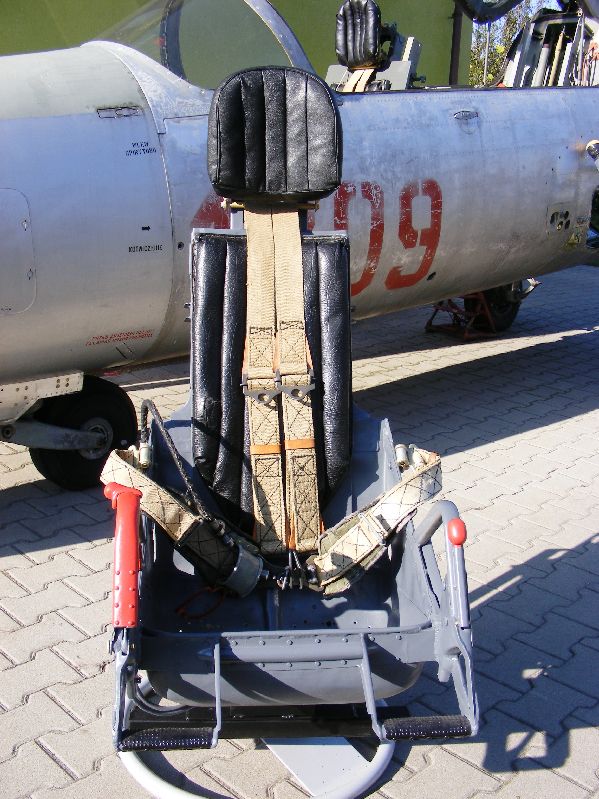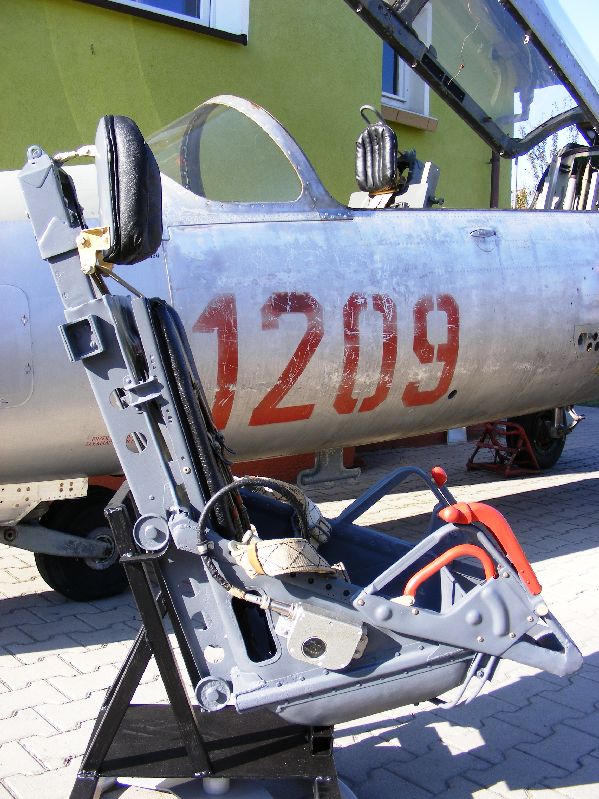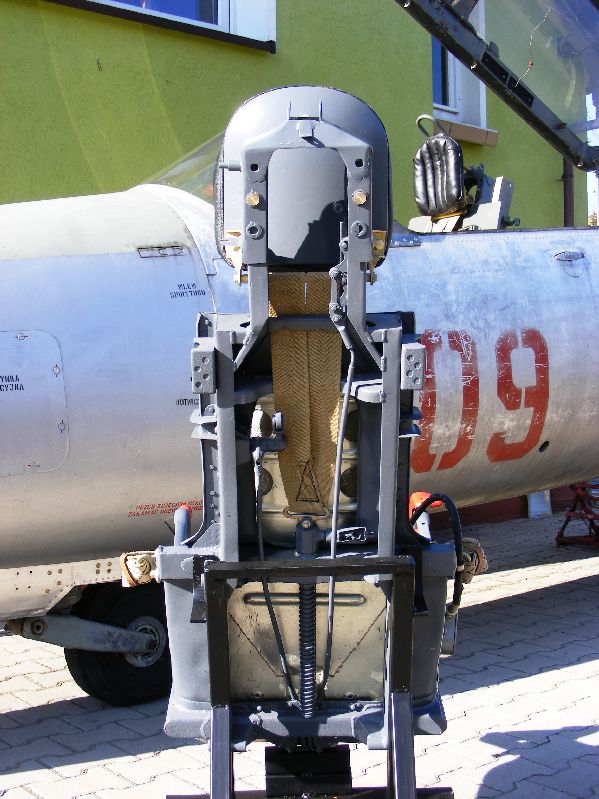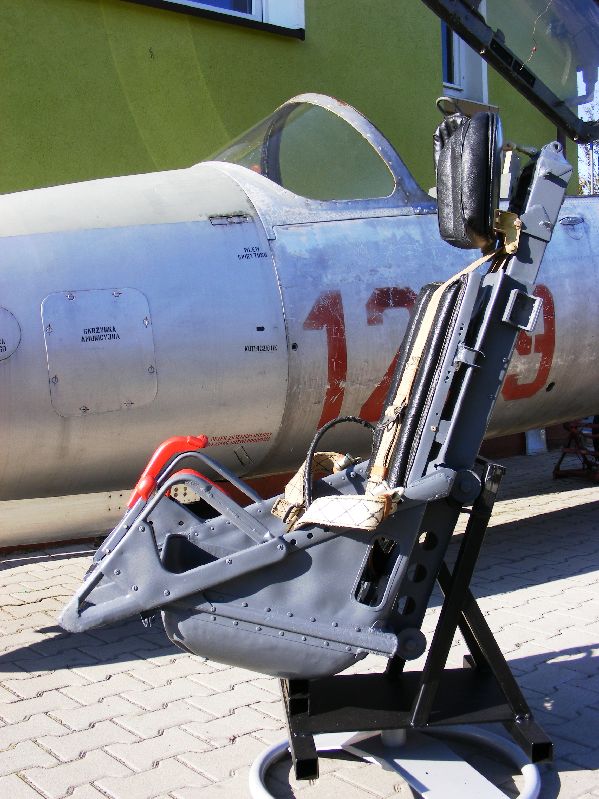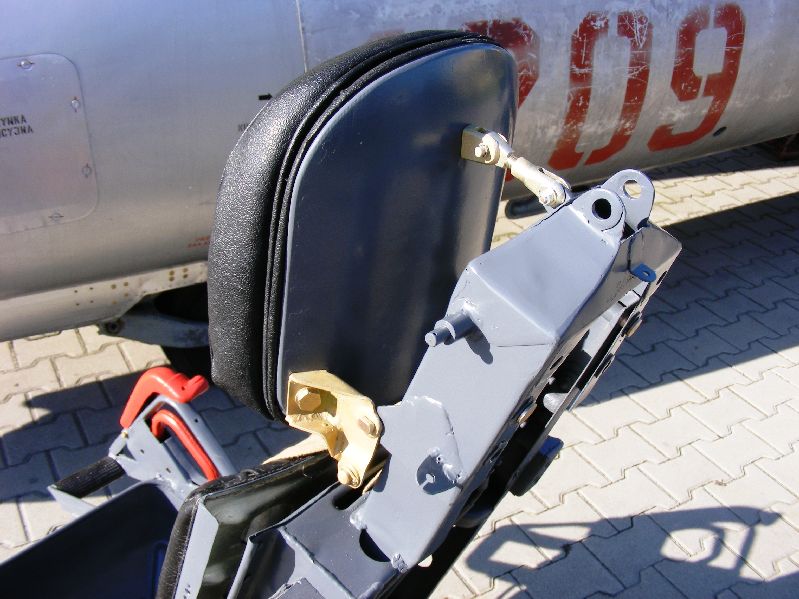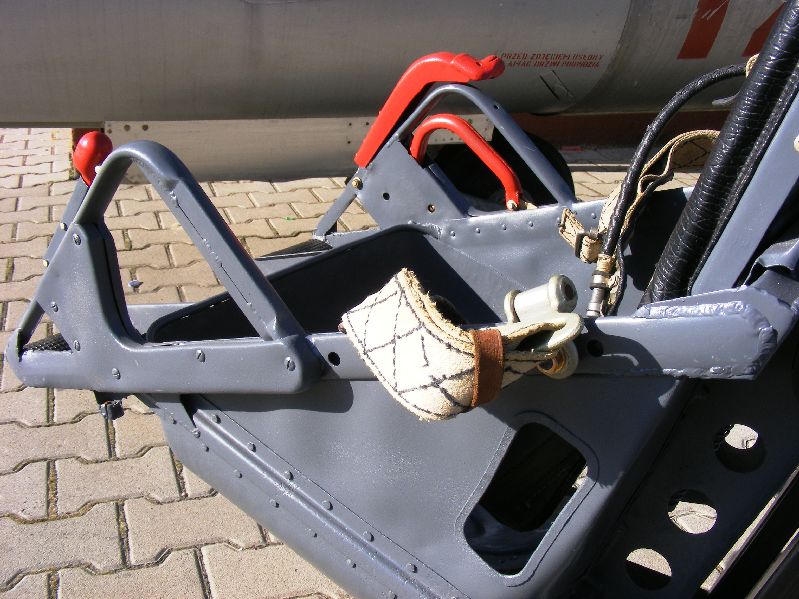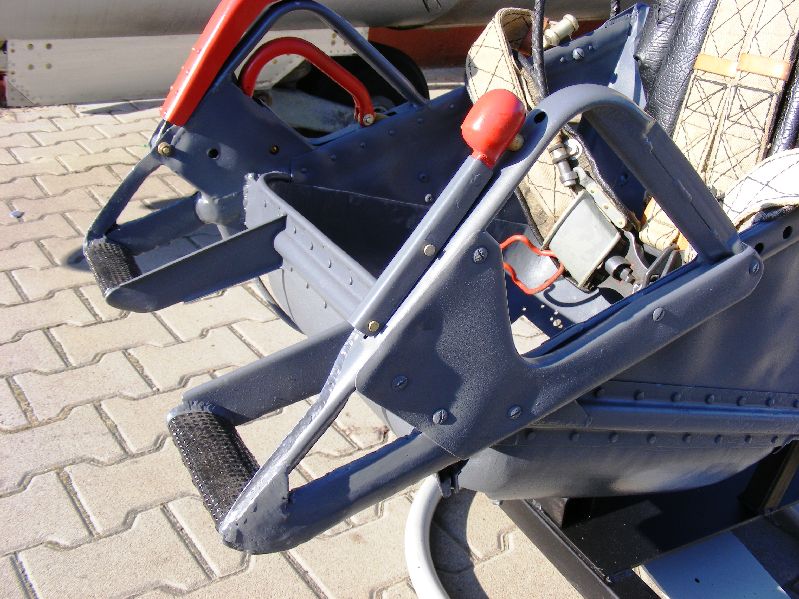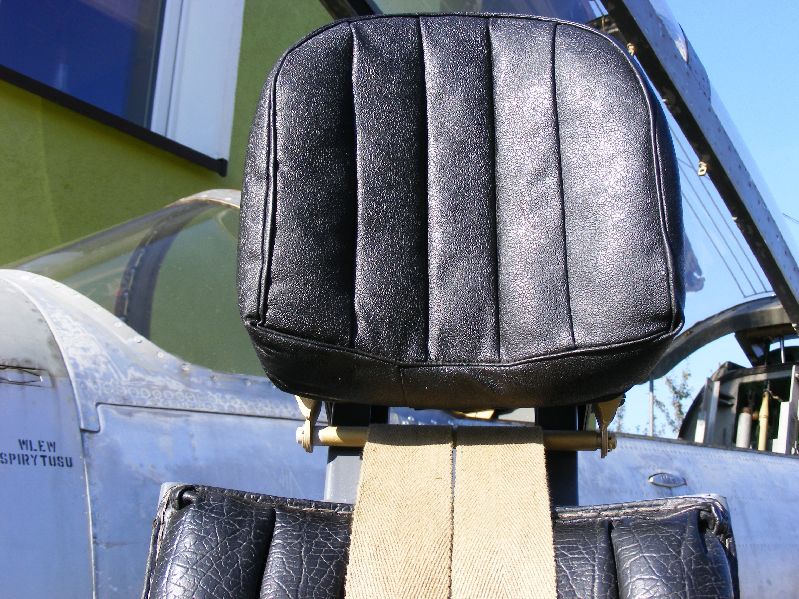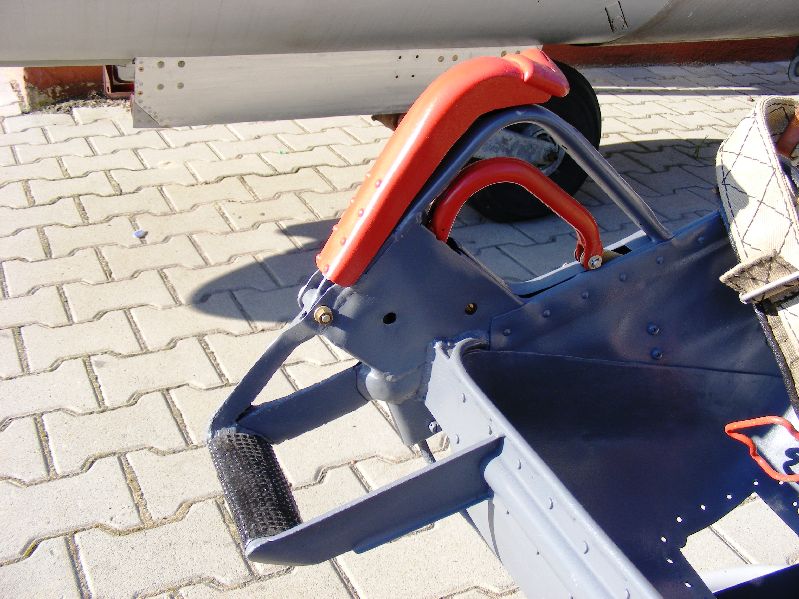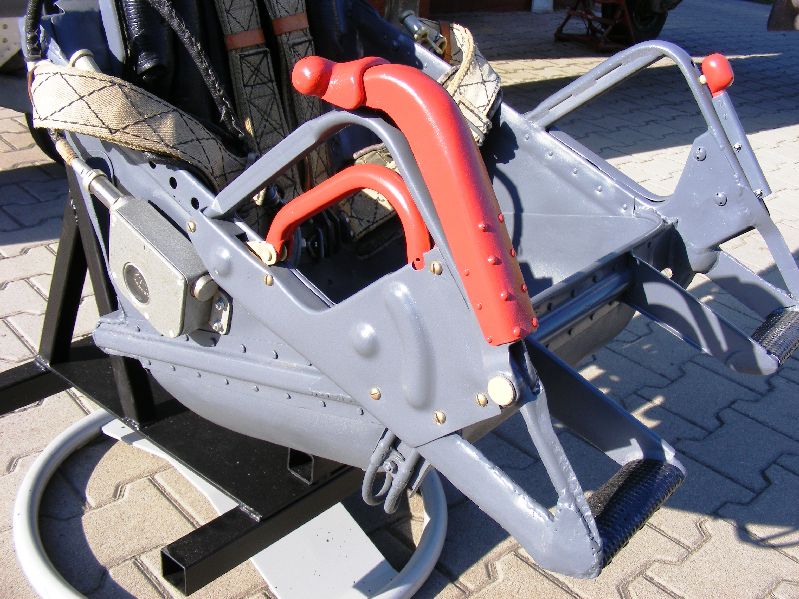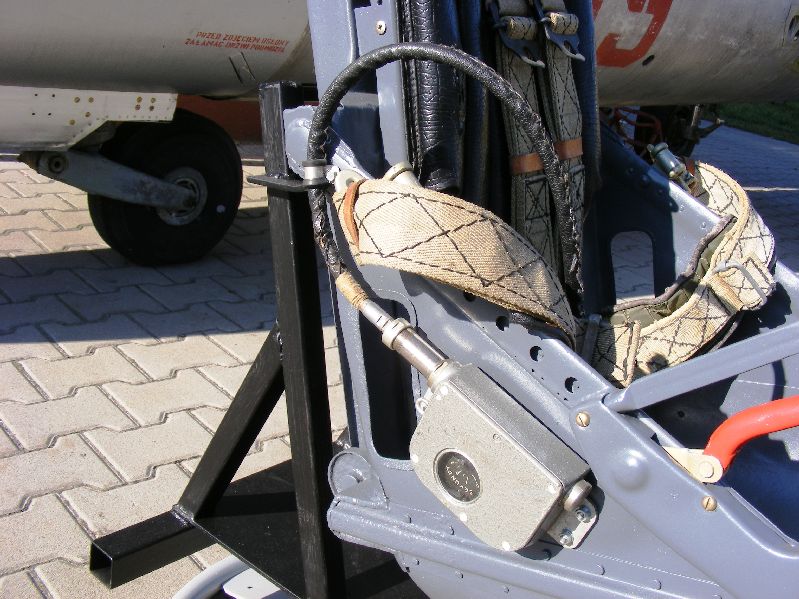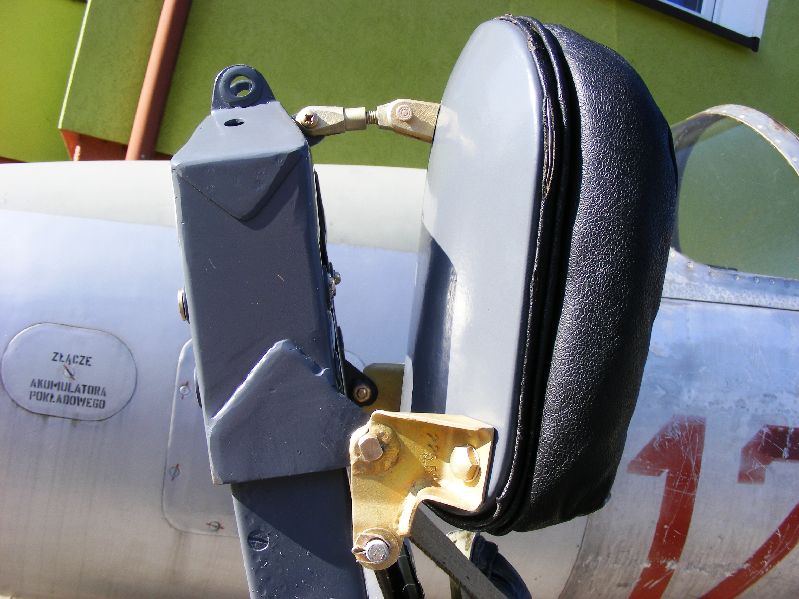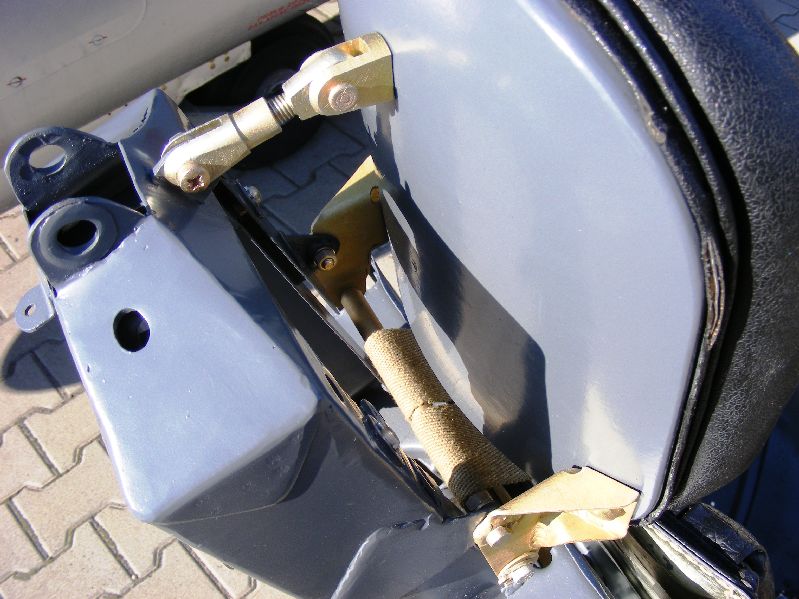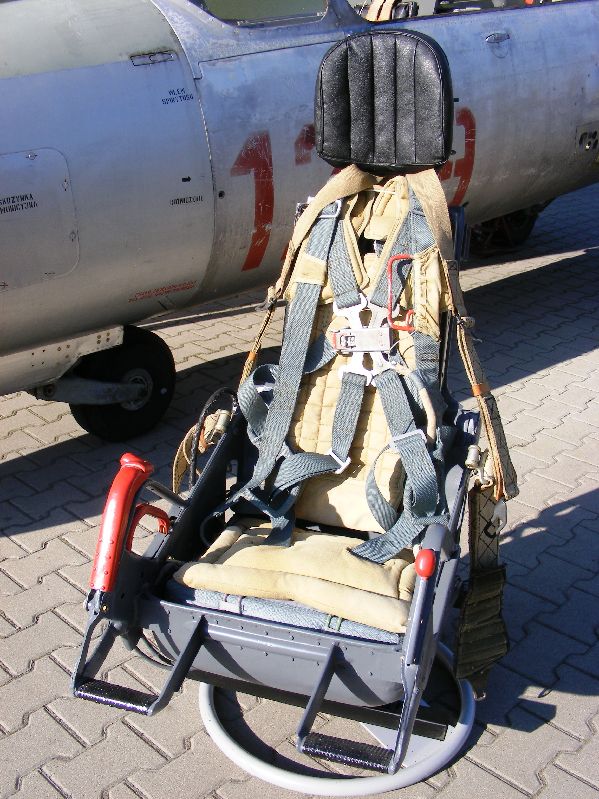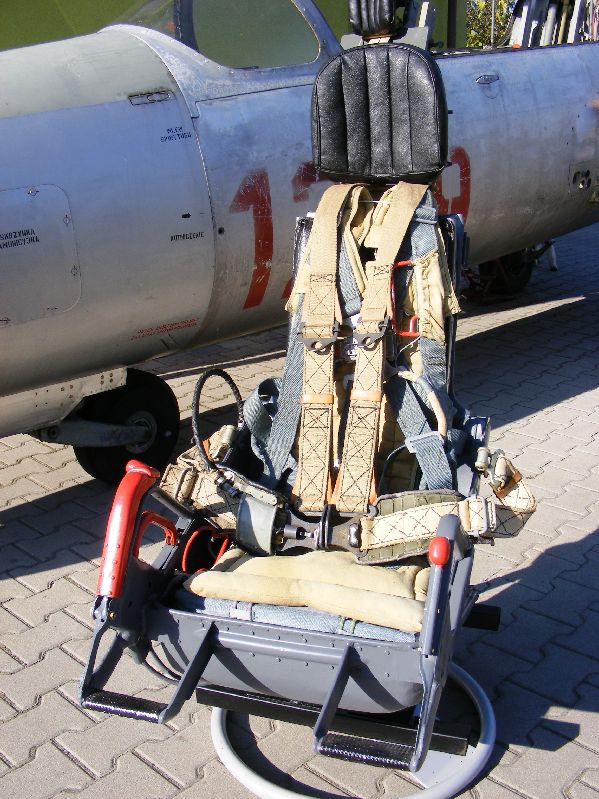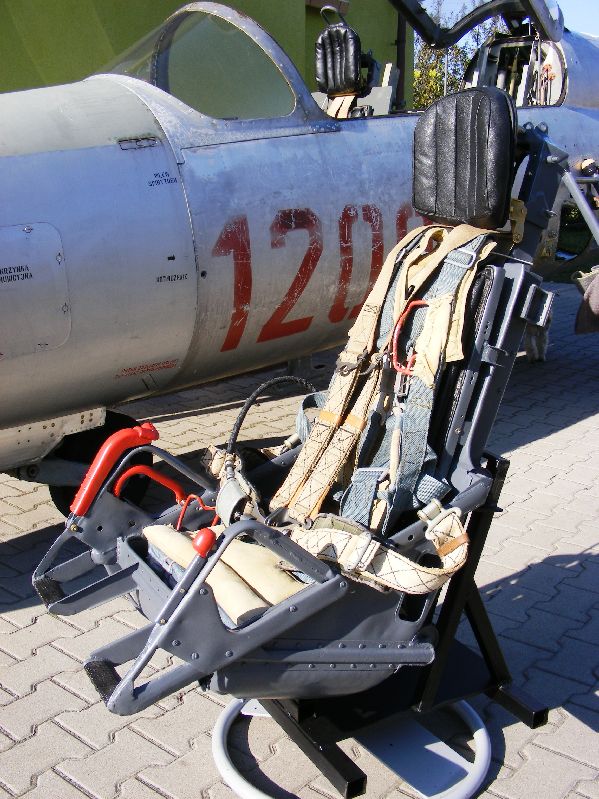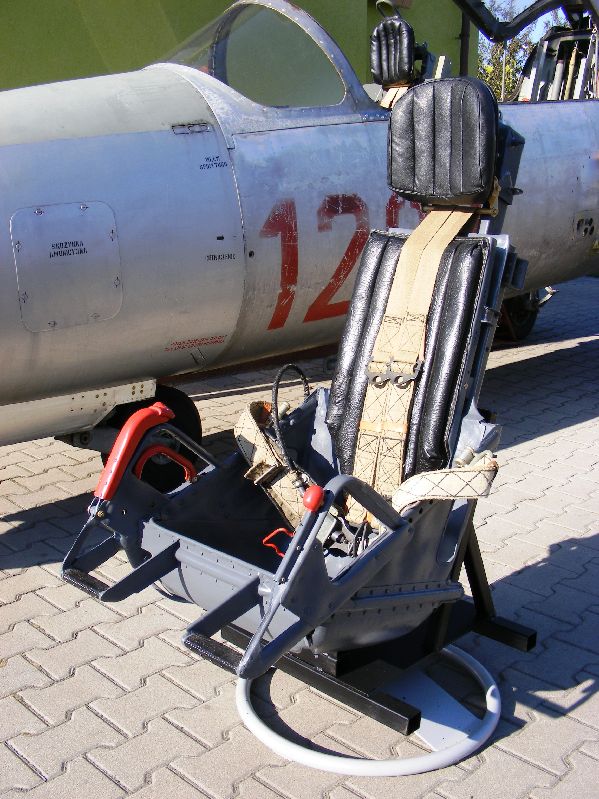
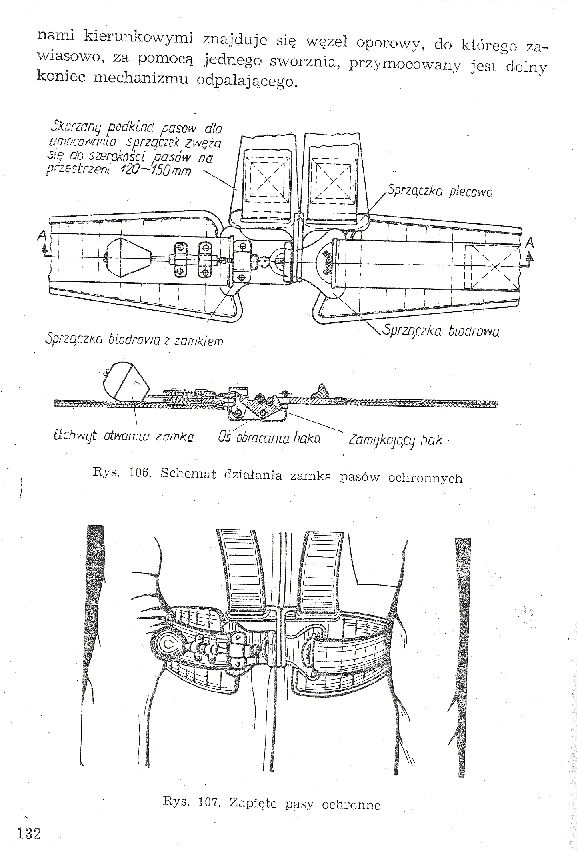
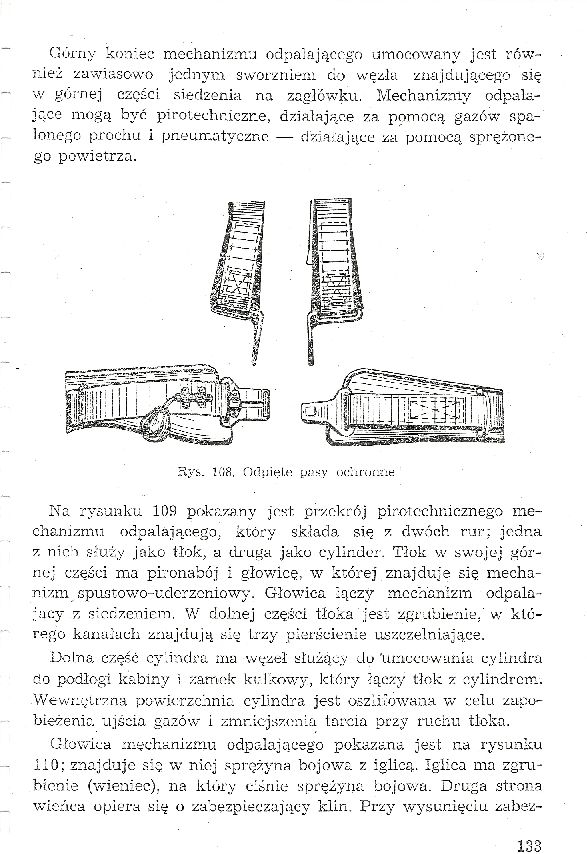
Seats of this type were fitted to the MiG-15, MiG-15bis, Lim-1 and Lim-2 aircraft and to the trainer versions of these machines. Depending on the factory and production period, they differed slightly in design details and maintenance markings. After the MiG-15 trials were completed, the military acceptance commission demanded that the armour of the headrest be thickened (to about 20 mm) so that it could withstand hits from 20 mm rounds. In addition, the backrest armour was increased to 15 mm and the windscreen front panel to 100 mm. The first MiG-15s had seats with rectangular headrest armour plates with cut-off upper corners and a short back cushion. The load-bearing frame of the seat is welded from steel sections, and the remaining parts are riveted duralumin. The seat weighs about 40 kg without a parachute. A far-reaching modernisation of it is the seat of the TS-11 Iskra.
Two variants of this seat with headrests of different sizes were used in the Lim family. The Lim-1 and Lim-2 had headrests 280 mm high, and the SBLim 240 mm. In practice, seats of both variants could be fitted to both types, except that in the SBLim (UTI MiG-15 and CS-102) there was a risk of the canopy lock cables rubbing against the longer headrest. The solution was very simple: the top of the headrest was ground down. The first successful ejection from a MiG-15bis took place during the Korean War, after the aircraft was shot down by an F-86. It happened in the very first air battle of that war, in December 1950.
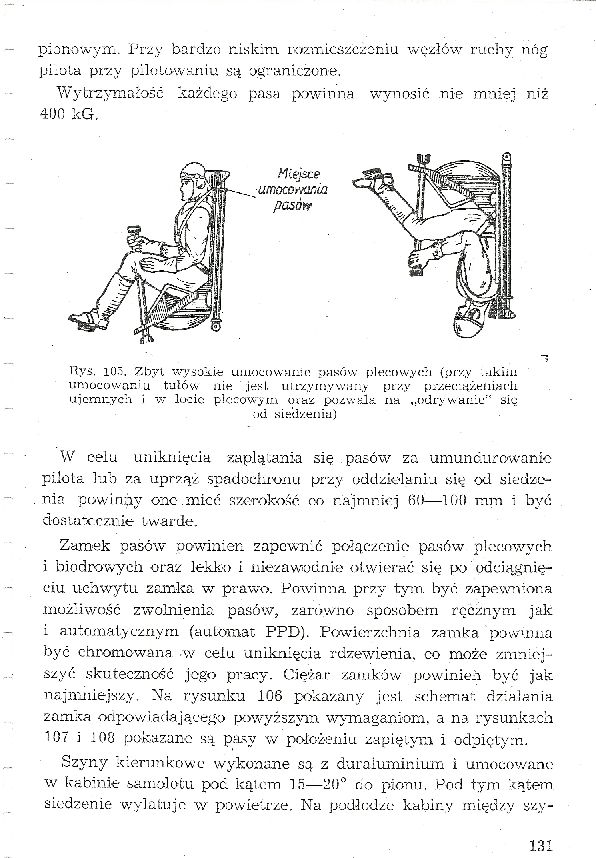
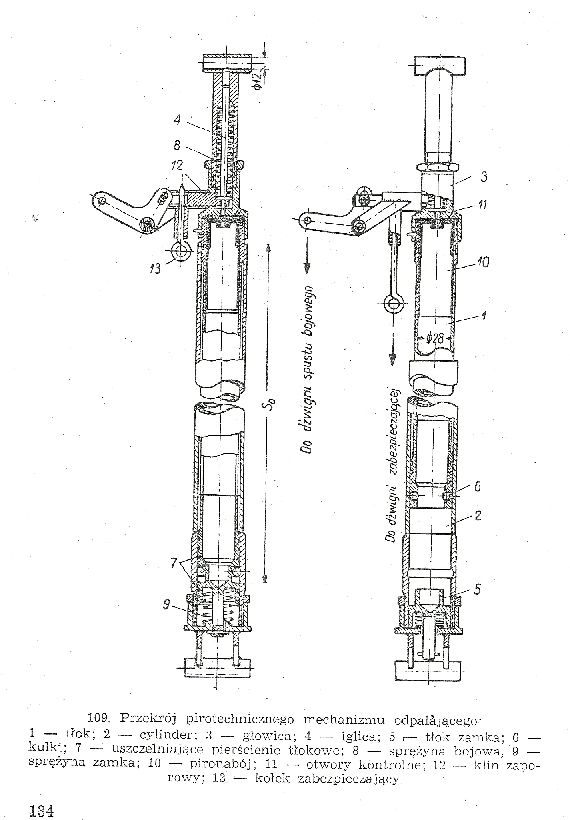
In the cockpit the seat sits on two guide rails and is attached to the floor by the lower mount of the ejection gun. Because of its very simple design, the recommended safe ejection altitude is 600 m in level flight and 1000 m in a dive, and the minimum ejection altitude must not be less than 250 m at an indicated airspeed of 400 km/h. Ejecting through the canopy of the SBLim rear cockpit gives the pilot minimal chances of survival. In exceptional cases, when all possible means of opening the front canopy locks fail (the lever on the seat and the internal lock lever), ejecting through the front canopy gives some chance of saving the pilot, provided that his head is below the top edge of the seat headrest at the moment of ejection.
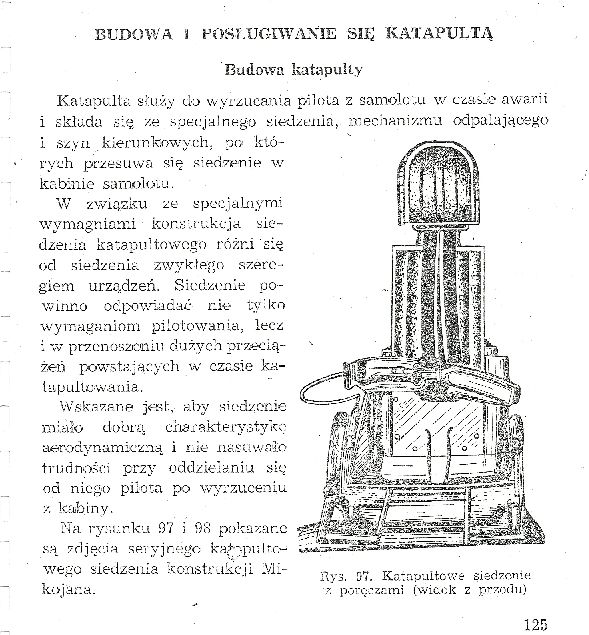
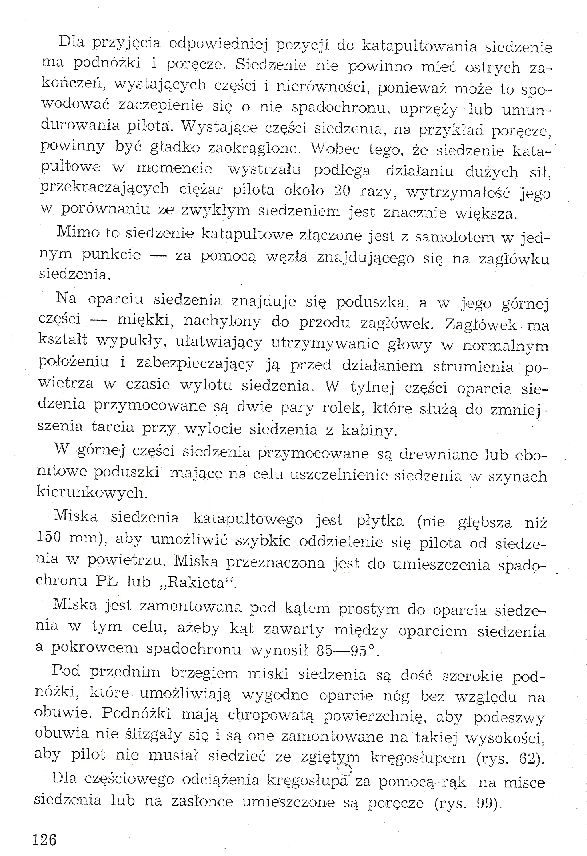
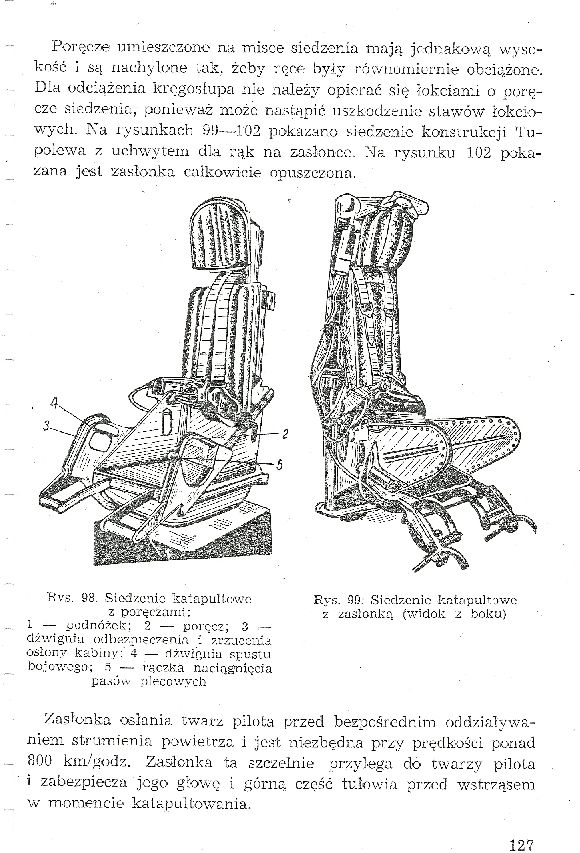
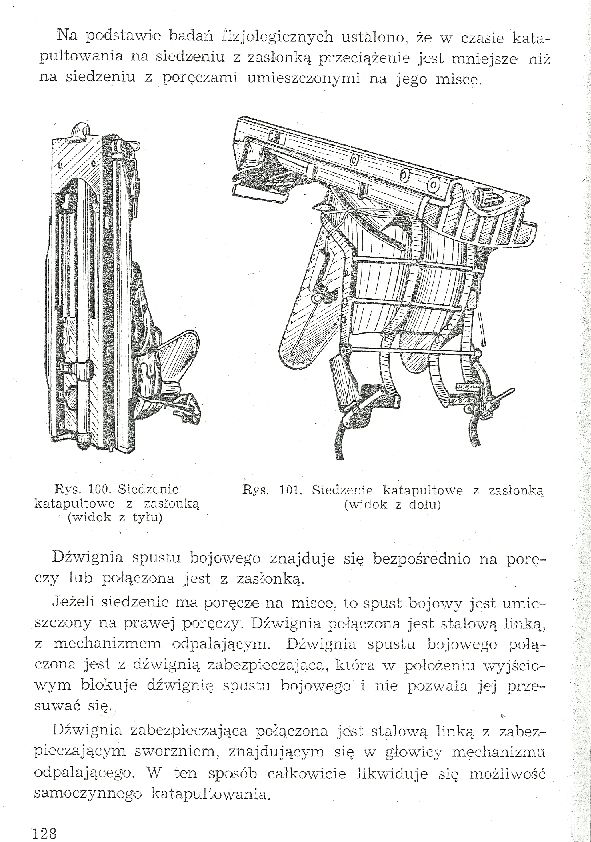
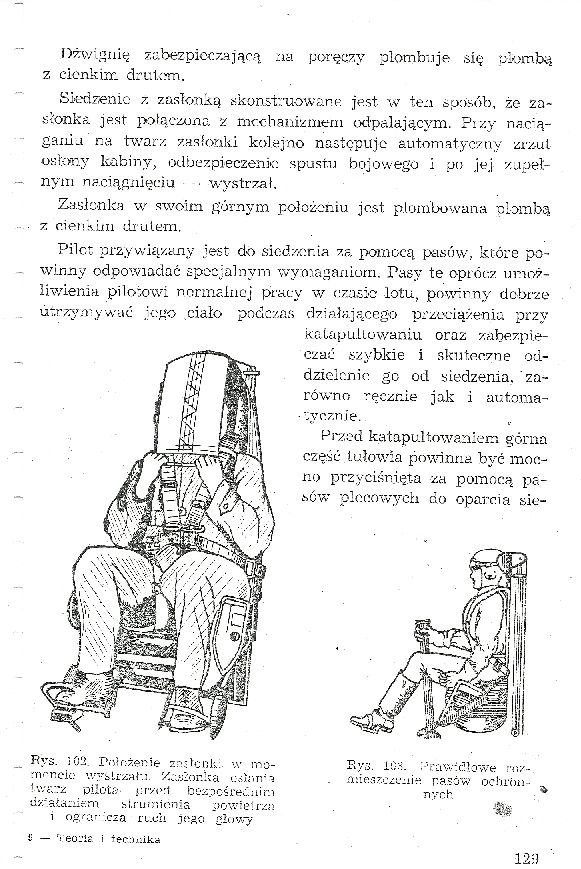
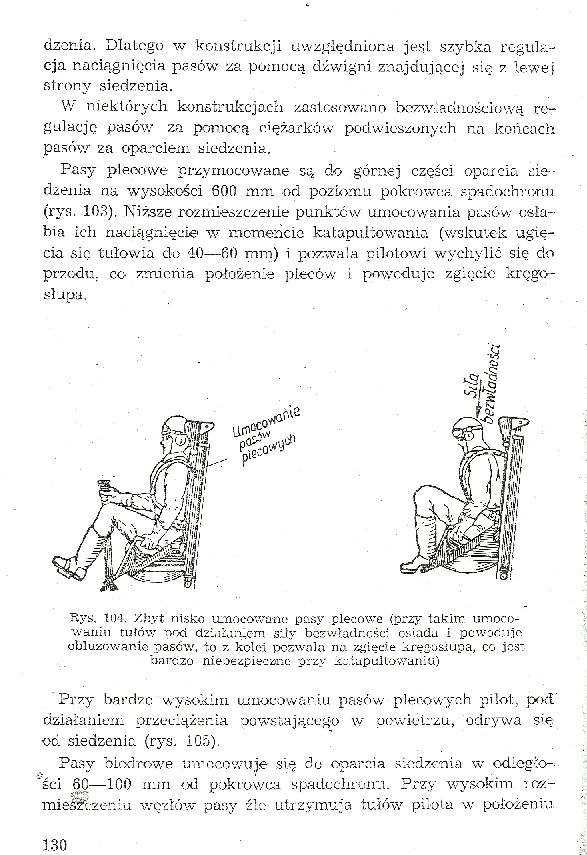
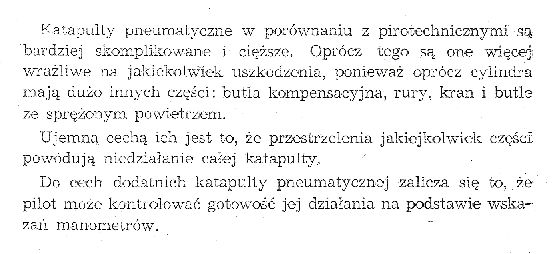
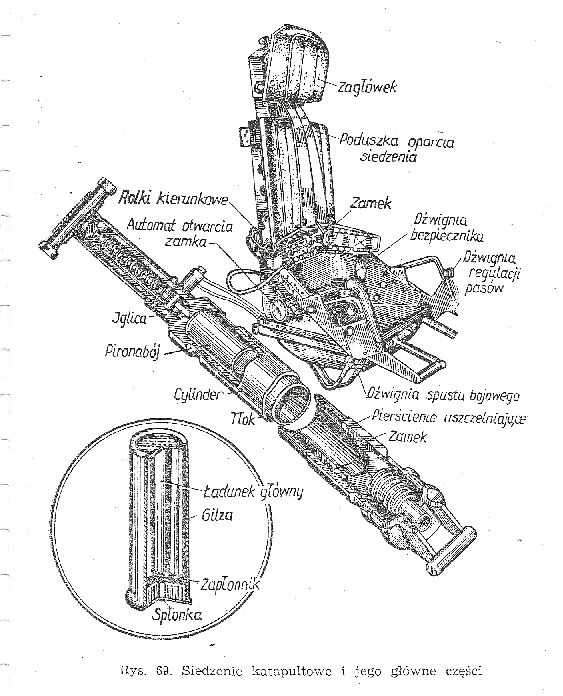
USED IN MiG-15, Lim-1, Lim-2 AIRCRAFT
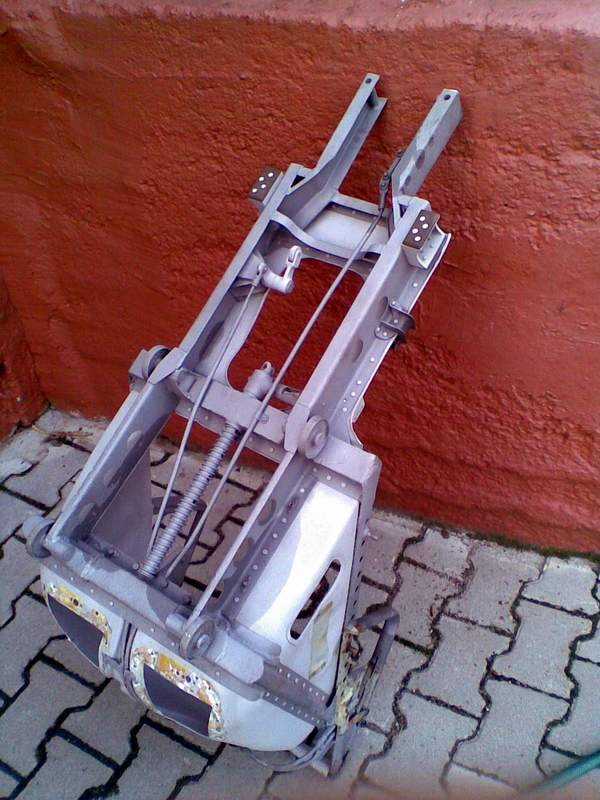
My seat as it looked before more than six months of renovation and reconstruction;
photos of this seat after reconstruction can be found in the main gallery.
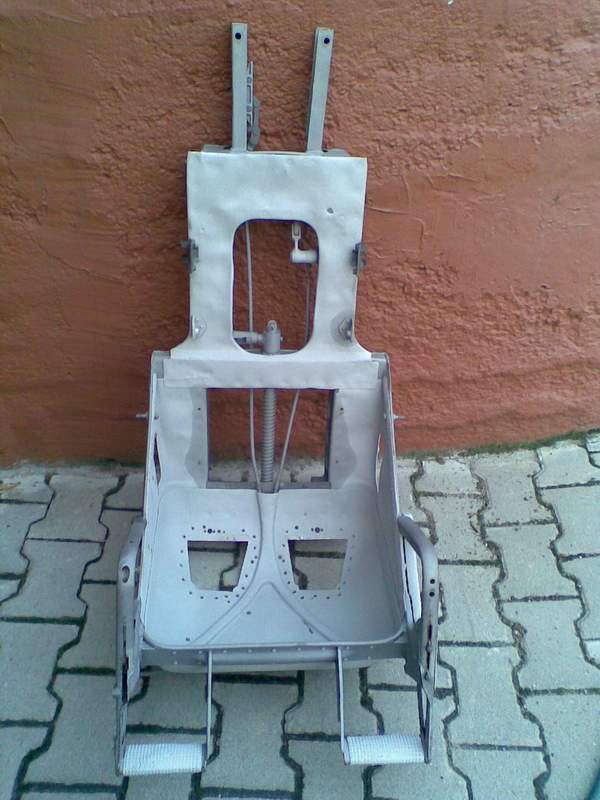
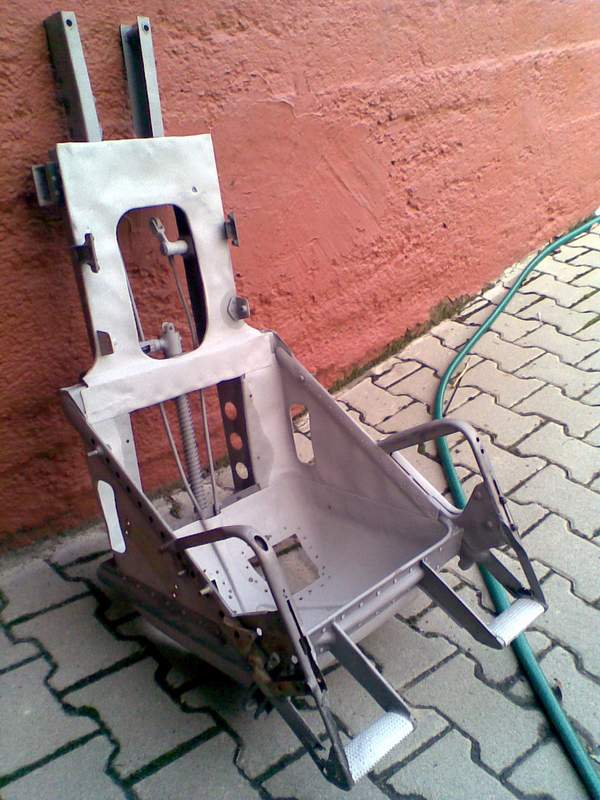
USED IN MiG-15, Lim-1, Lim-2 AIRCRAFT
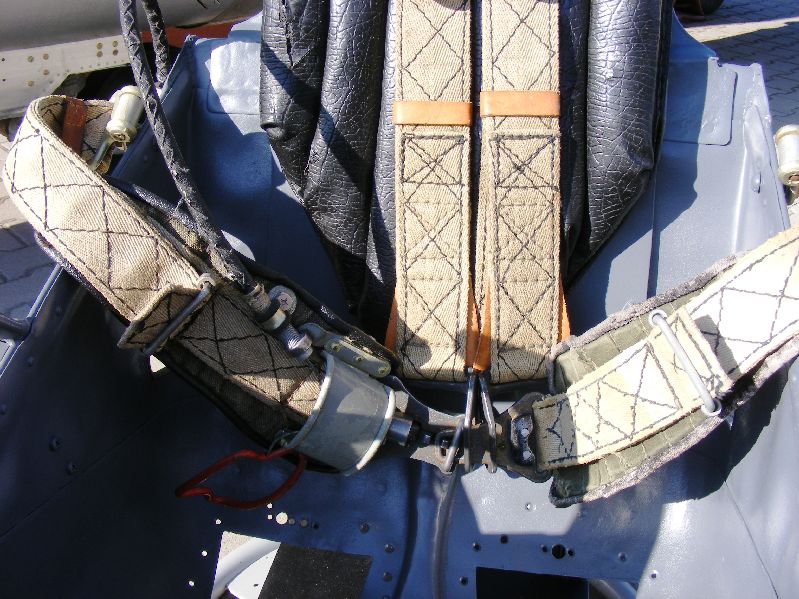
I do not know the history of this seat or of the particular aircraft in which it was used. It has been in the collection since 2009; it was in a terrible condition, and it took me 6 months to restore and complete it to its present state. Visible in the seat is the S-3 parachute rescue system, which also served as the seat cushion.