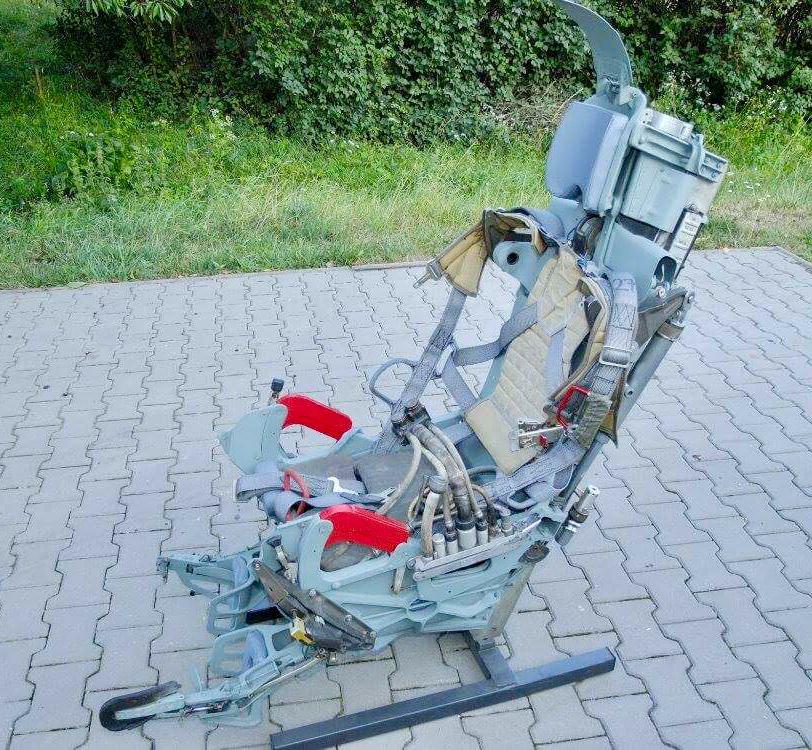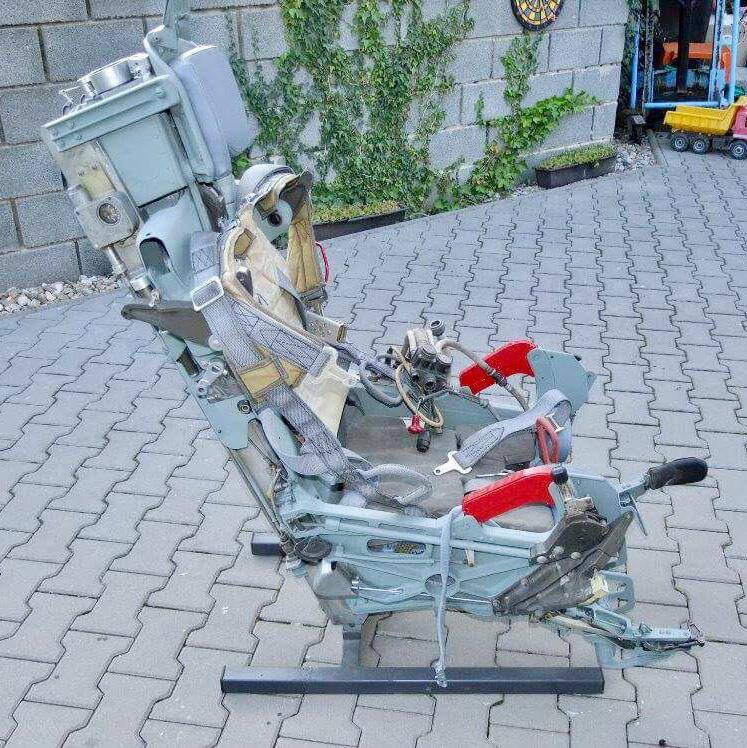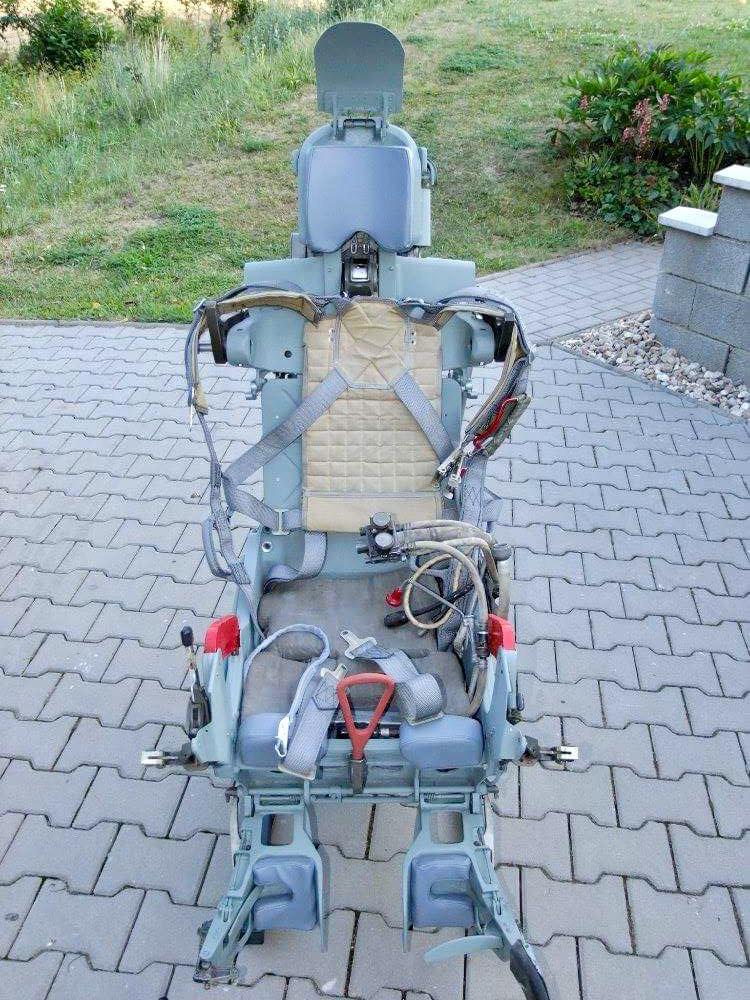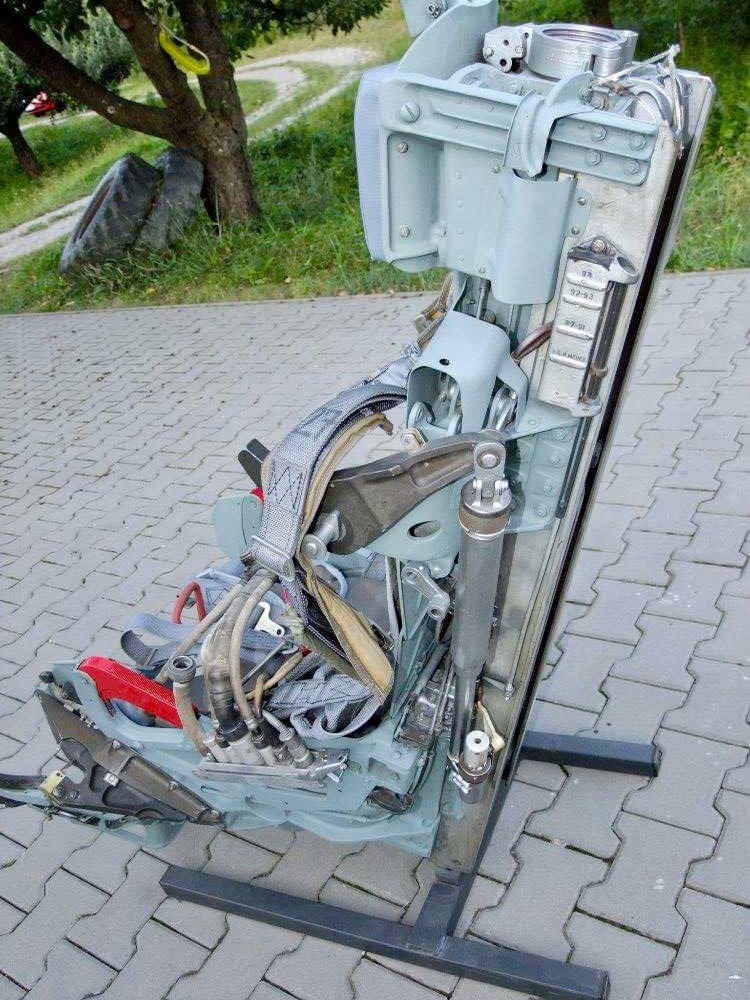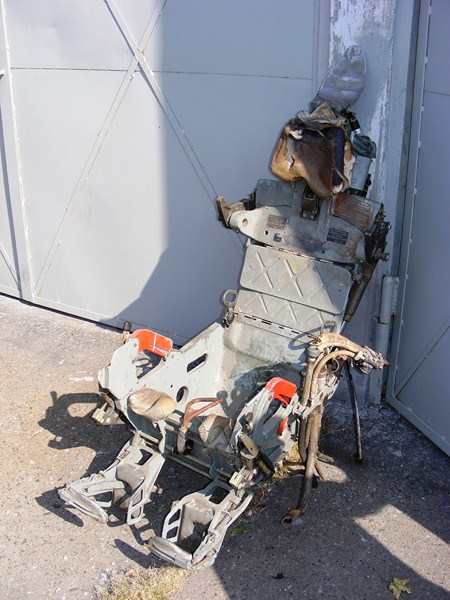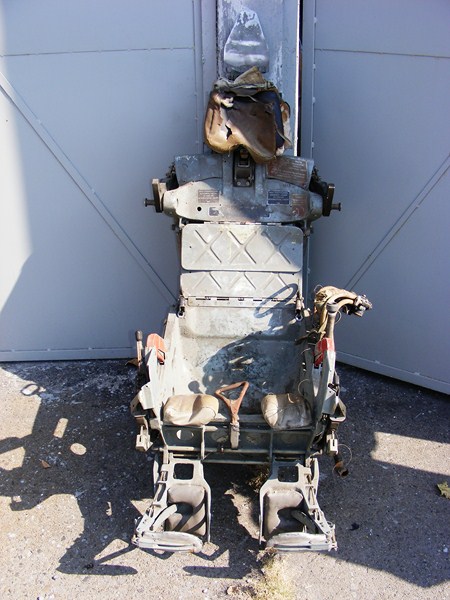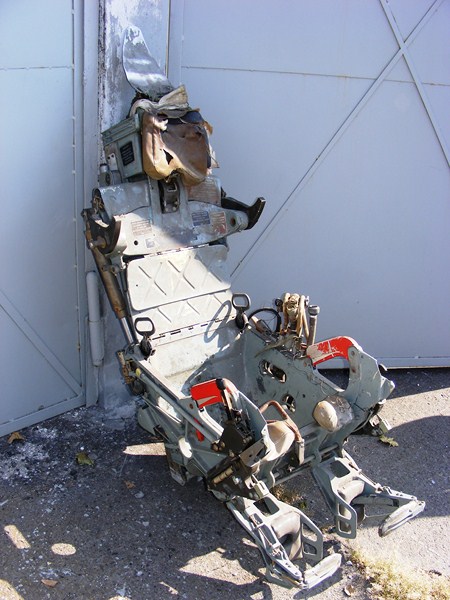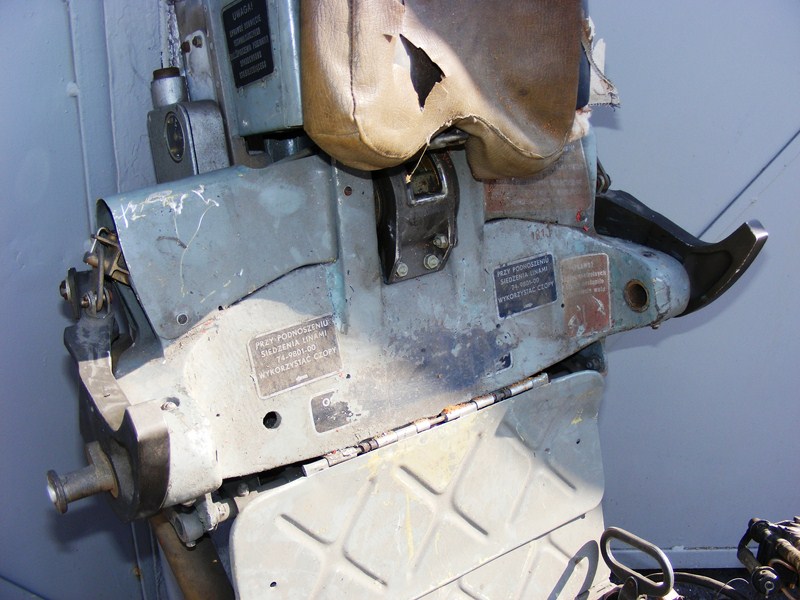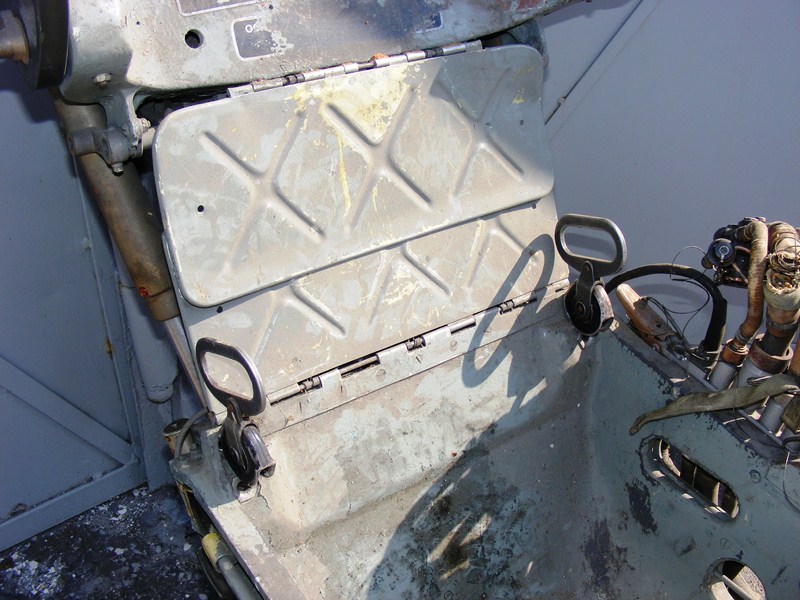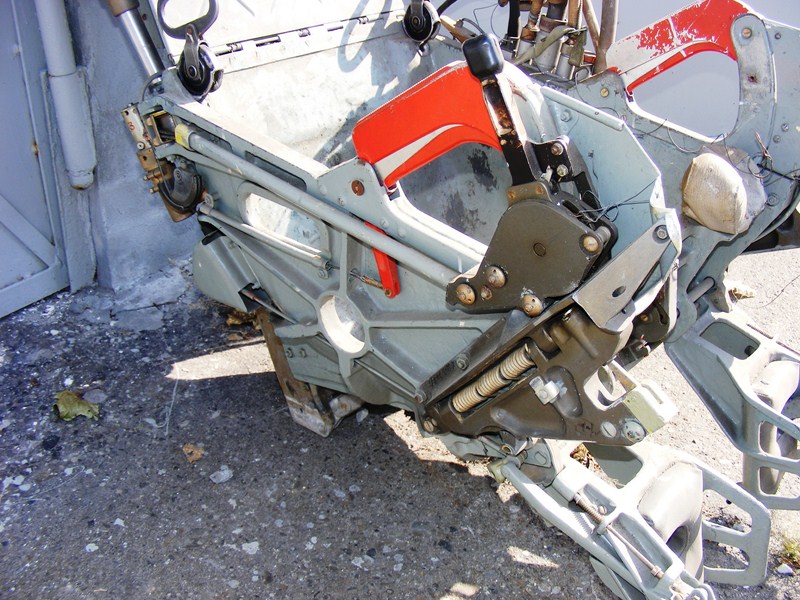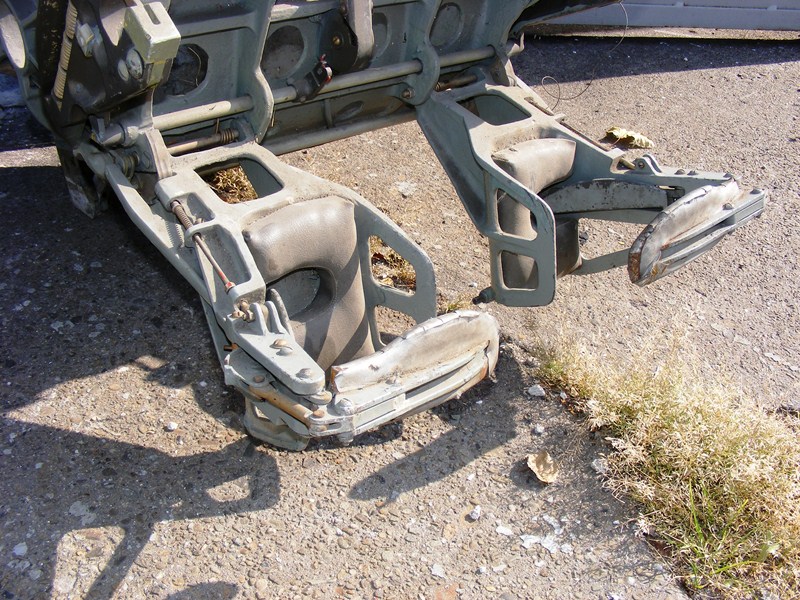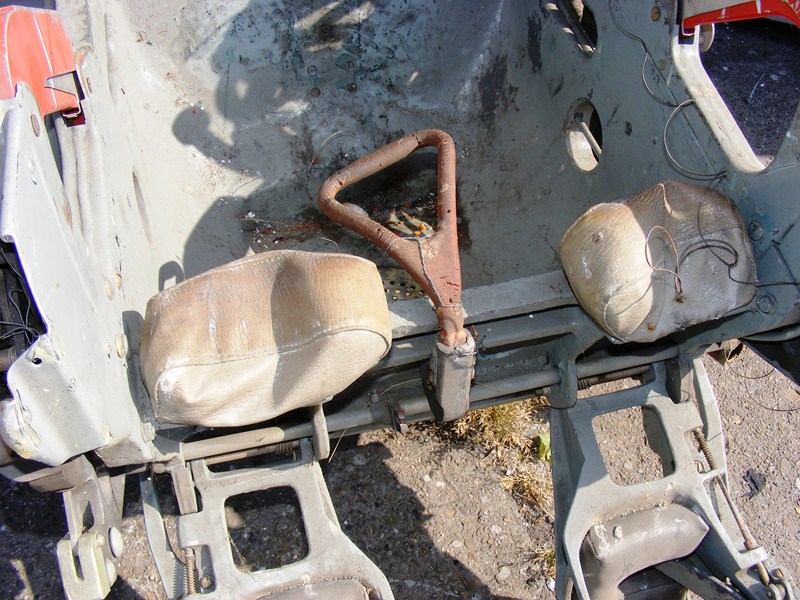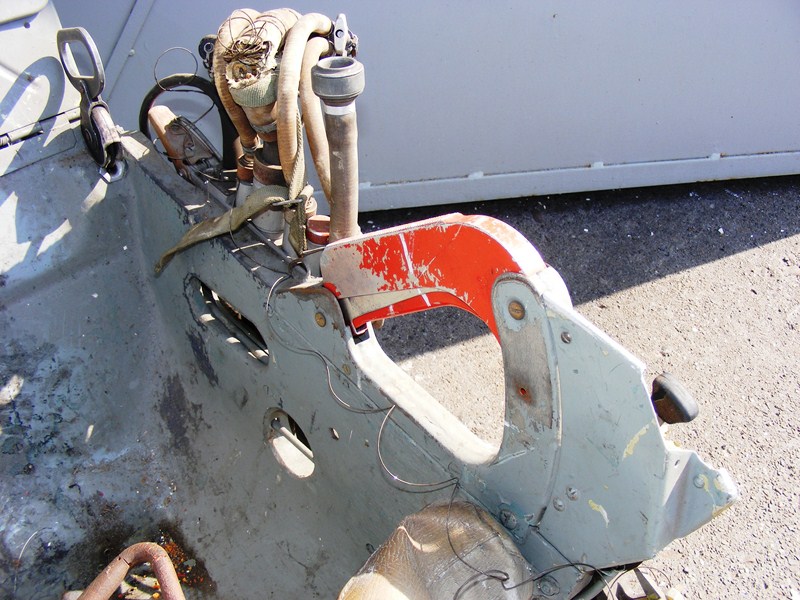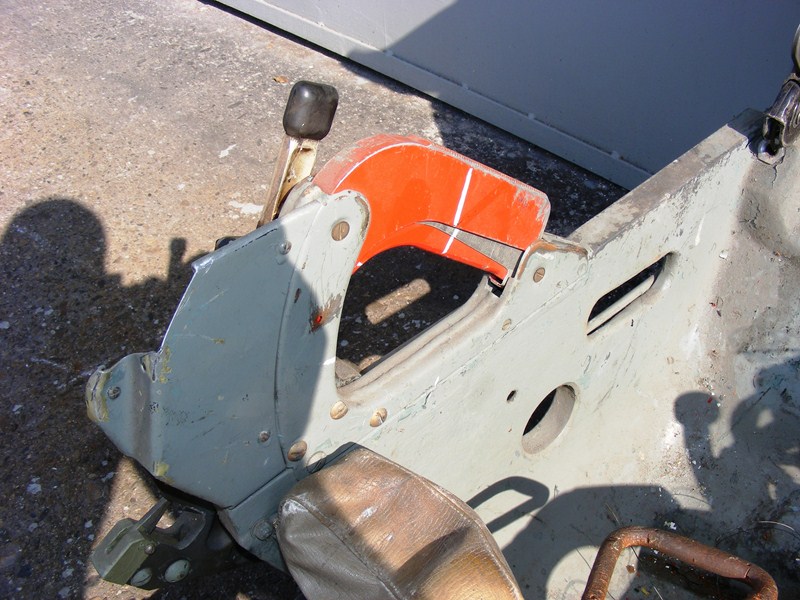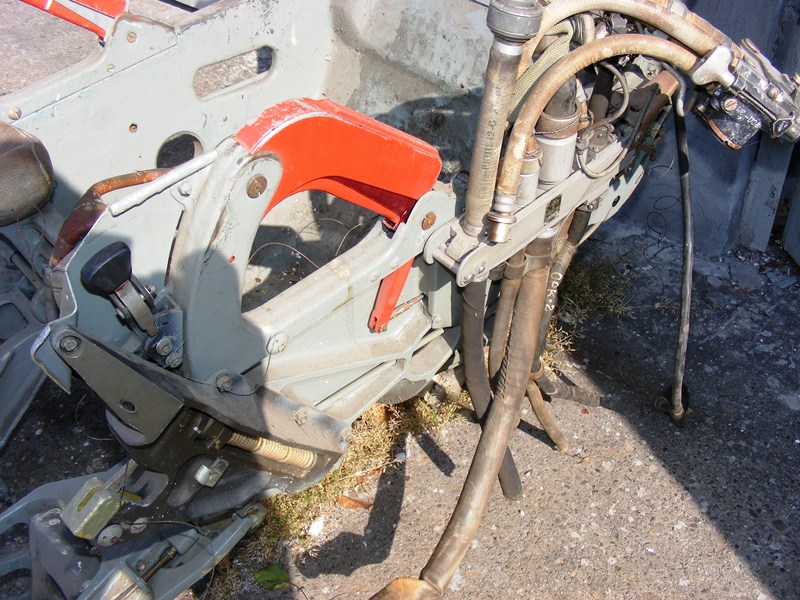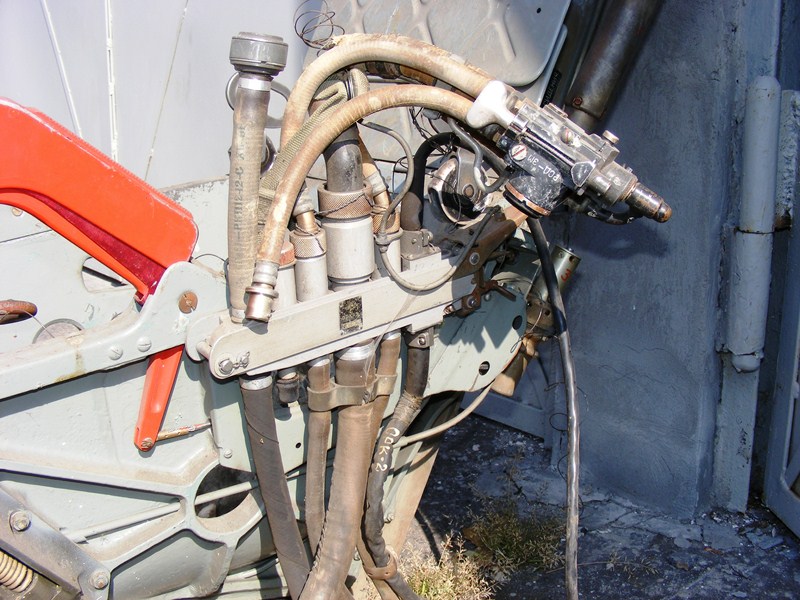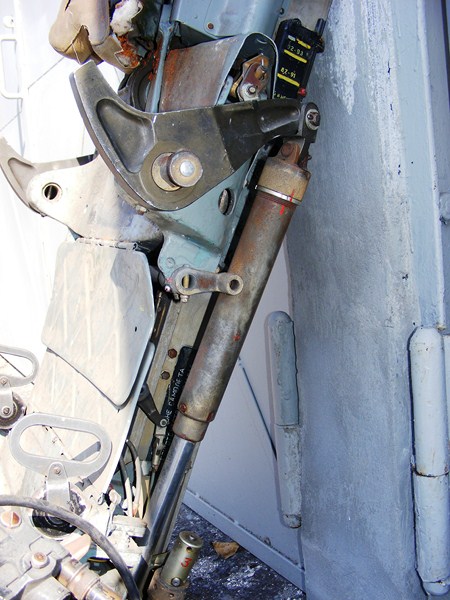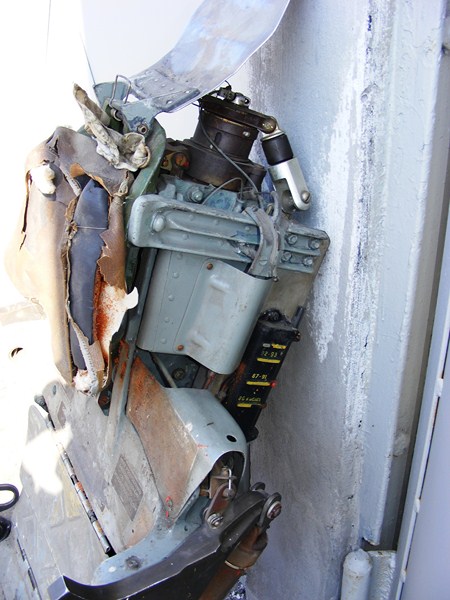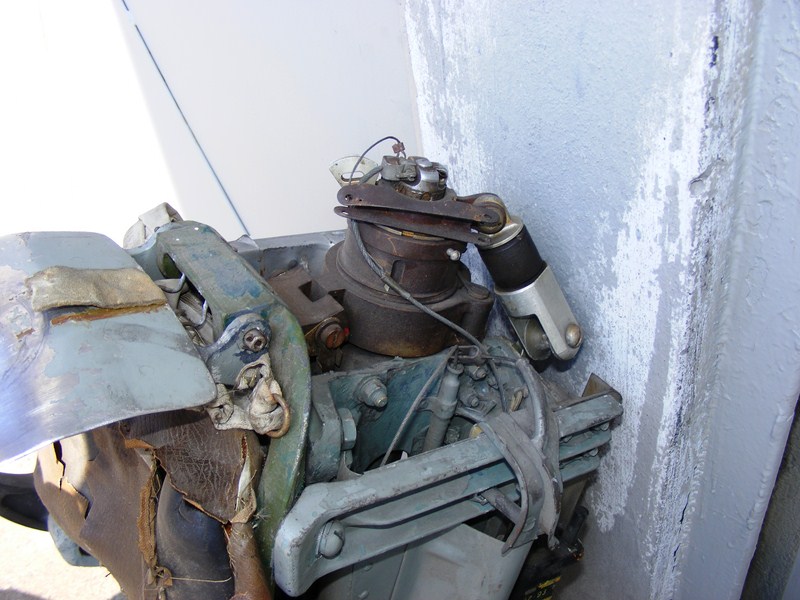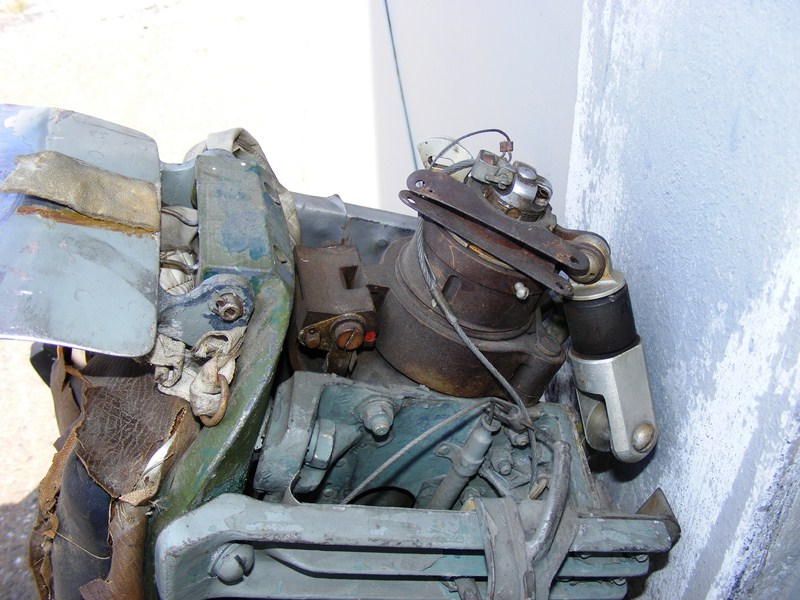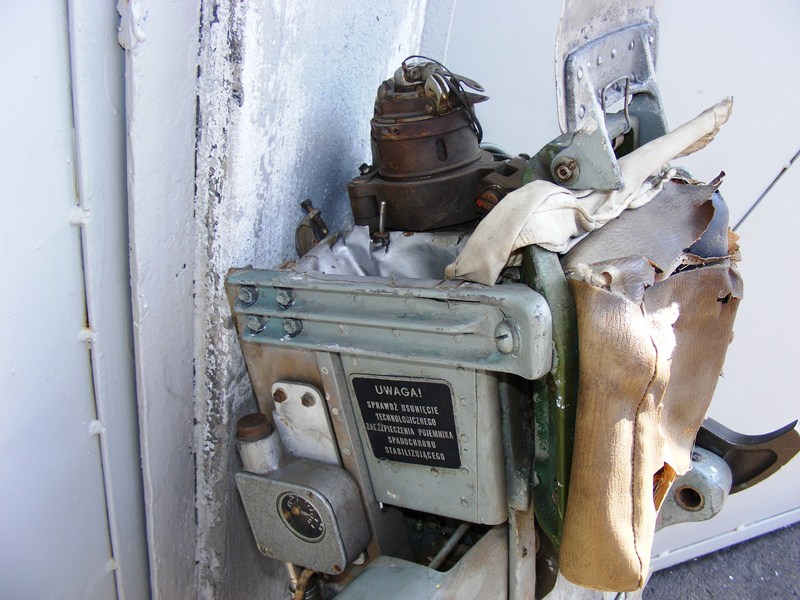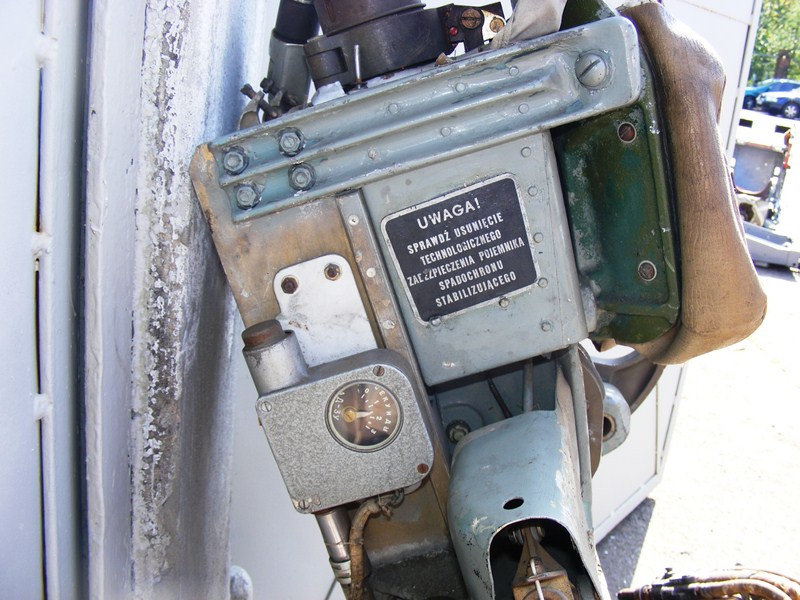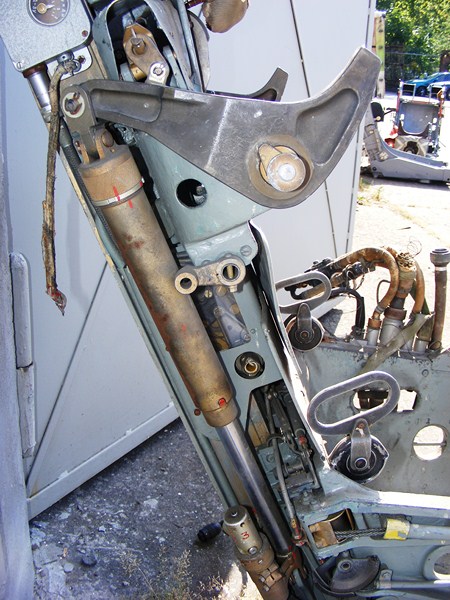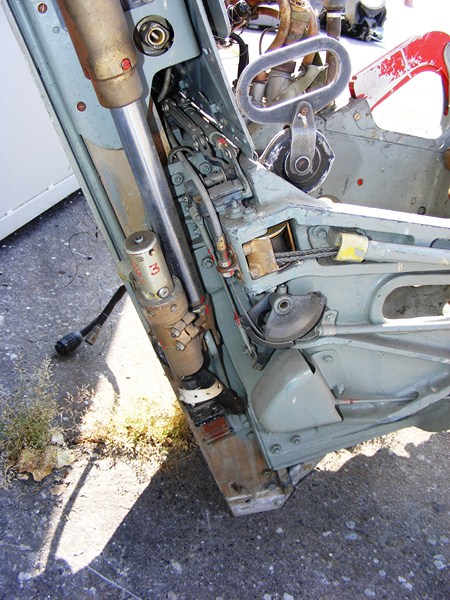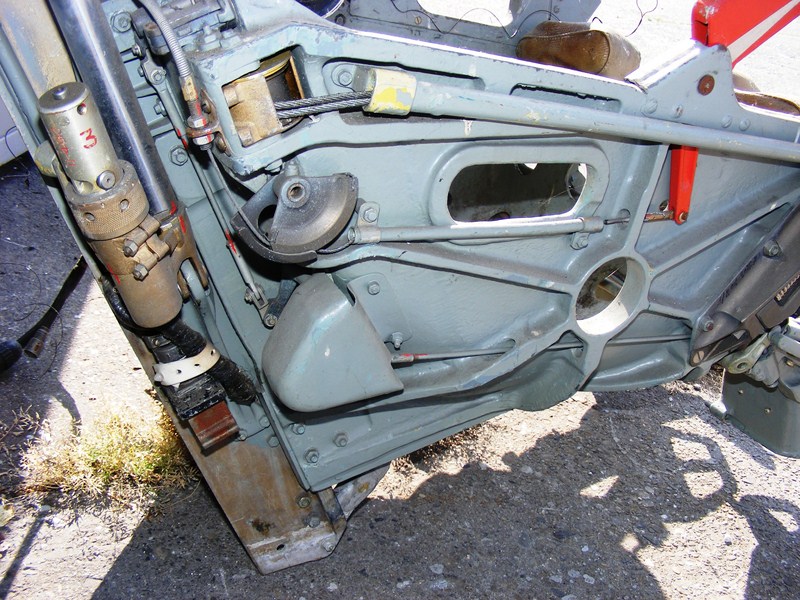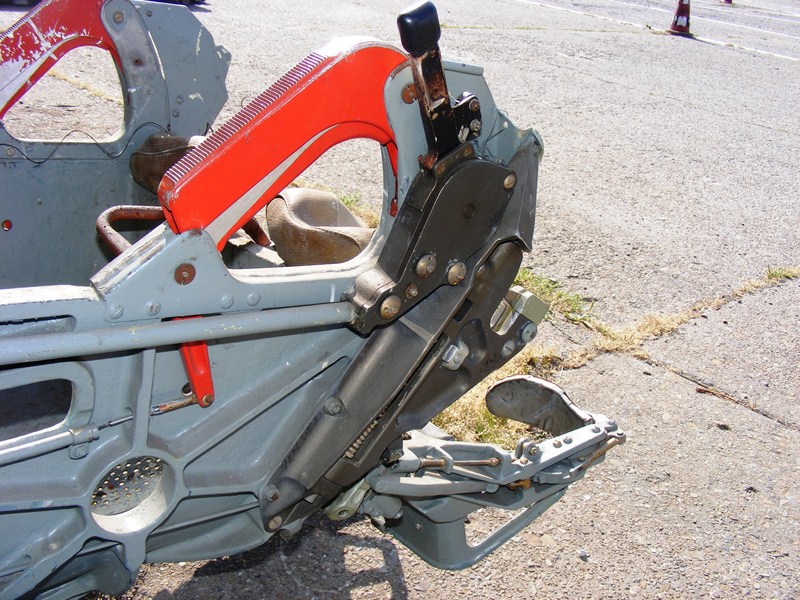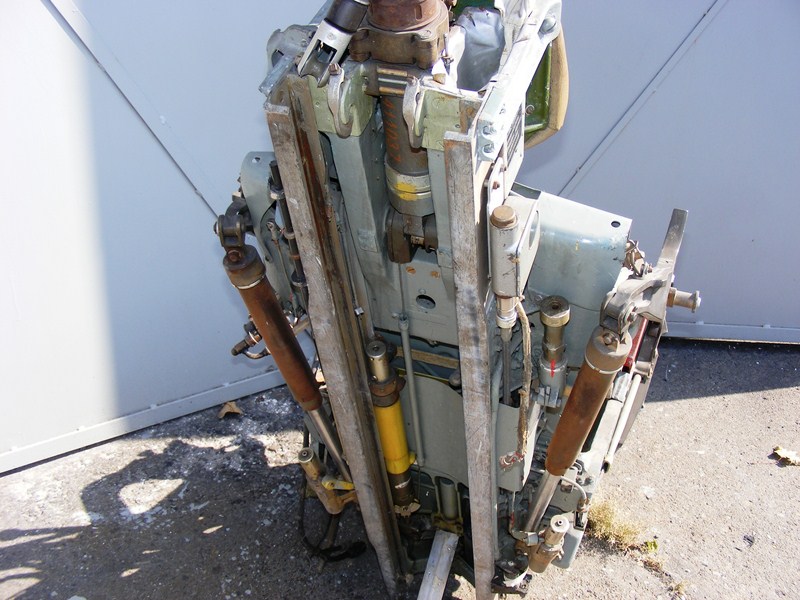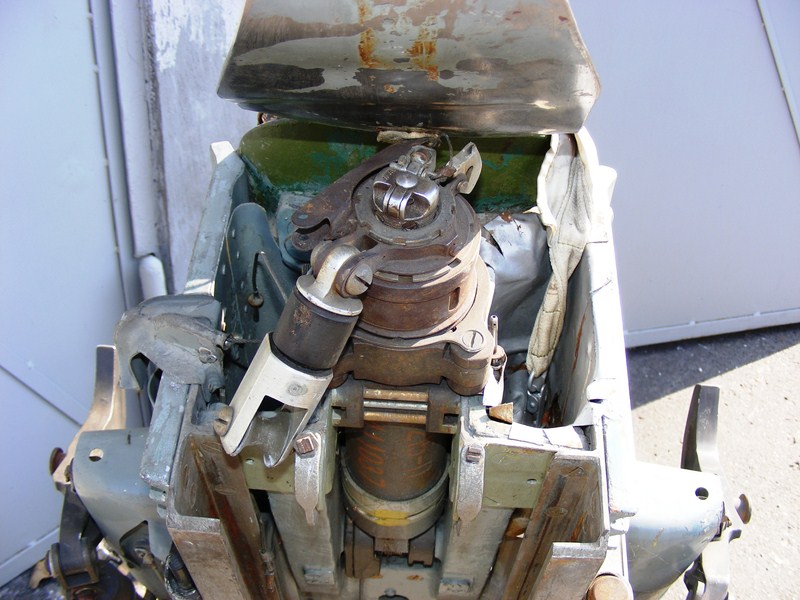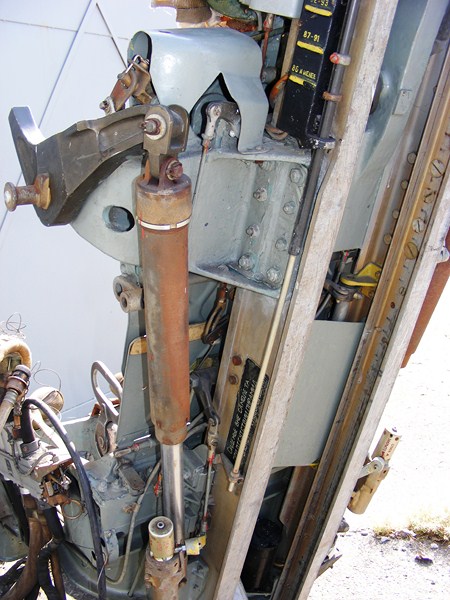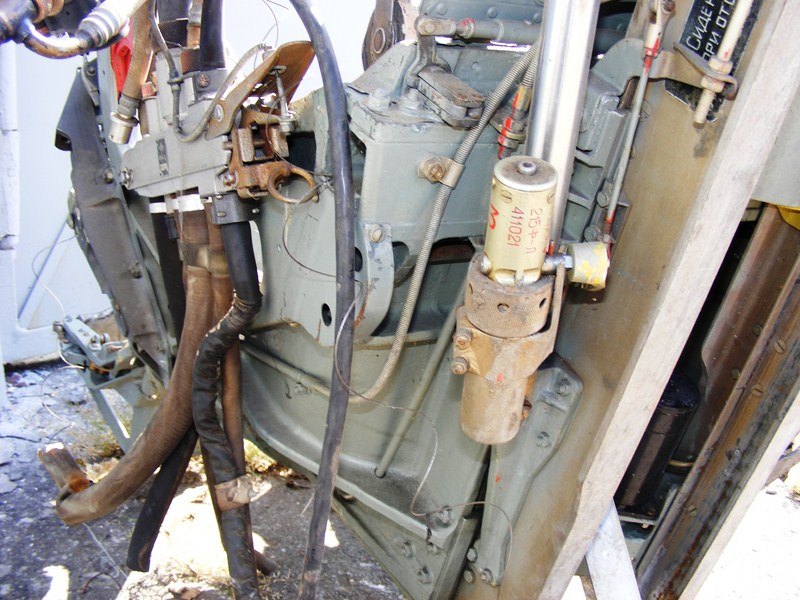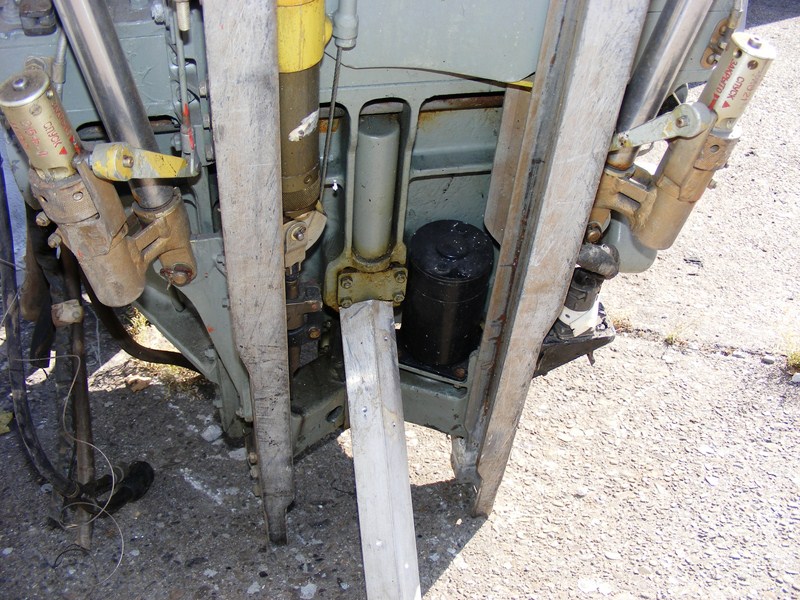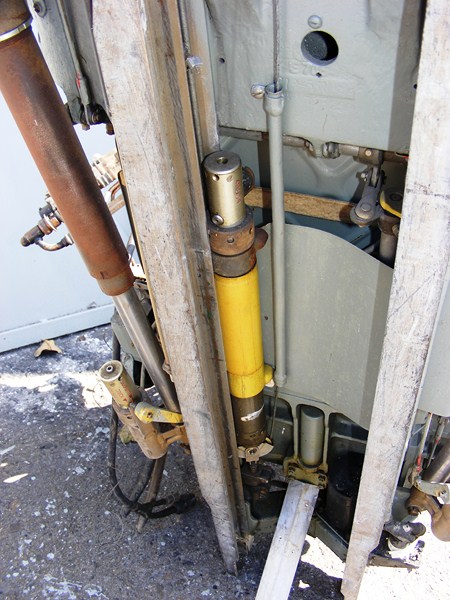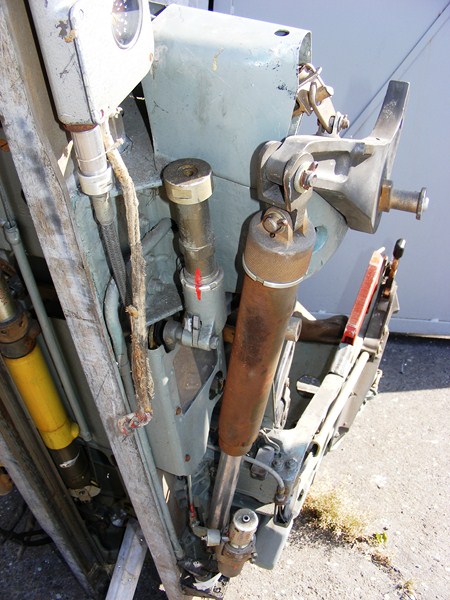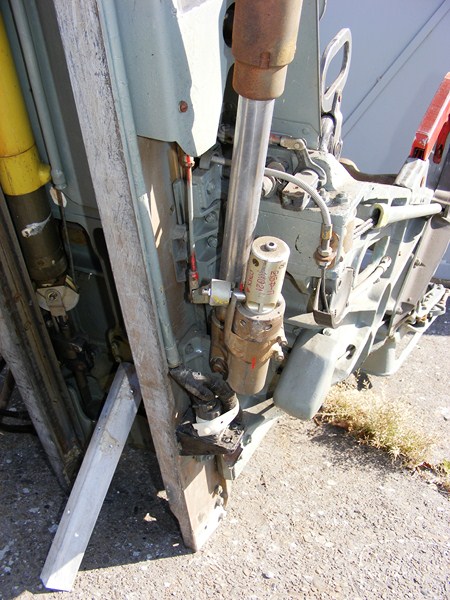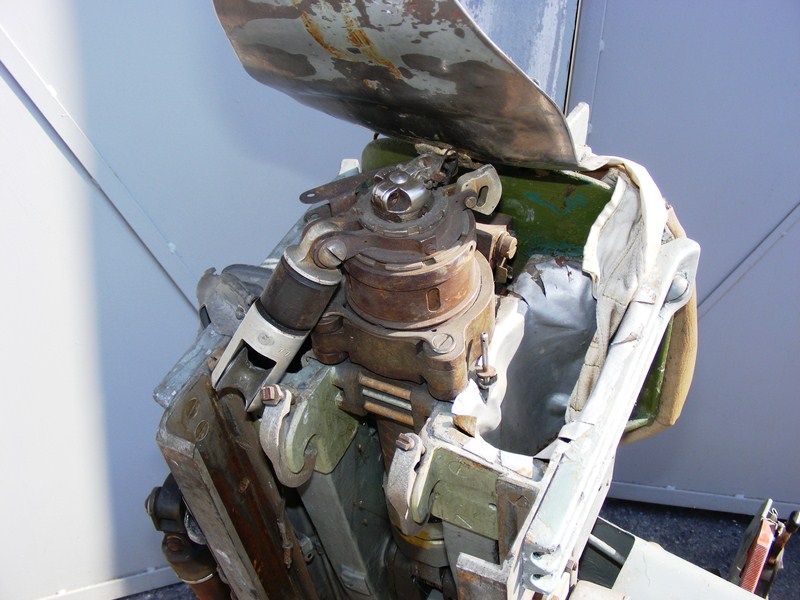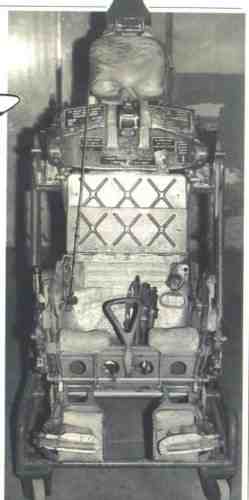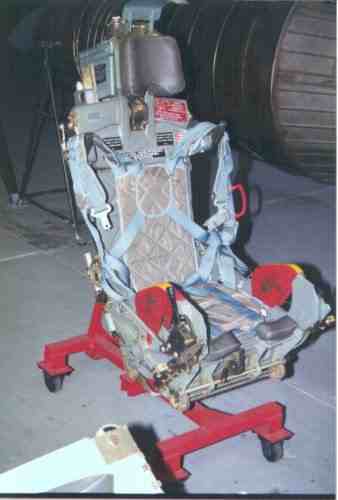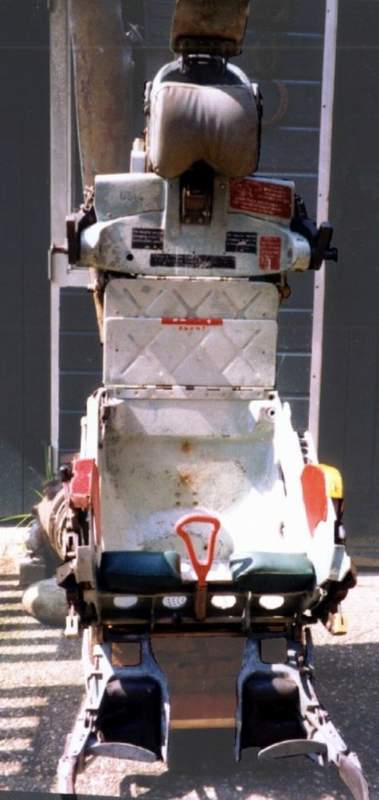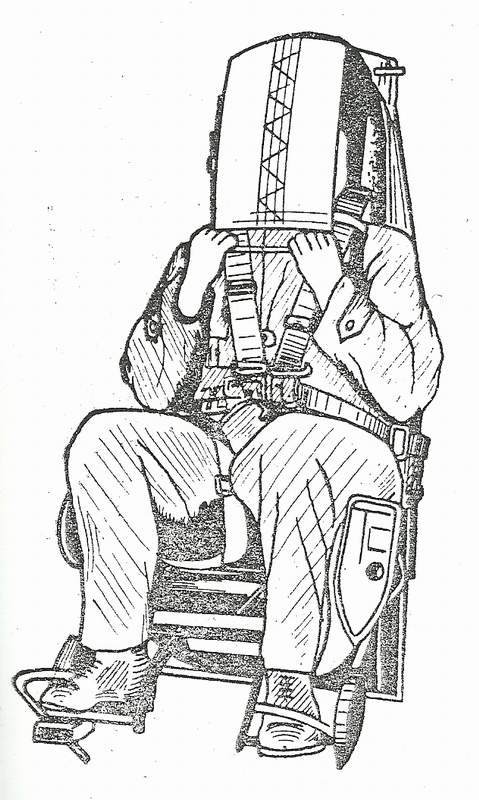
The “SK” ejection system is a particularly original one, because it uses the cockpit canopy to shield the pilot from the airblast during ejection at high speeds. The “seat–canopy” combination was used in the MiG-21F, MiG-21F-13, MiG-21PF, MiG-21FL and MiG-21PFM (Indian). In addition, the seat alone, called “SKU” (slightly modified), was used in the first MiG-21U and MiG-21US two-seat trainers (nicknamed “Szparka” in Poland).
The system is designed so that the pilot can eject either with or without the canopy. In the first case, safe abandonment of the aircraft is ensured up to 1100 km/h, and in the second up to 700 km/h. For the personal parachute canopy to inflate fully, the minimum ejection altitude is limited to 110 m. In the MiG-21U, ejection always takes place after the canopy has been jettisoned. The SK seat is a rigid metal structure consisting of a load-bearing frame and a number of subassemblies that ensure the correct operation of the whole system. These include the systems for:
– adjusting the position of the seat bucket, with an MU-100AP electric actuator
– tightening the harness straps connecting the pilot to the seat (215R pyrotechnic actuator)
– controlling the firing of the TSM-2500-38 ejection gun
– stabilising the seat during free fall (215P pyrotechnic actuator and stabilising parachute)
– catching and locking the pilot’s legs (cable-operated)
– coupling the seat to the cockpit canopy
– opening the pilot’s harness locks and the leg restraints and separating the canopy from the seat (AD-3U automatic release and 215F pyrotechnic actuator)
– automatically opening the S-3 personal parachute with a KAP-3 automatic device
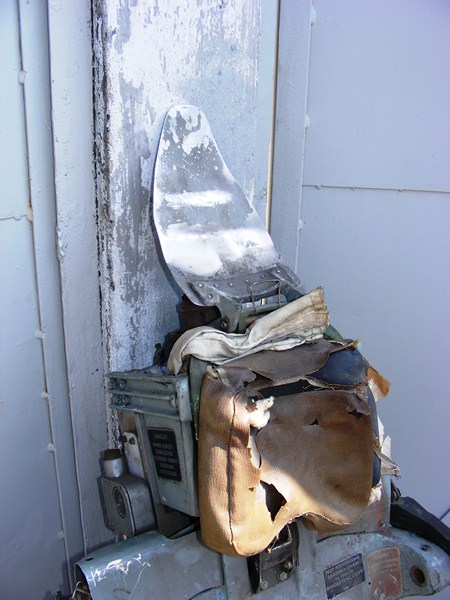
The seat bucket is cast from Elektron and holds the personal parachute with the KP-27M parachute oxygen apparatus from the KKO-3 set. The seat is mounted in the fuselage by three pairs of guide rollers working with its guide rails. Vertically, the seat is held in place by the TSM-2500-38 ejection gun. At the back, at the height of the pilot’s head and shoulders, the seat is protected by an armour plate. On the left side of the seat bucket there is an ORK-2 multi-connector, which connects the pilot to the aircraft systems.
Having decided to eject, the pilot presses one or both levers on the armrests, which causes the 215R pyrotechnic actuator to pull the pilot’s body back into the seat. Next, the TSM-2500-38 ejection gun fires and the seat with the pilot starts to rise. The upper pins of the seat then engage the rear locks of the canopy, which starts to move together with the seat, shielding the pilot from the airblast. The front of the canopy is still connected to the fuselage by a delay lock. This prevents the airflow from lifting it upwards. When the seat has moved 30-50 mm along the rollers, the stabilisation system comes into action: the 215P pyrotechnic actuator knocks out a small cover in the canopy and extends a telescopic boom with the stabilising parachute. The parachute canopy inflates even before the seat has completely left the guide rollers. Further movement of the seat opens the side coupling brackets and locks the pilot’s legs in the correct position. Separation of the ORK-2 multi-connector switches the pilot’s supply from the aircraft system to the parachute system. When the seat is positioned so that the airflow presses the canopy against it, the delay lock opens and the seat continues to move upwards with the canopy. In this phase the canopy rolls on its rollers along the inner armoured glass of the cockpit, and the pin of the AD-3U automatic release is pulled out. When the canopy slides off the armoured glass, it locks onto the seat brackets, and the seat–pilot–canopy assembly leaves the cockpit, passing freely over the aircraft’s vertical stabiliser. 1.5 s after the AD-3U is triggered, the 215F pyrotechnic actuators fire: the stabilising parachute is released, the canopy separates, and the pilot’s harness and leg restraints open. The pilot separates from the seat together with the personal parachute, which opens automatically on a signal from the KAP-3. If the AD-3U fails, the pilot can free himself from the canopy and seat by pulling a flexible handle on the SK seat bucket (not present on the SKU). When ejecting without the canopy, or from a two-seat aircraft, the canopy must first be jettisoned in the emergency mode and then the ejection lever pressed.
During service, a so-called bracket bridge was introduced at the lower ends of the SK seat guide rails. It improves the conditions for leaving the cockpit during ejection and, in particular, prevents the lower supports of the pilot’s legs from hitting and catching on the ejection gun tube. To prevent accidental operation of the seat mechanisms, two sets of safety pins are provided: an operational set, used when the seat is in the cockpit, and a ground set, which secures the seat after it has been removed from the cockpit. The first set includes the pins for:
– the TSM-2500-38 ejection gun
– the 215P pyrotechnic actuator
– the ejection levers
– the emergency canopy jettison lever
– the guards protecting the ejection levers
– the lock holding the 215F pyrotechnic actuators
Before the pilot enters the cockpit, the technician removes them from the seat, and refits them after the flight.
Technical data:
– weight of the seat with pilot and canopy ……………………………………….. approx. 240 kg
– weight of the seat with the inner TSM tube ………………………………. 83 kg
– weight of the pilot in full gear ………………………………. approx. 100 kg
– weight of the canopy …………………………………………………………. 57 kg
– minimum distance between the canopy glazing
and the pilot’s helmet ……………………………………………………………….. 50 mm
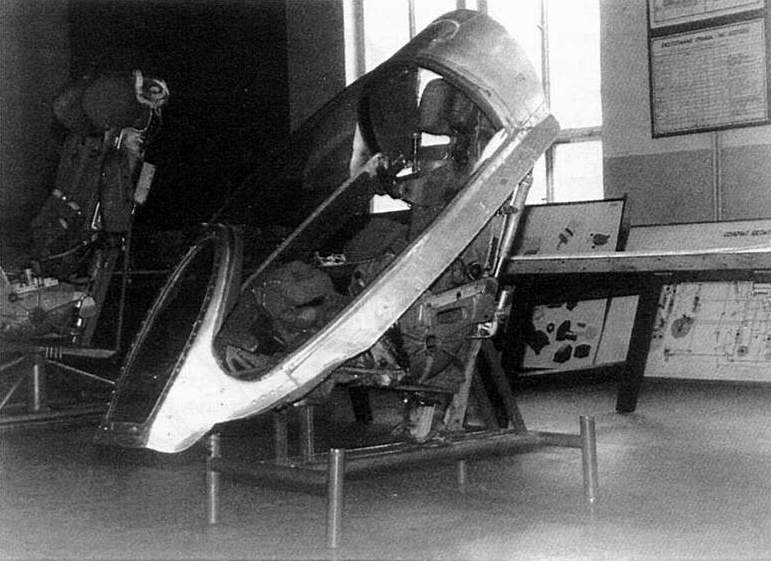
The “seat–canopy” combination was used in the MiG-21F,
MiG-21F-13, MiG-21PF, MiG-21FL and MiG-21PFM aircraft. In addition, the seat alone, called “SKU” (slightly modified), was used in the first two-seat trainers (“Szparka”):
MiG-21U and MiG-21US.