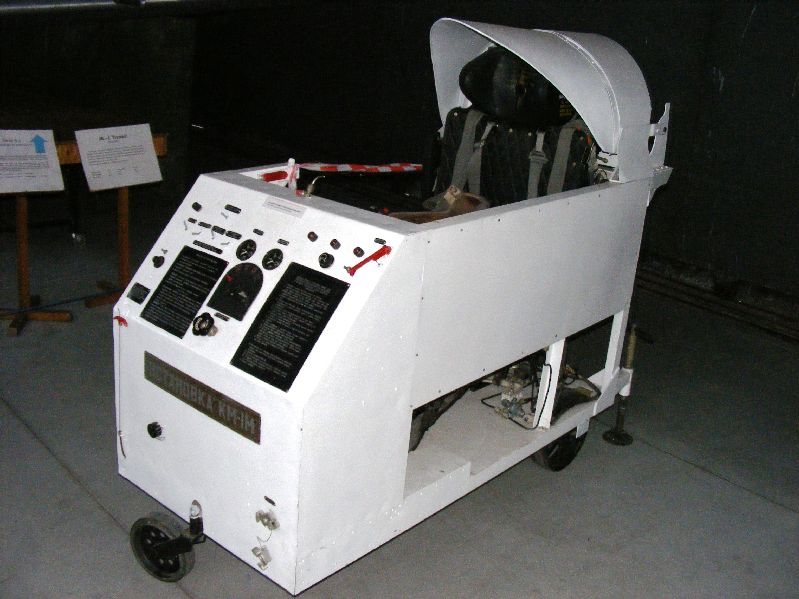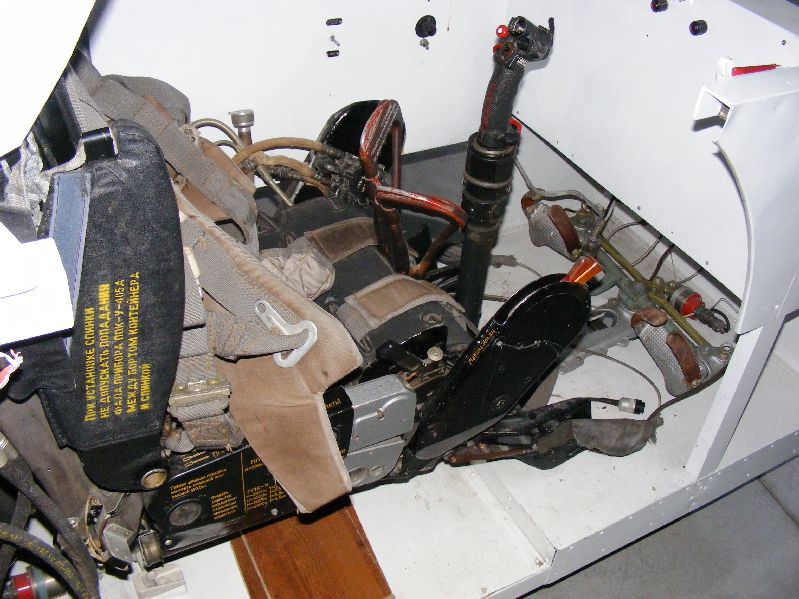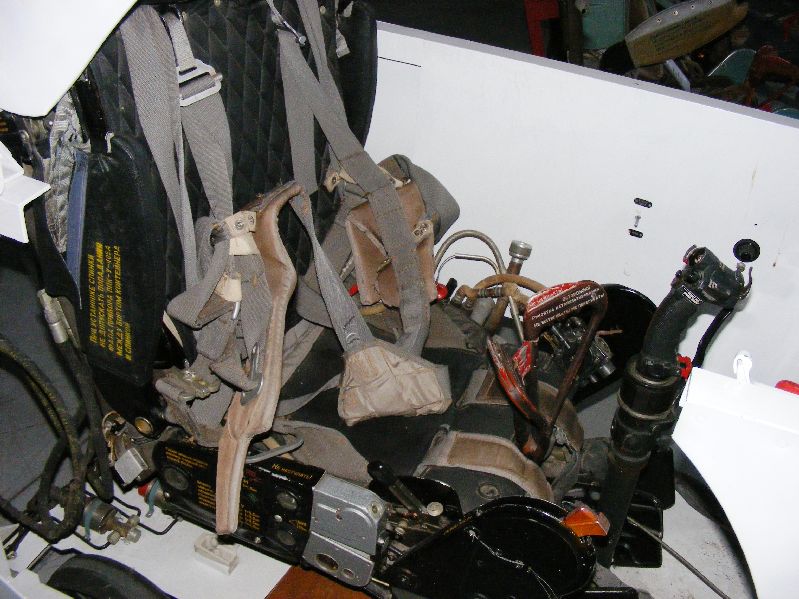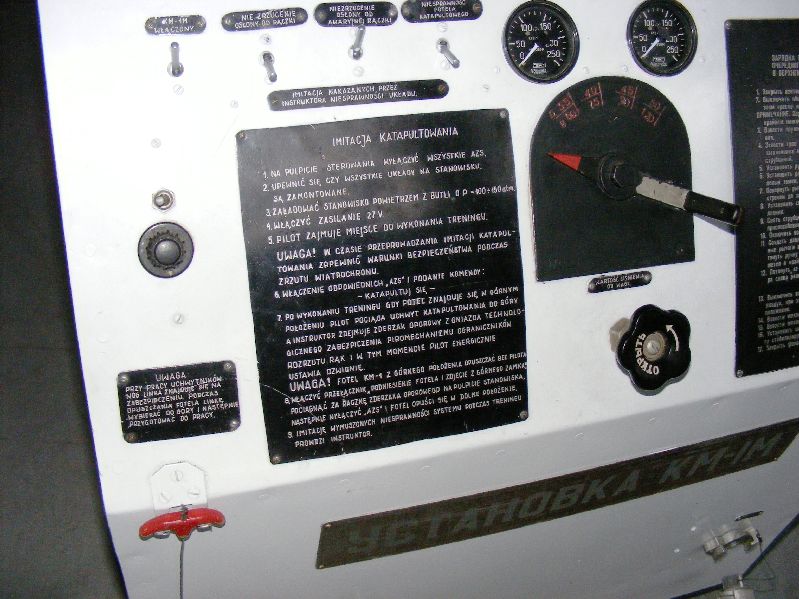
The popular Soviet MiG-21 fighter is still in service in many countries. Over the decades of its service, many changes were made to the airframe, weapons and equipment, including the pilot’s workplace – the ejection seat. In the first production versions and in the MiG-21U combat trainer, the crew had SK seats. Later MiG-21 versions received a new, much more modern seat, the KM-1, which gave crews a better chance of saving their lives in critical situations. Apart from the MiG-21, this seat was also used in other aircraft and, depending on the type, comes in several variants:
– KM-1 – MiG-21PFM (94A, 94R and 94N), MiG-21M, S, SM, RF, SMT and the first production MiG-23 and MiG-25,
– KM-1I (I for instructor) – rear cockpit of the MiG-21US (“68”),
– KM-1U (U for student) – front cockpit of the MiG-21US.
The canopy jettison and ejection control systems of the last two seats share a common interlock, thanks to which a predetermined order of canopy jettison and crew ejection is maintained. Externally, the KM-1I and KM-1U differ from the KM-1 only in minor details.
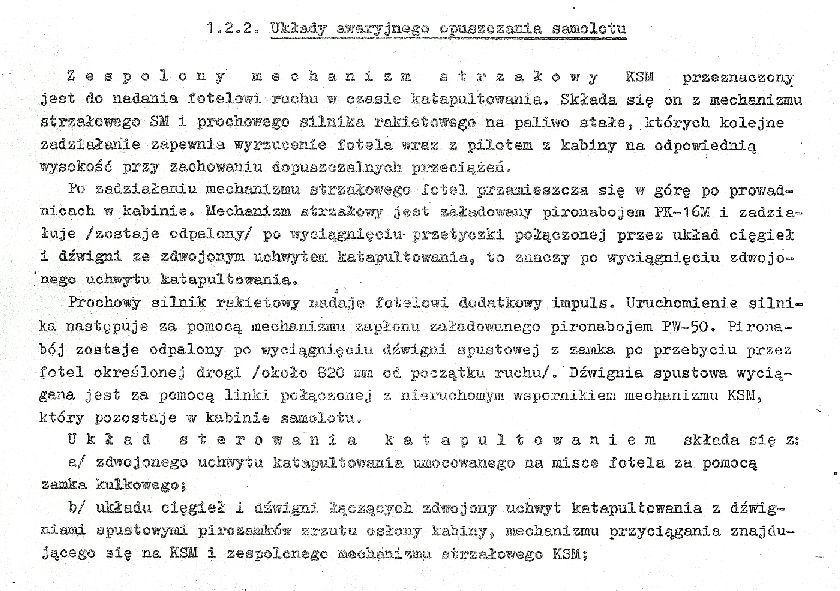
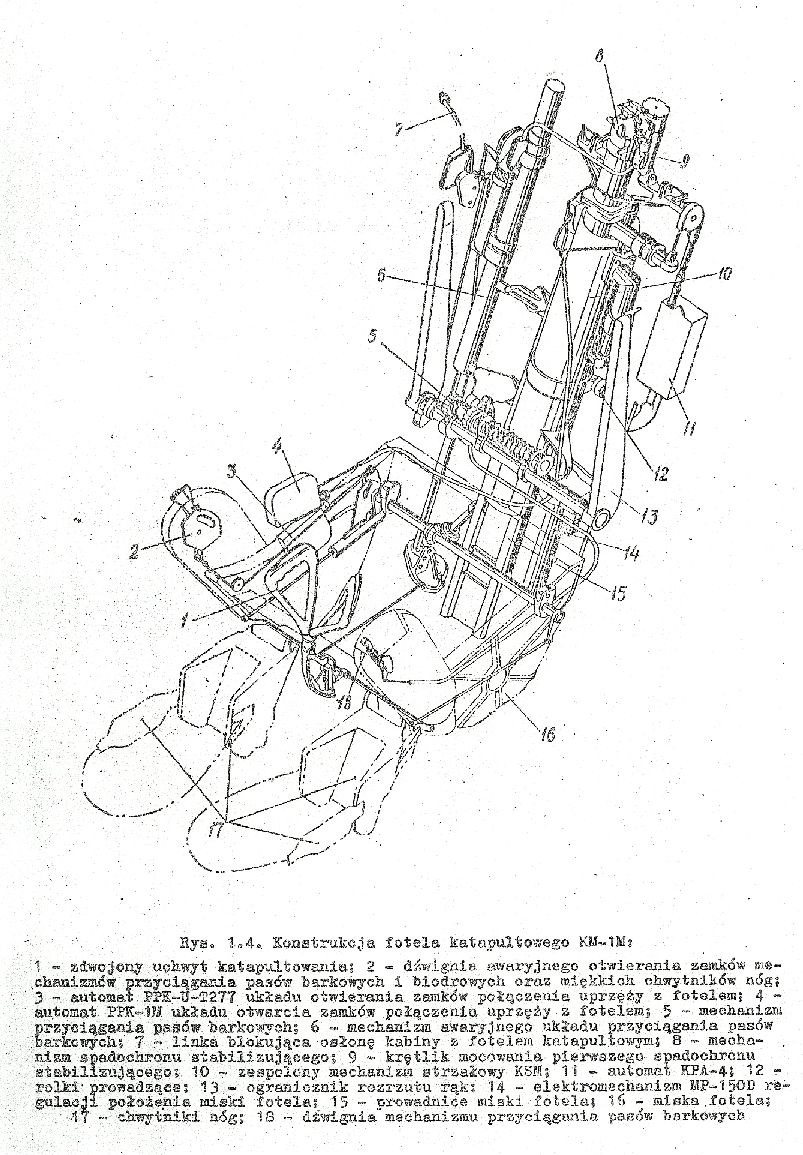
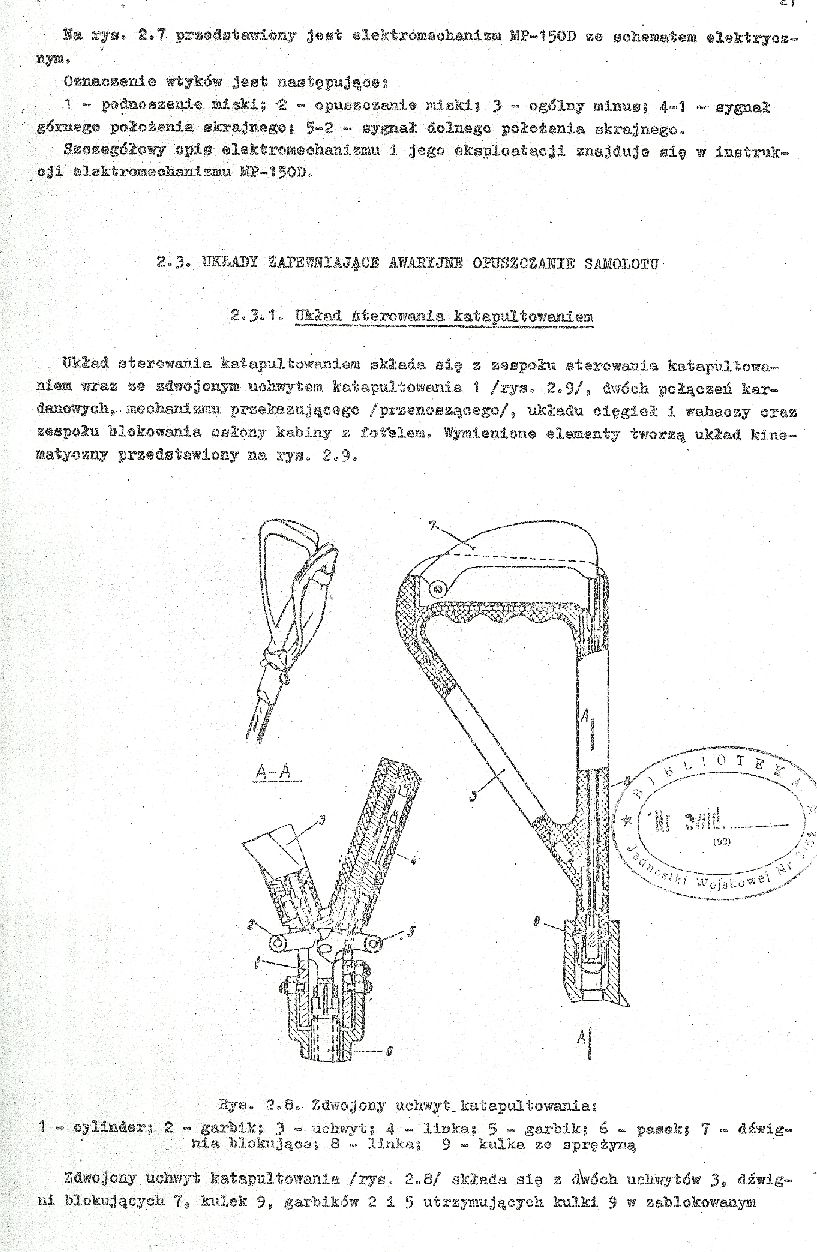
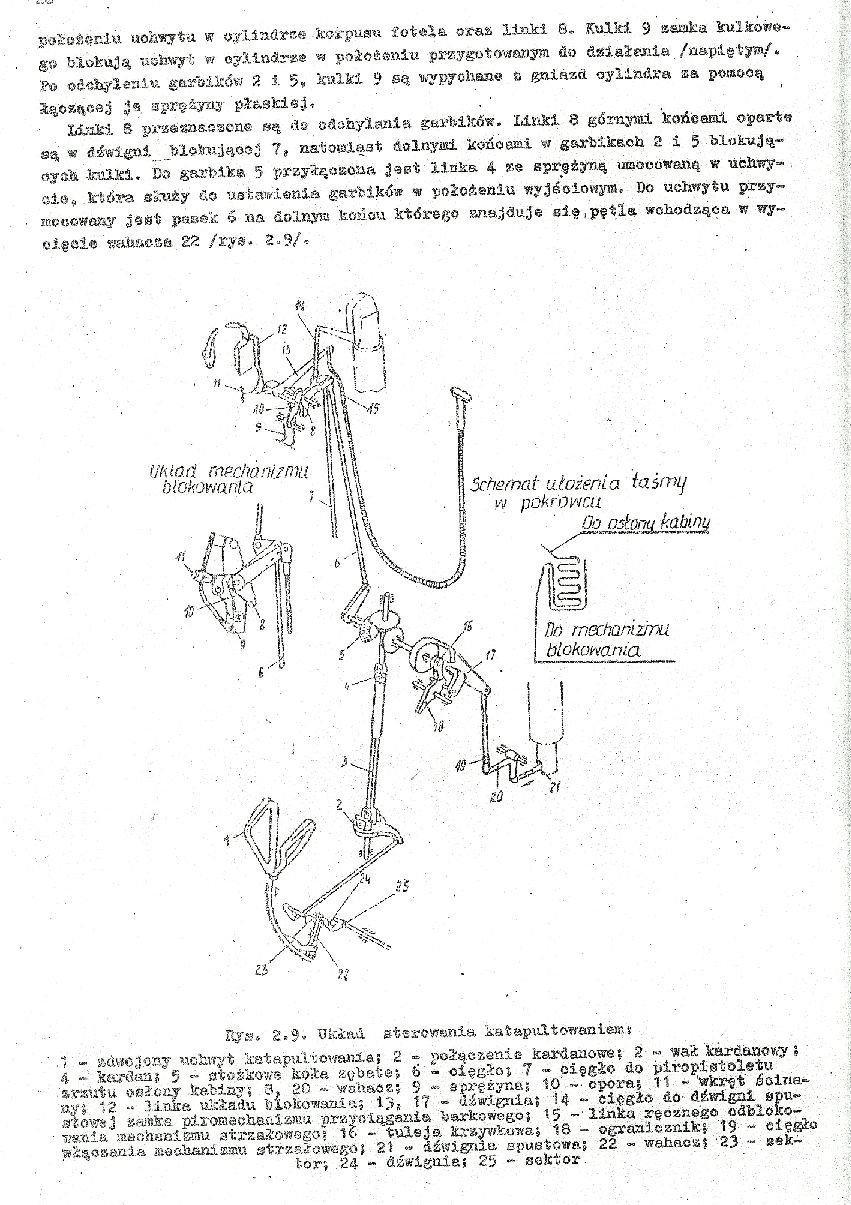
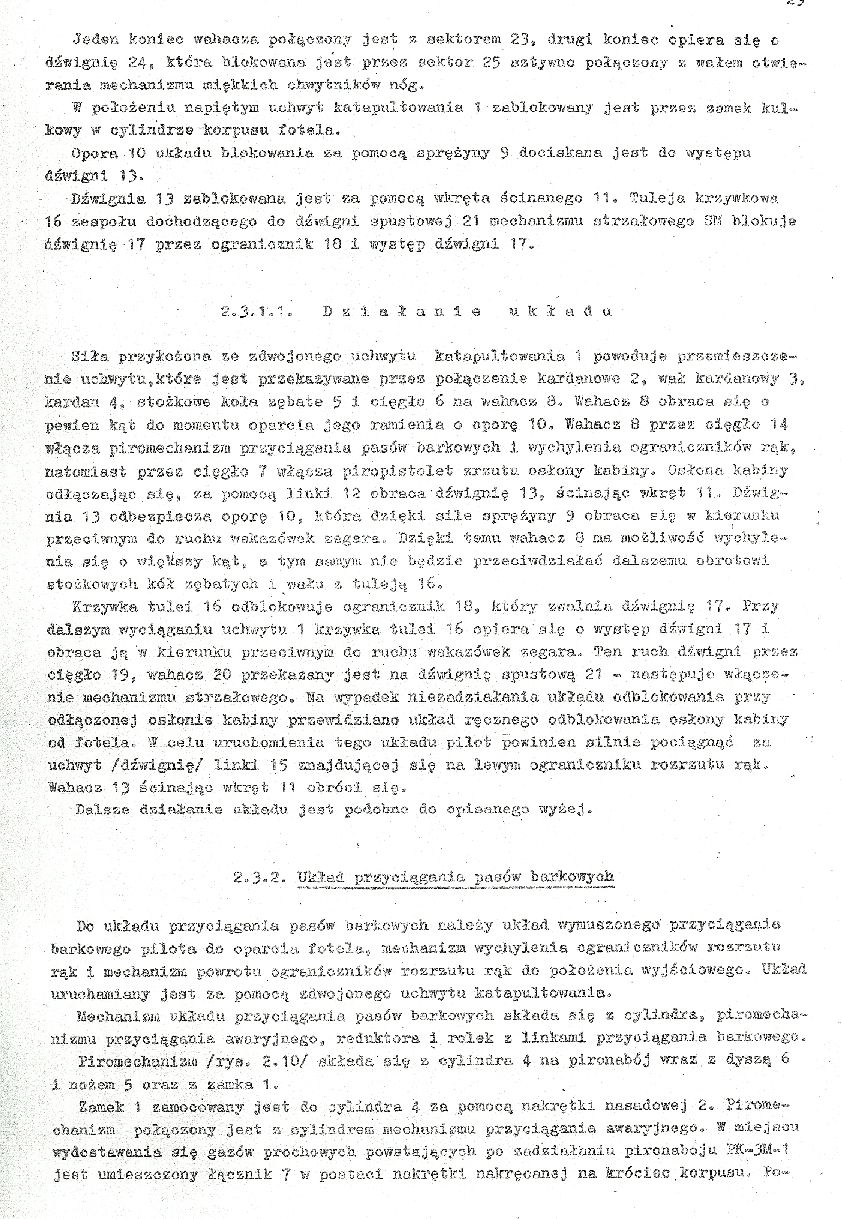
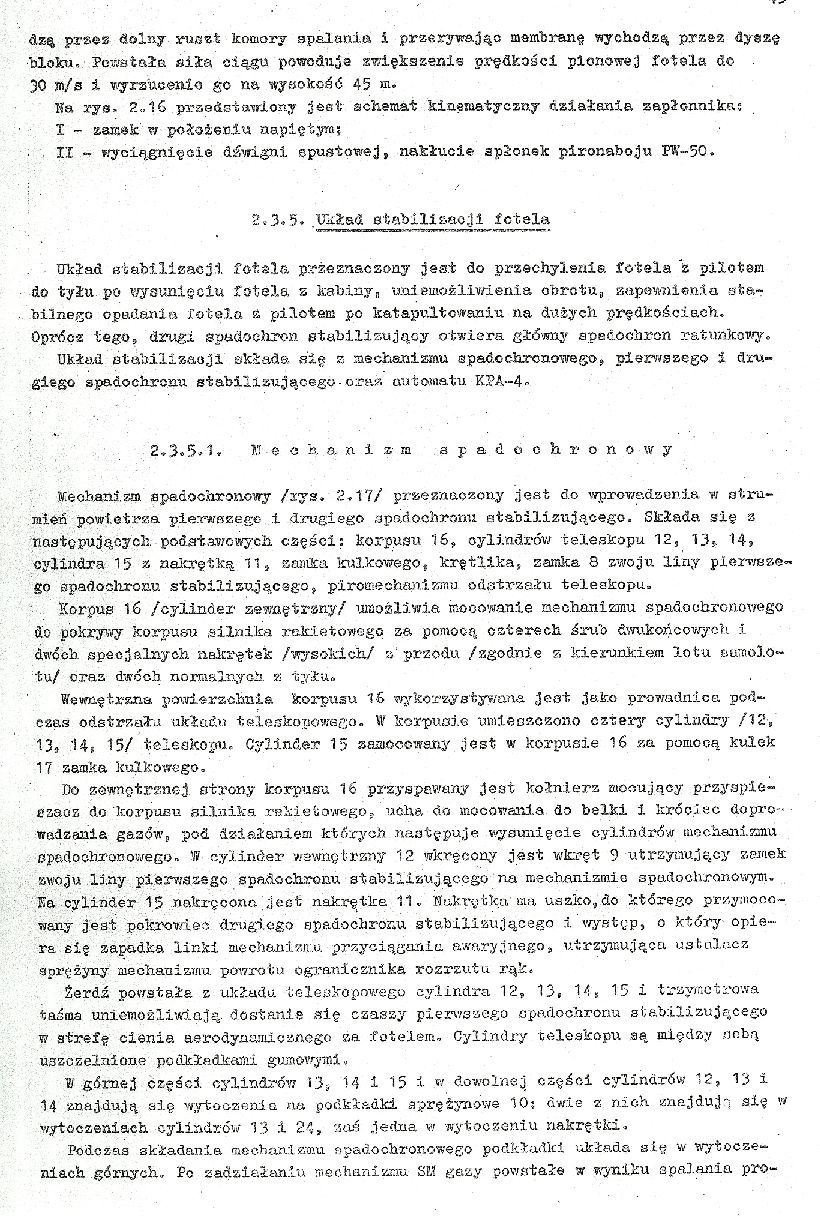
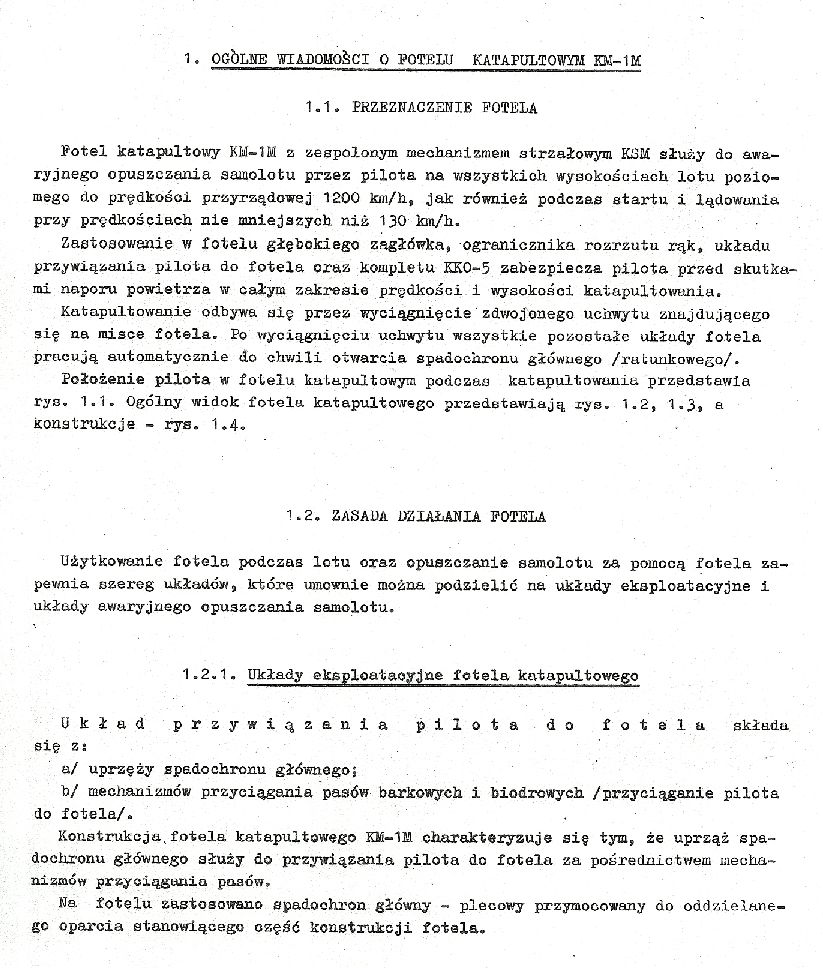
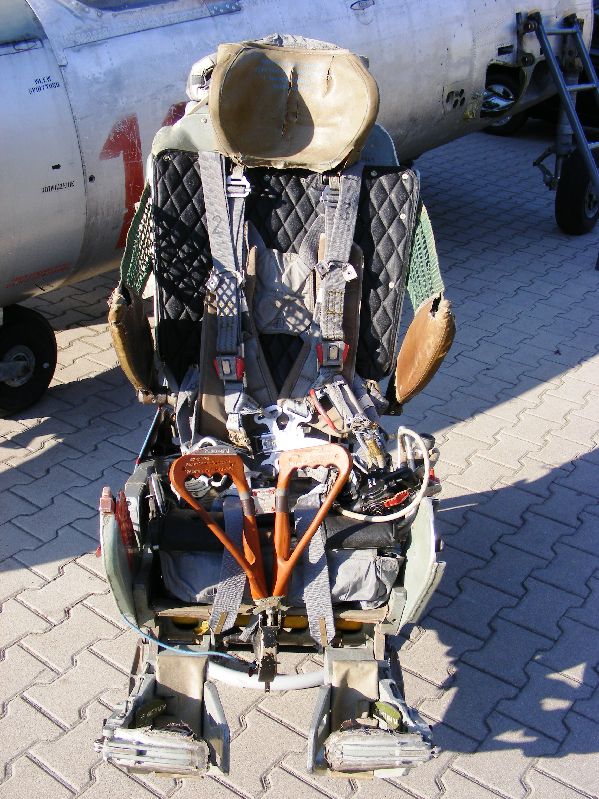
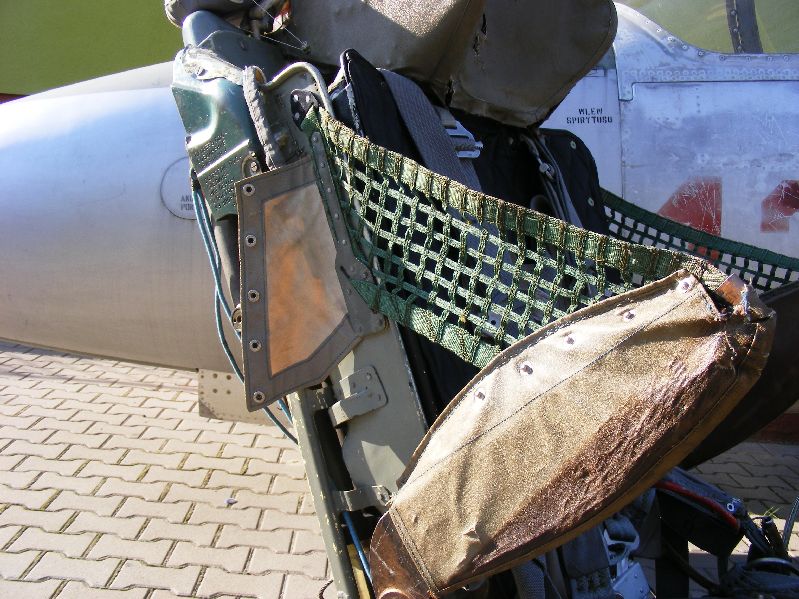
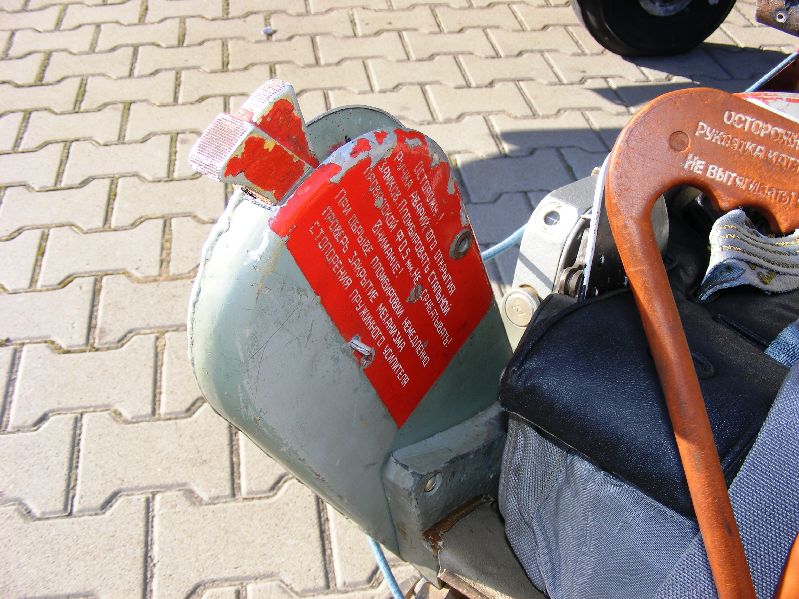
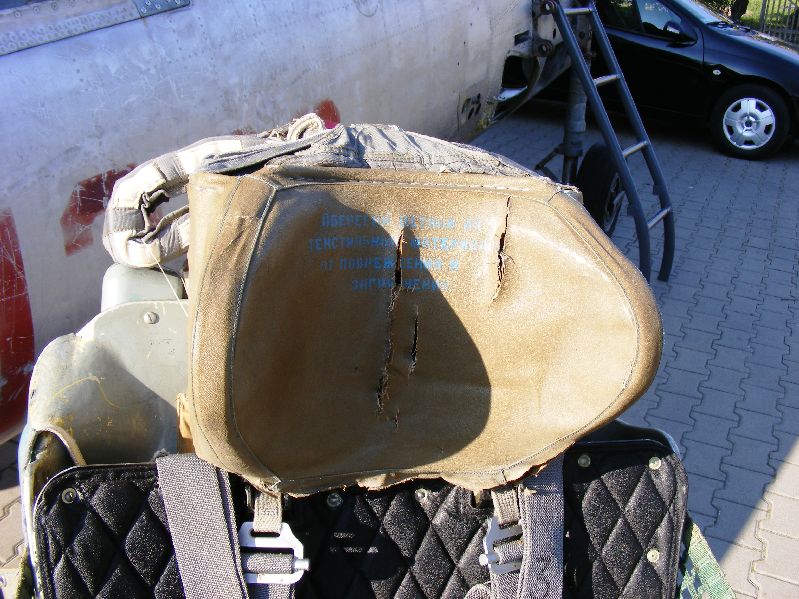
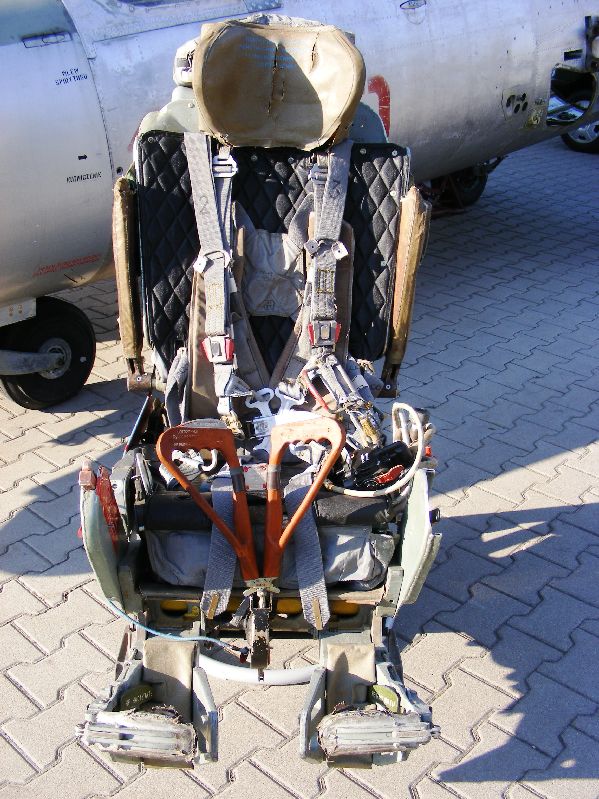
The KM-1 seat with the KSM combined ejection gun allows the pilot to abandon the aircraft in an emergency at all altitudes in level flight at speeds of up to 1200 km/h, and during take-off and landing at speeds of no less than 130 km/h. A deep headrest, arm restraints and a pilot restraint system, together with the KKO-5 oxygen set, protect the pilot from the effects of the airblast throughout the whole range of ejection speeds and altitudes. Ejection is initiated by pulling the double handle on the seat bucket.
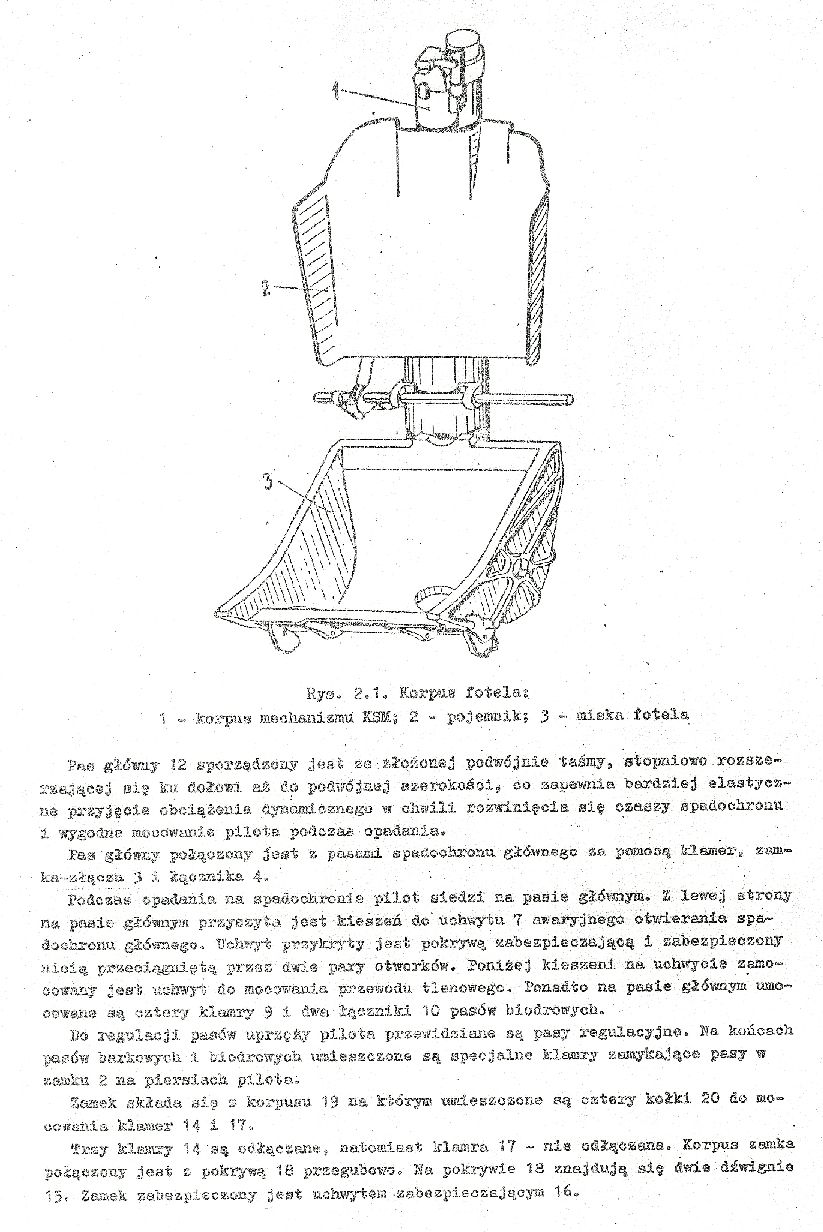
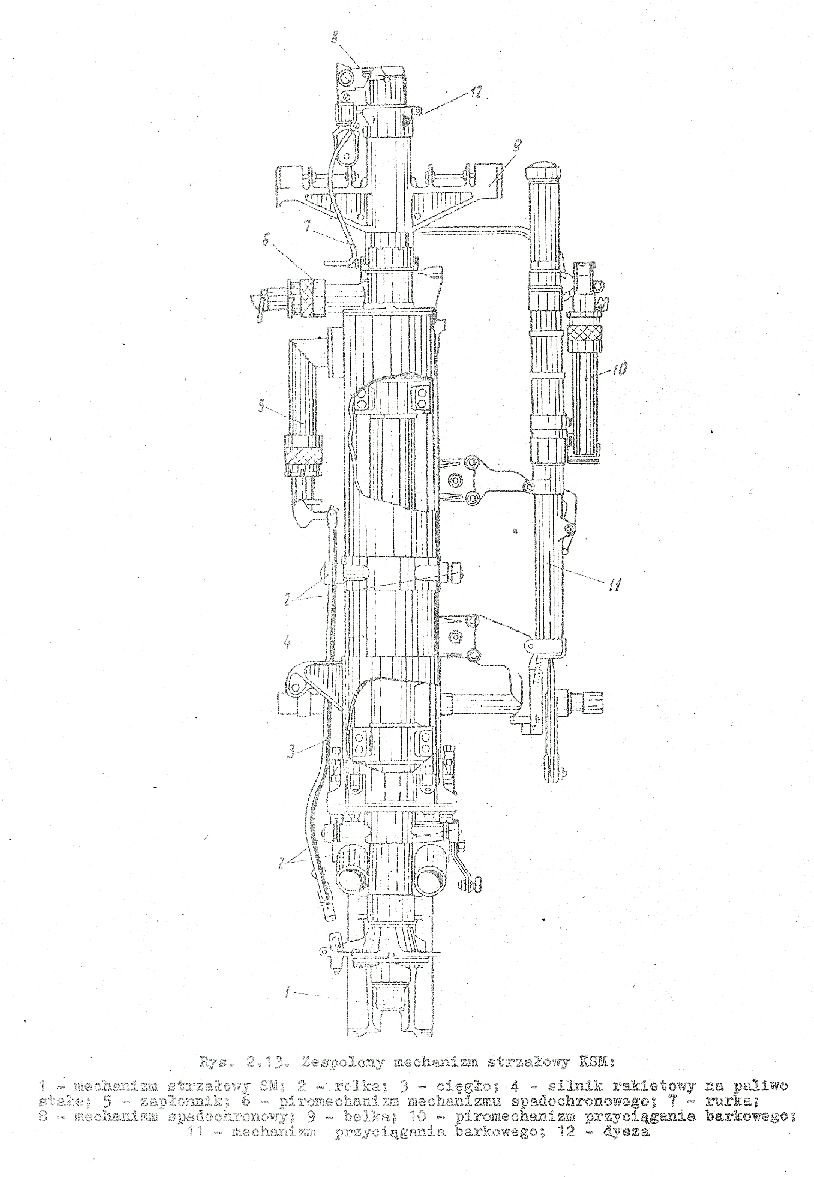
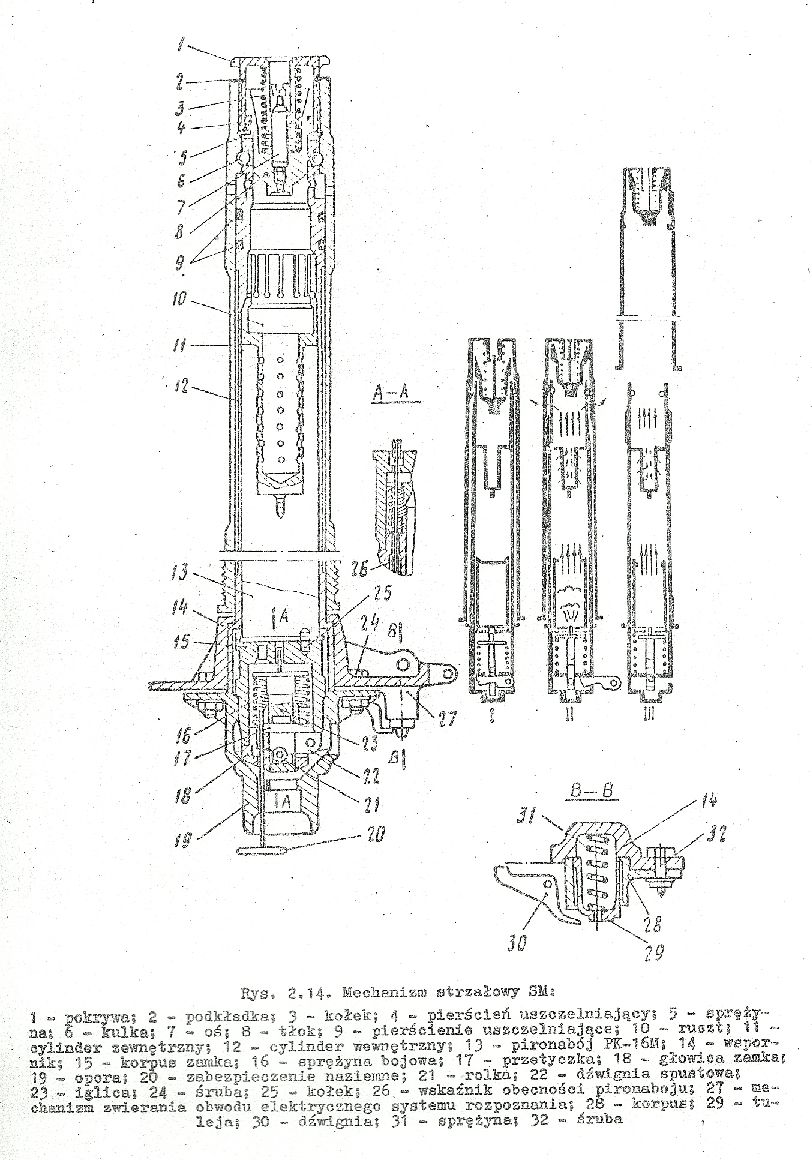
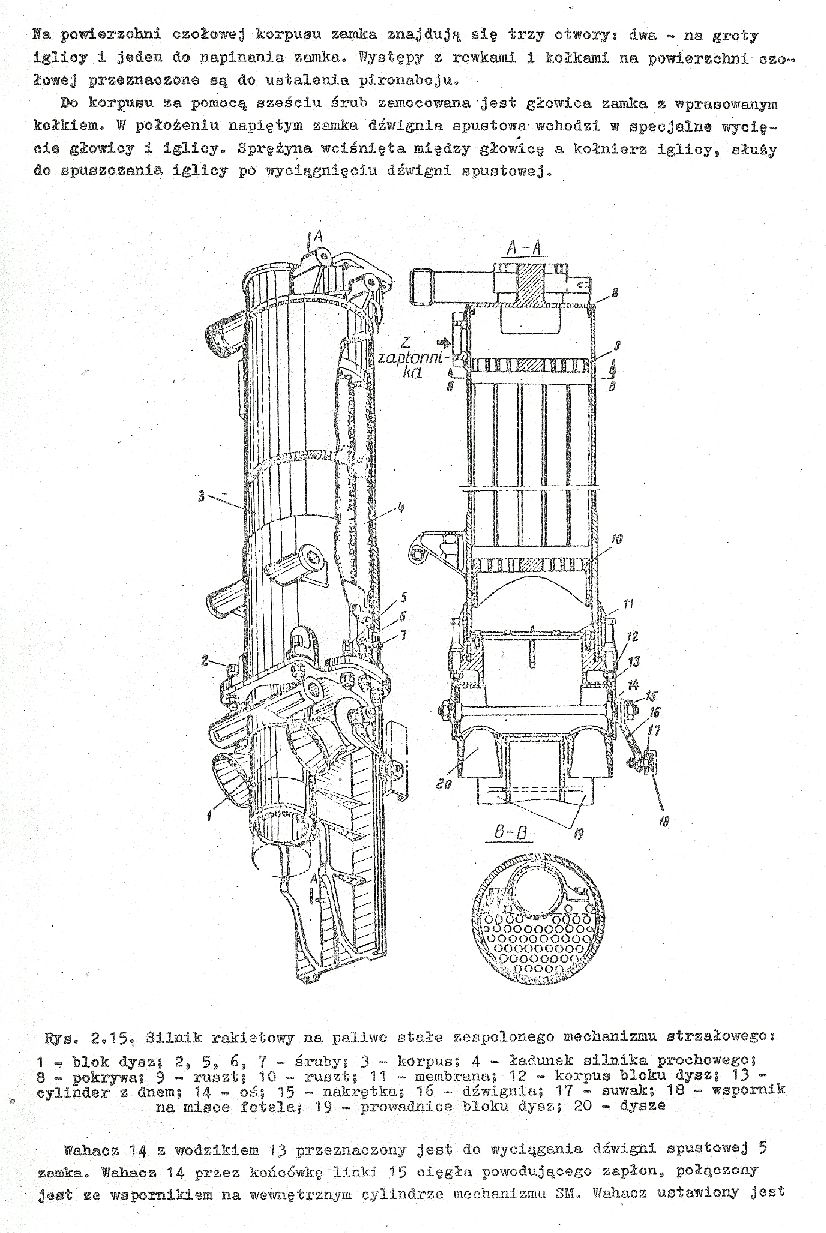
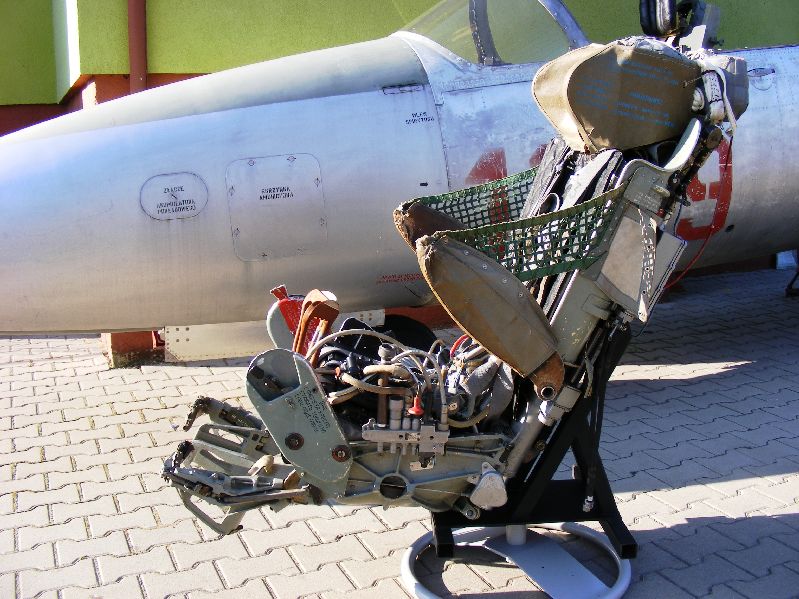
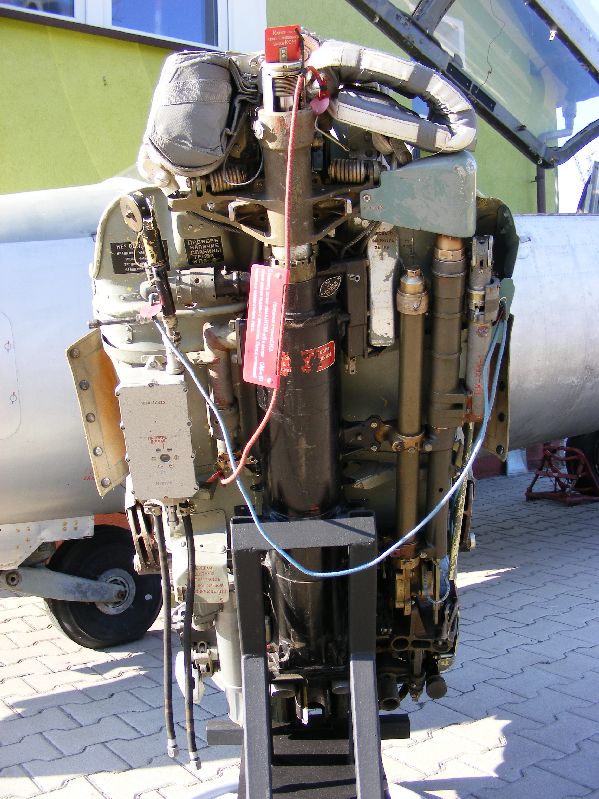
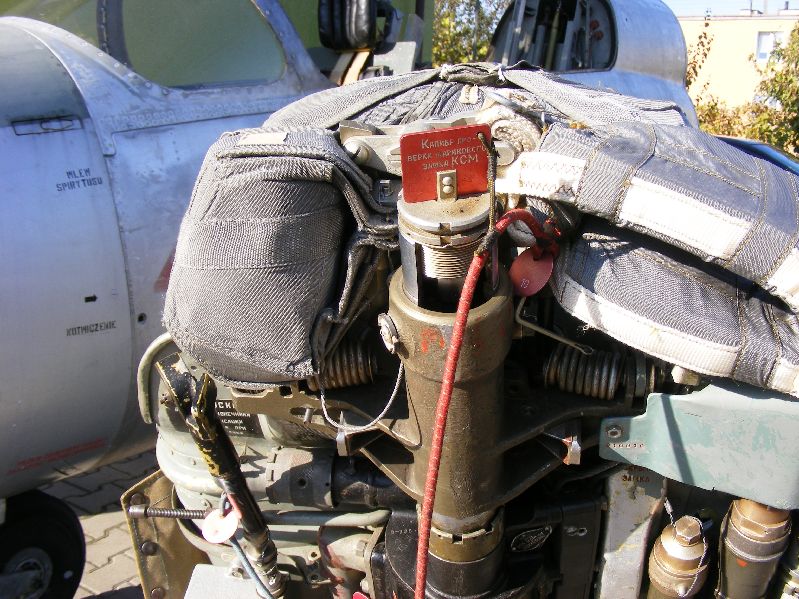
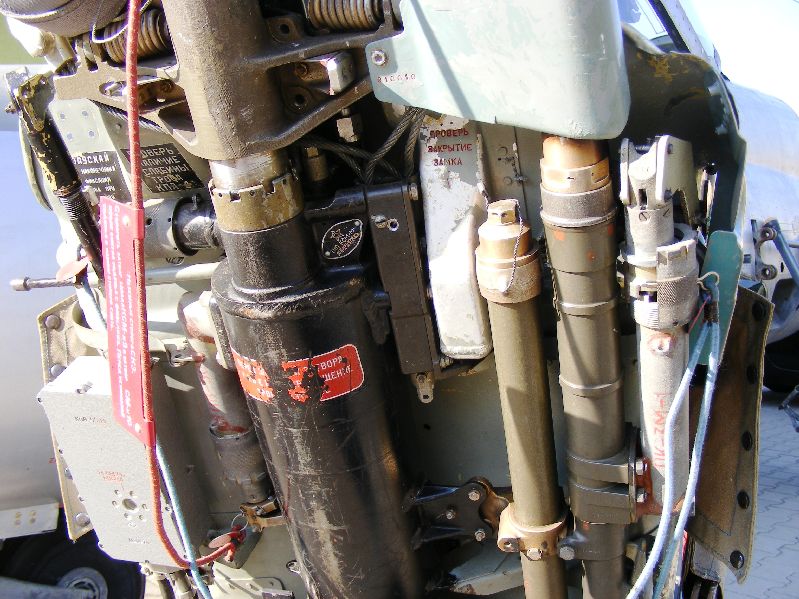
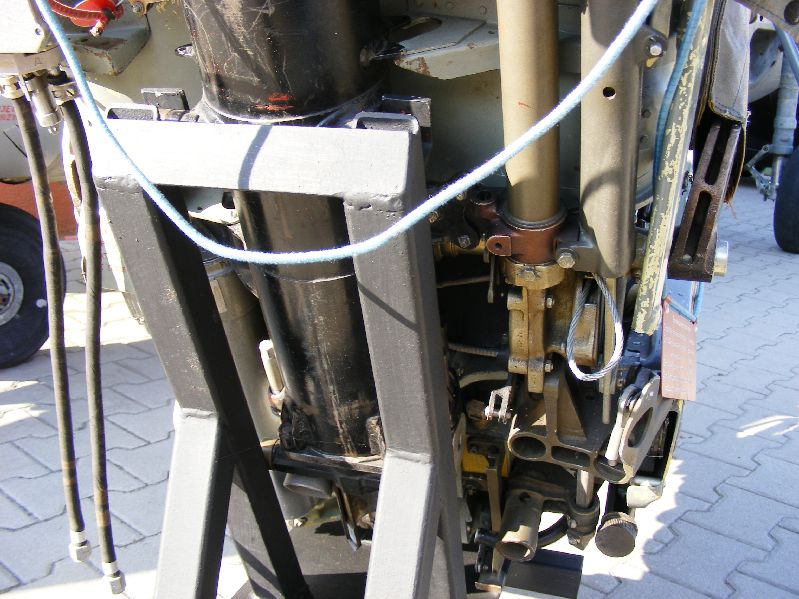
The KSM-M ejection gun, together with the bucket and backrest, forms the load-bearing structure of the seat and is designed to propel the seat–pilot assembly during ejection. The KSM-M consists of the SM ejection gun and a solid-fuel rocket motor, whose successive firing throws the seat and pilot to a sufficient height while keeping the g-loads within permissible limits. The initial speed of the seat after the first stage (SM) fires is 15 m/s. Ignition of the rocket motor (the second stage of the KSM-M) increases the seat’s speed to 30 m/s.
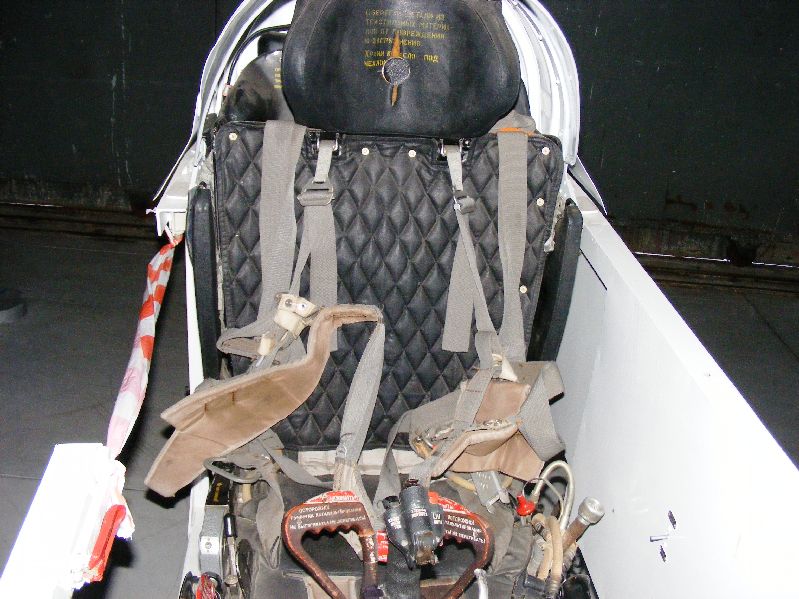
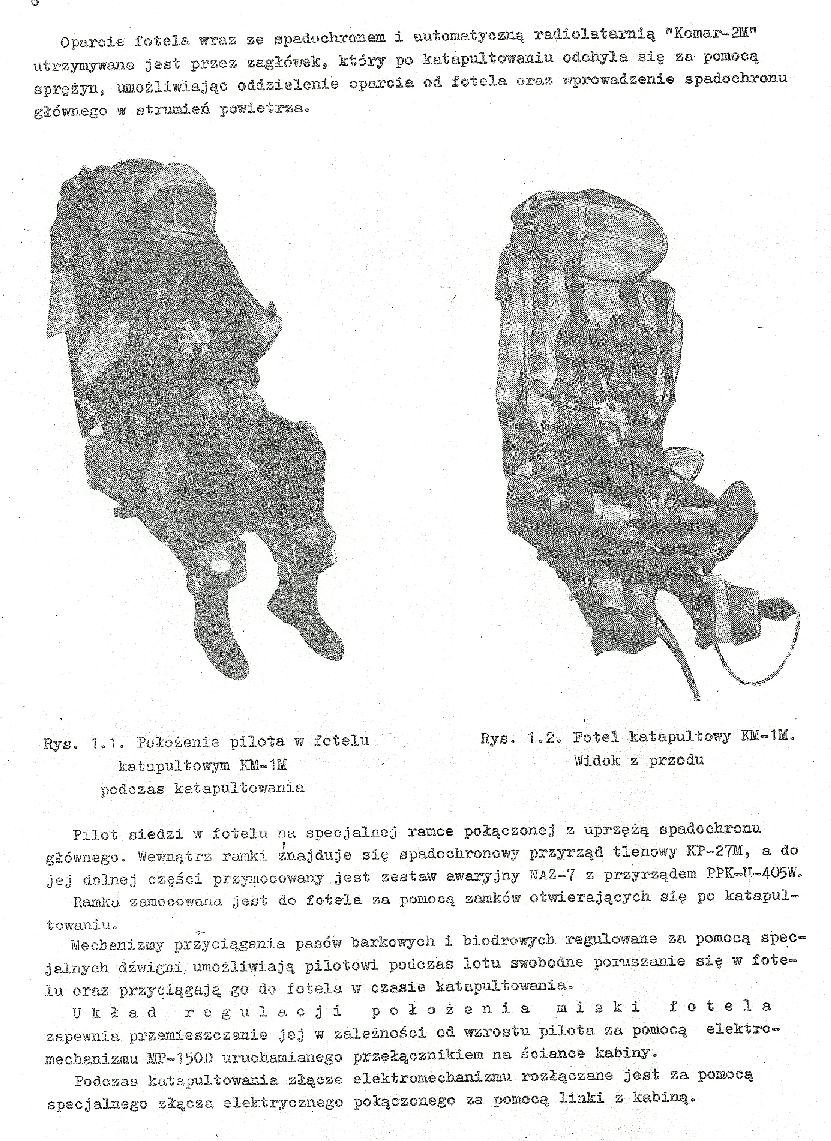
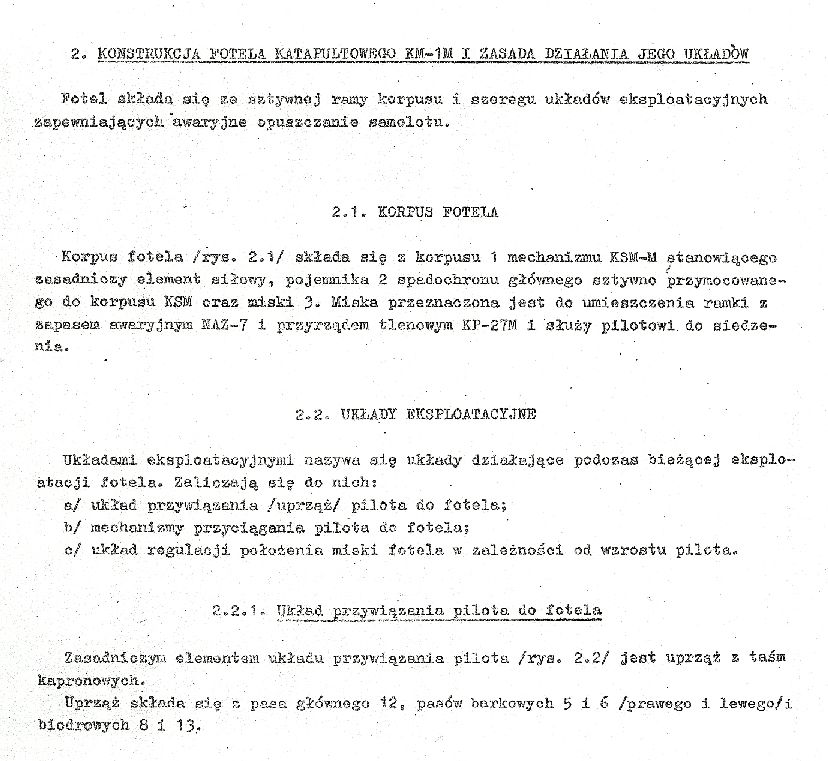
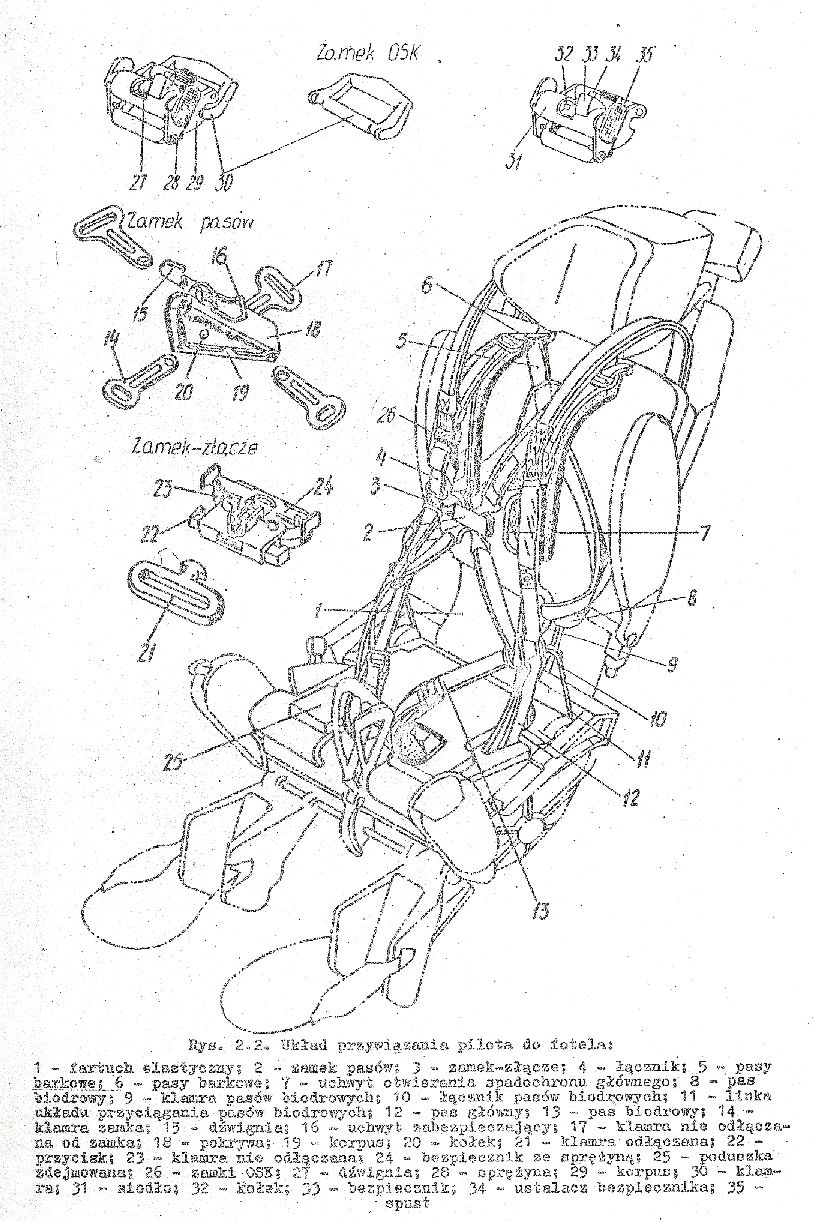
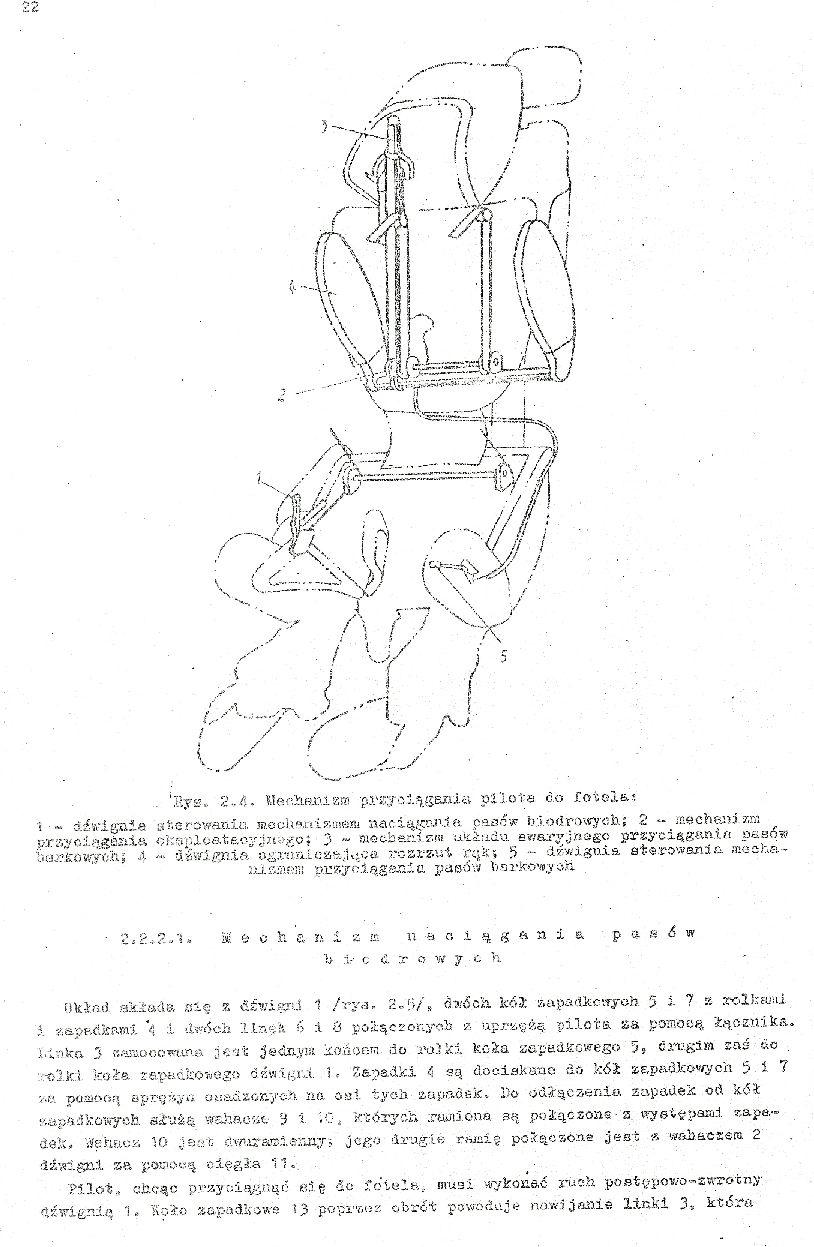
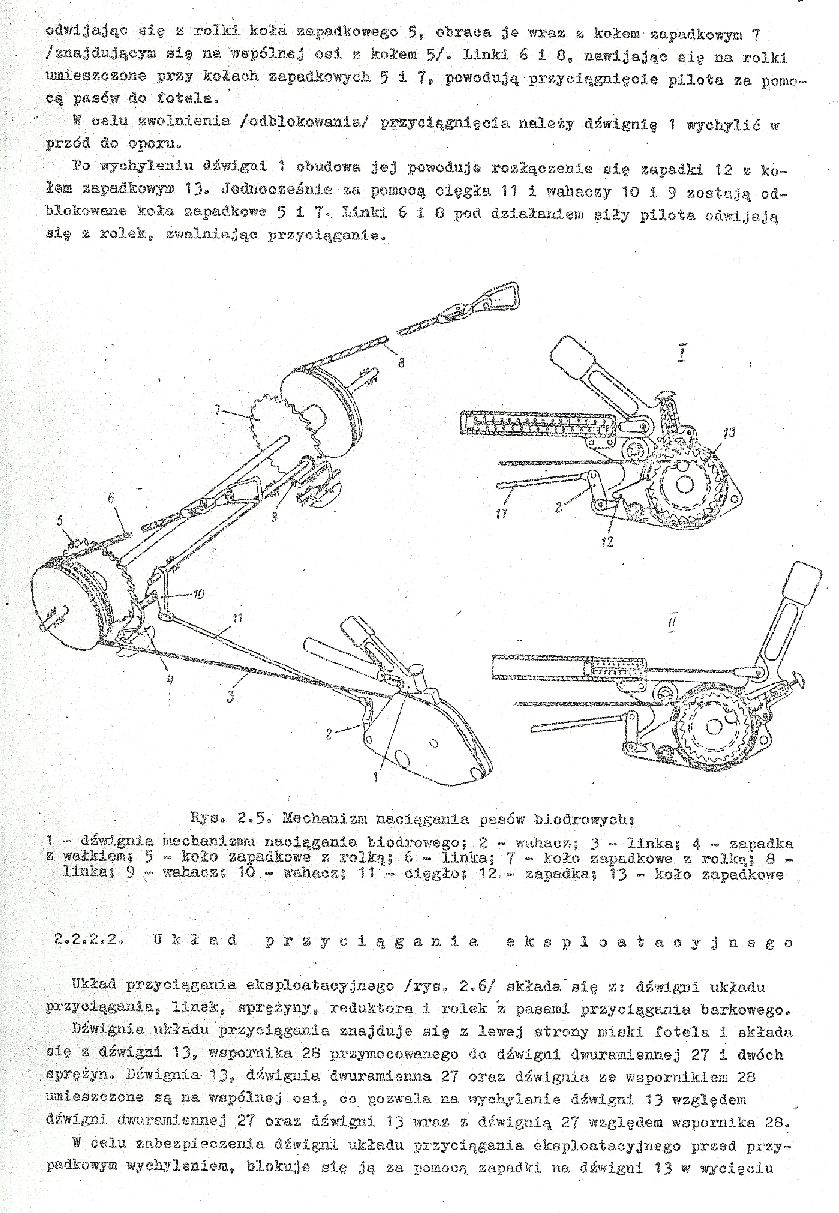
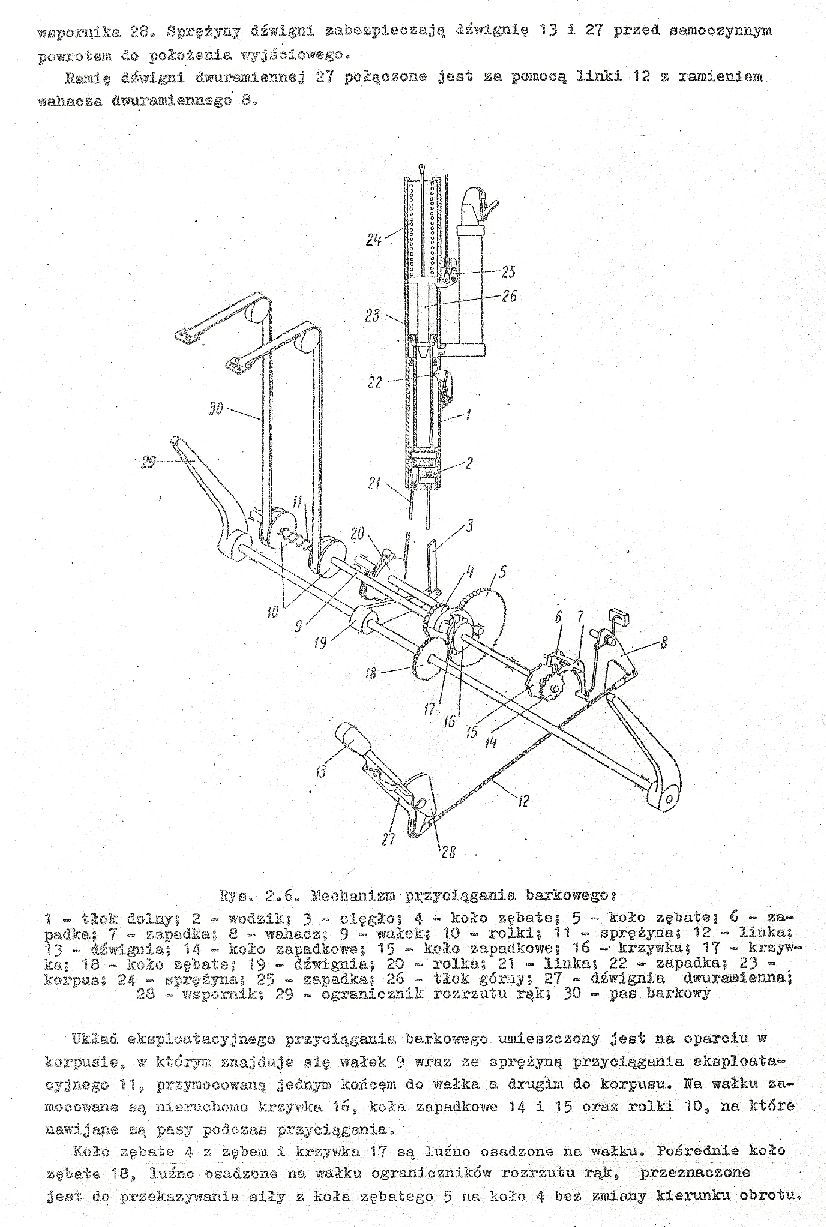
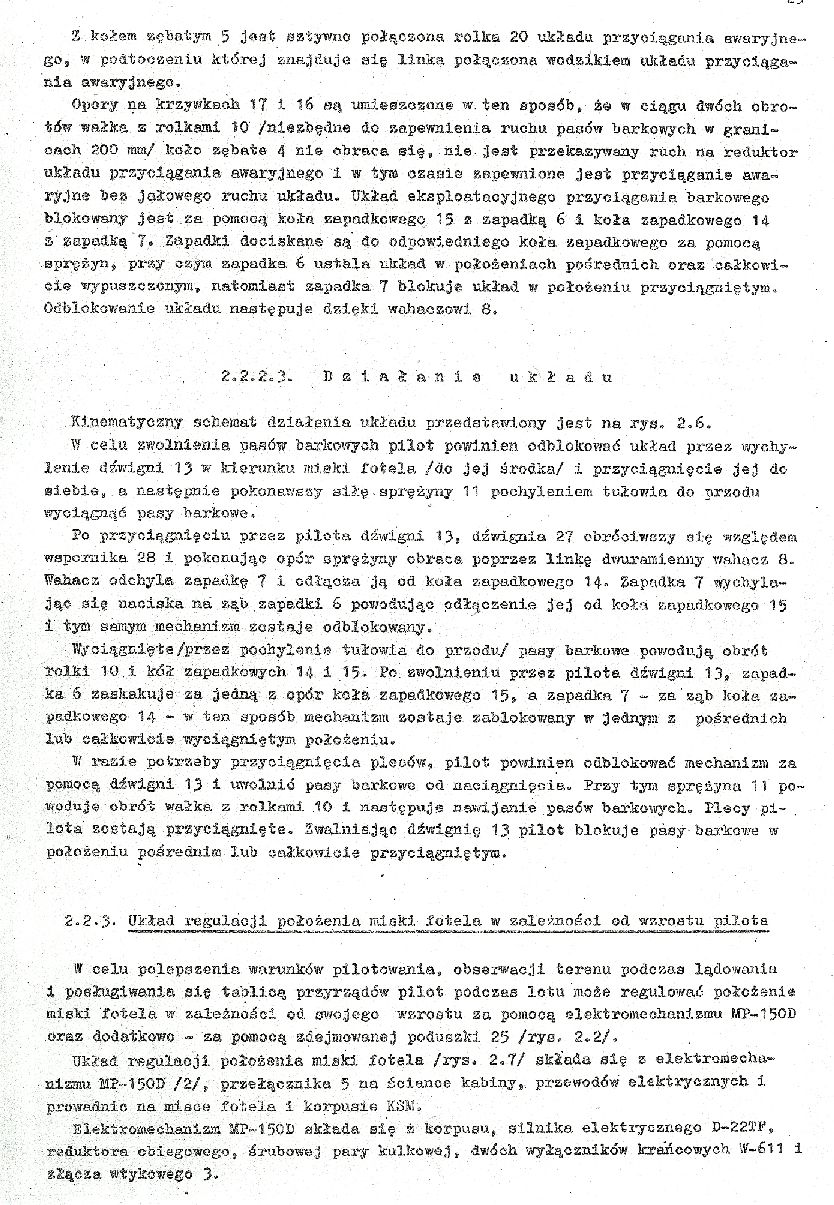
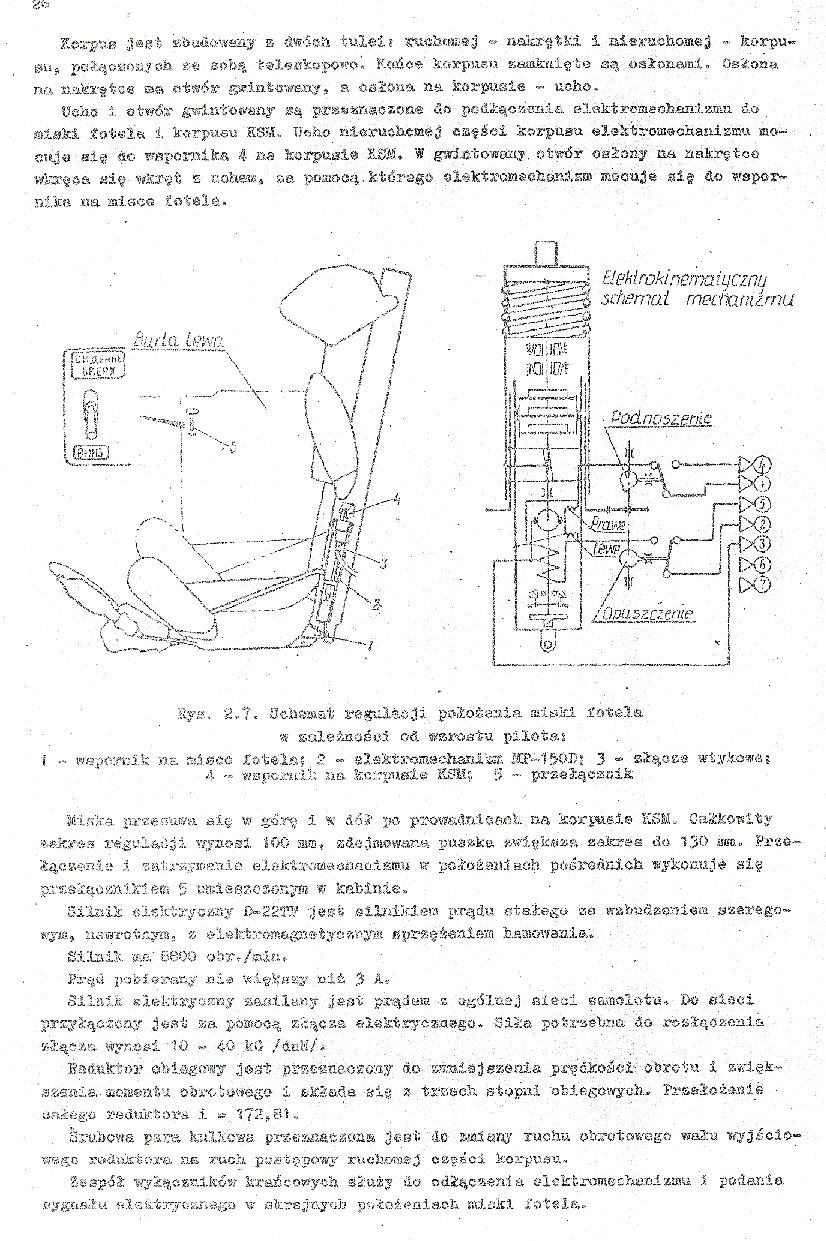
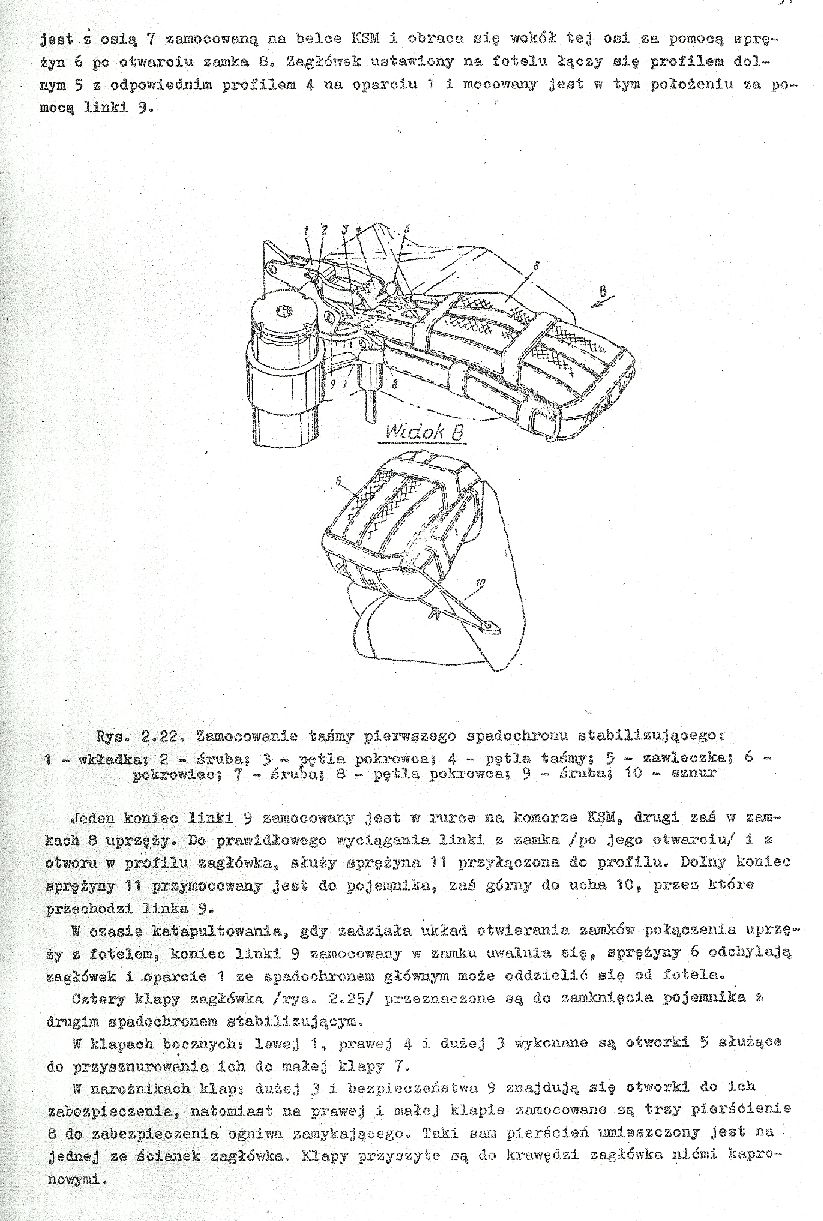
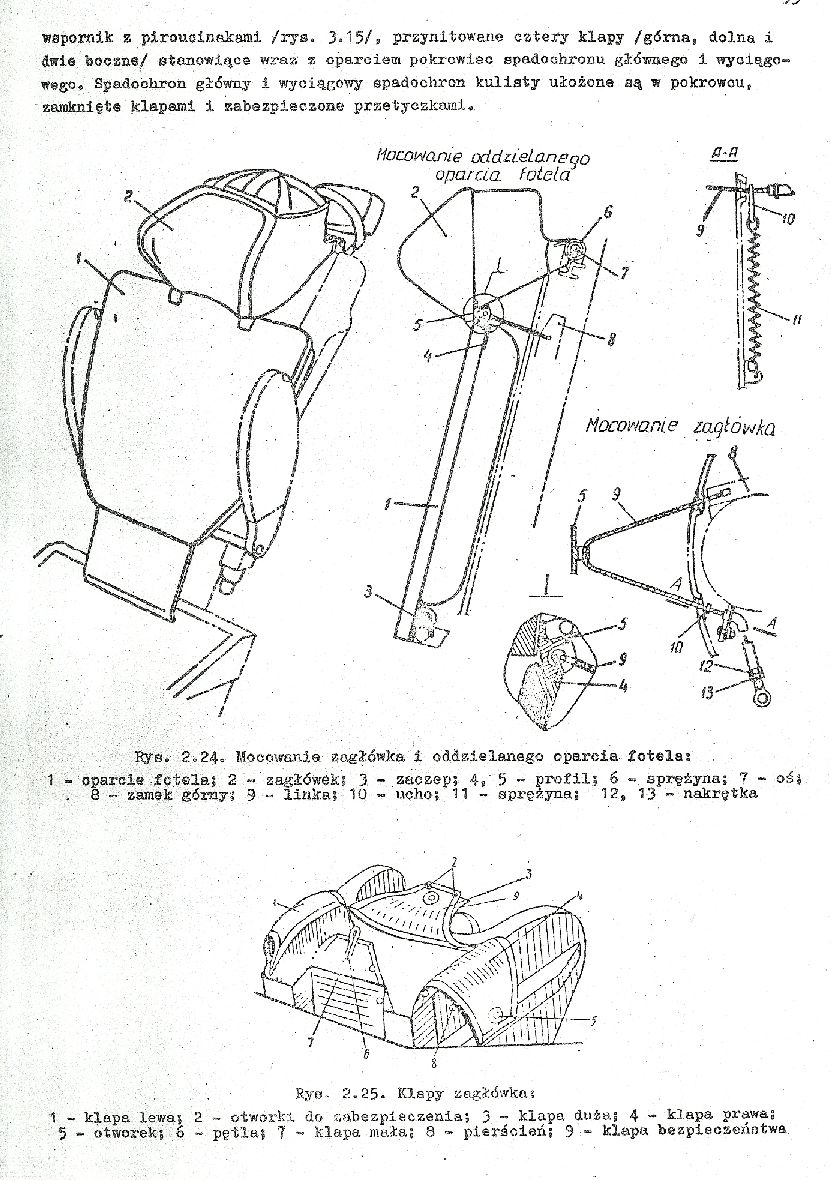
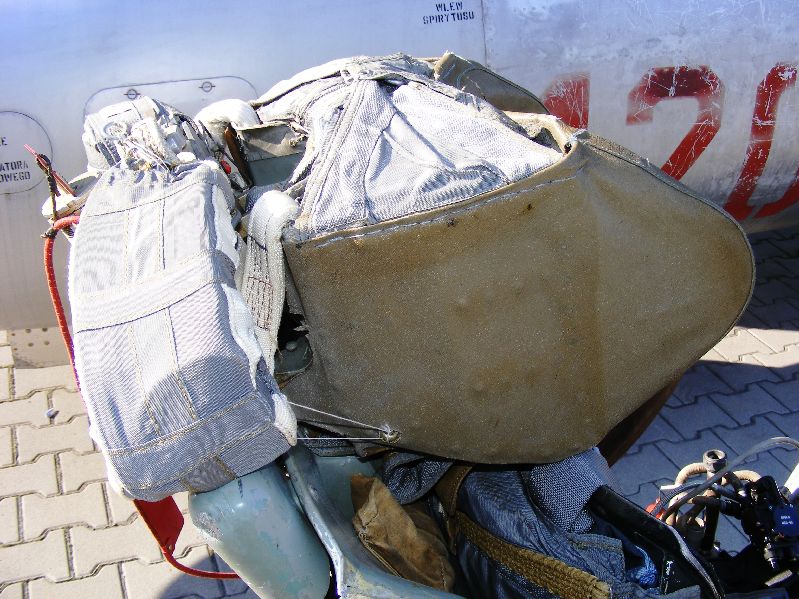
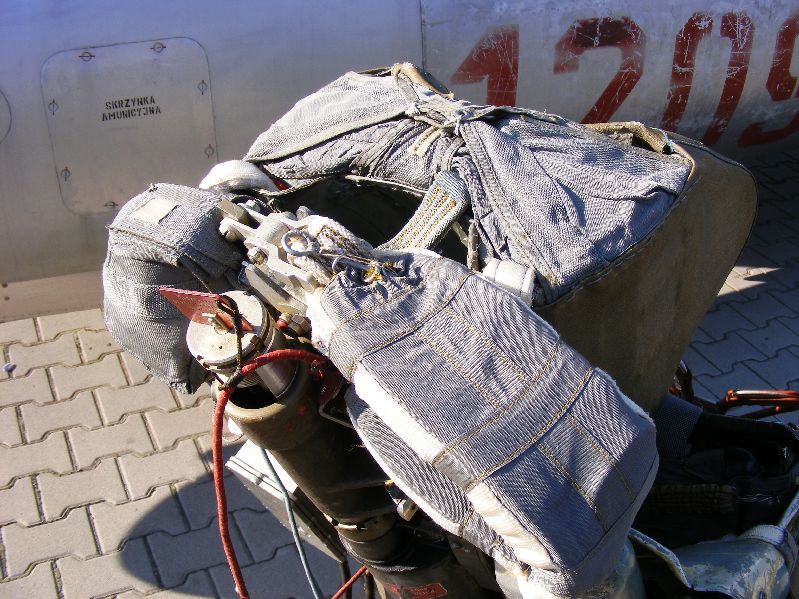
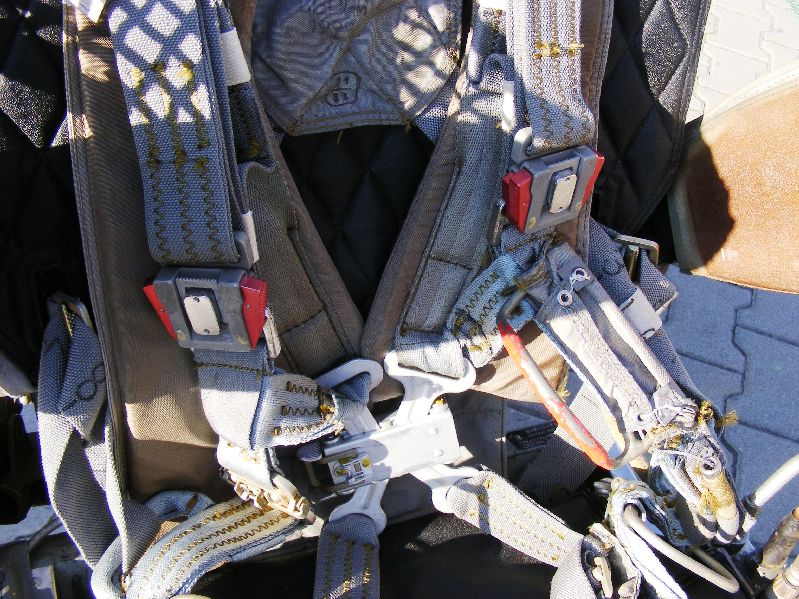
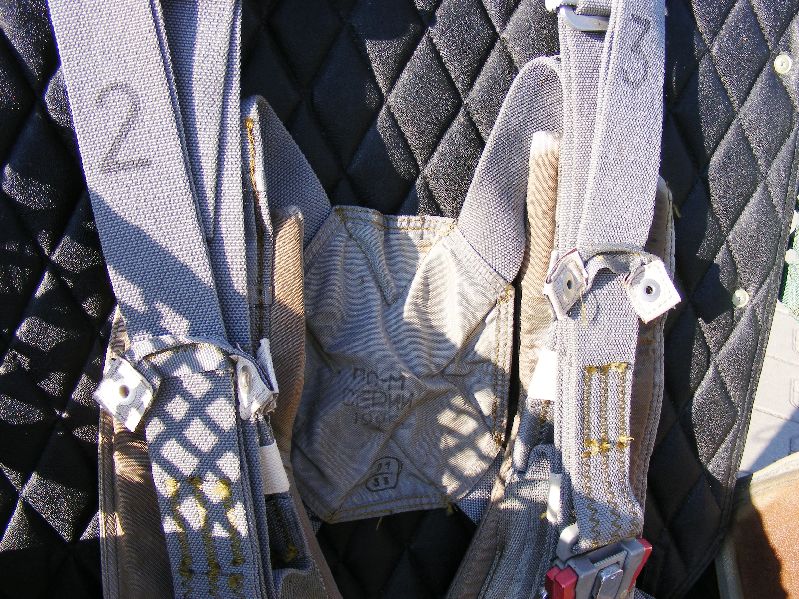
A distinctive feature of the KM-1 design is that the main parachute harness also restrains the pilot in the seat, via the strap-tightening mechanisms. The seat uses a back-type main parachute attached to a detachable backrest, which is held in place by the headrest. After ejection the headrest tilts back and releases the backrest with the parachute. The adjustable seat bucket holds a frame with survival equipment and can slide along the ejection gun guides over a range of 100 mm.
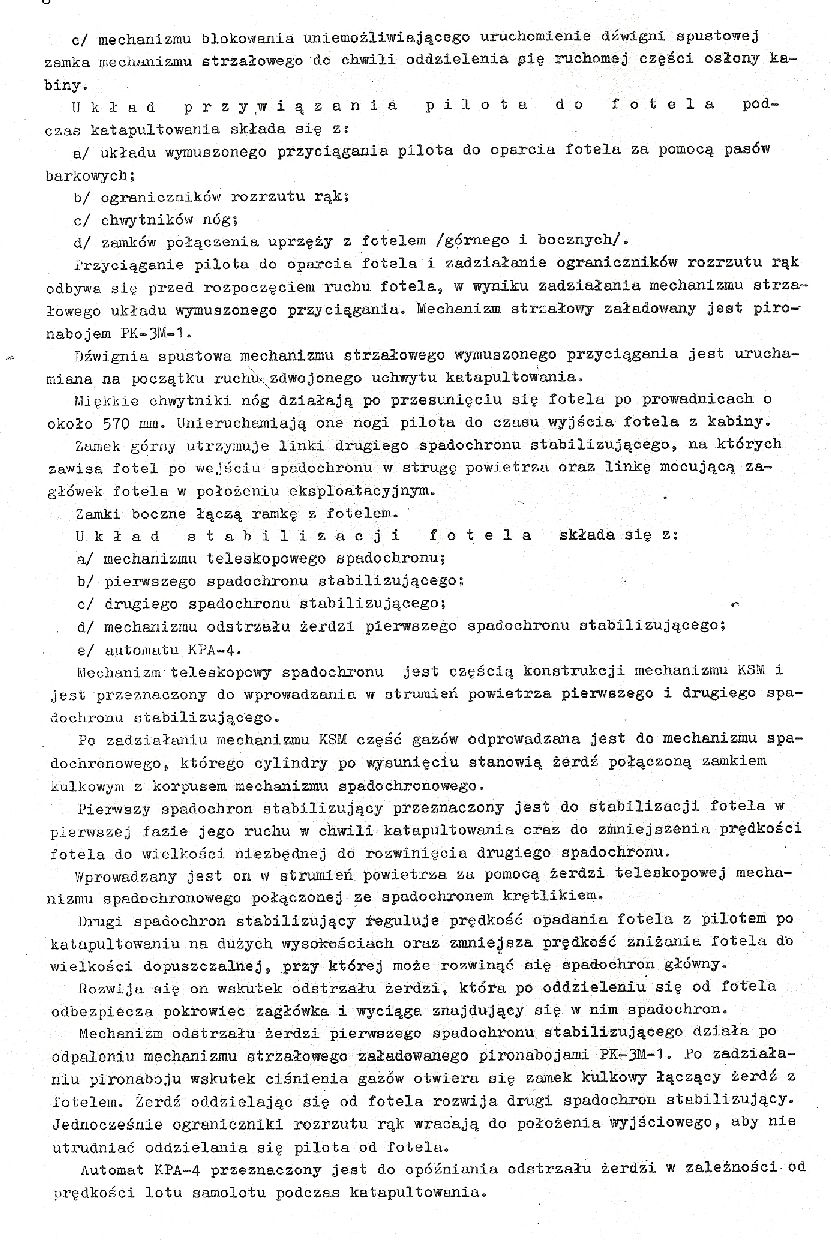
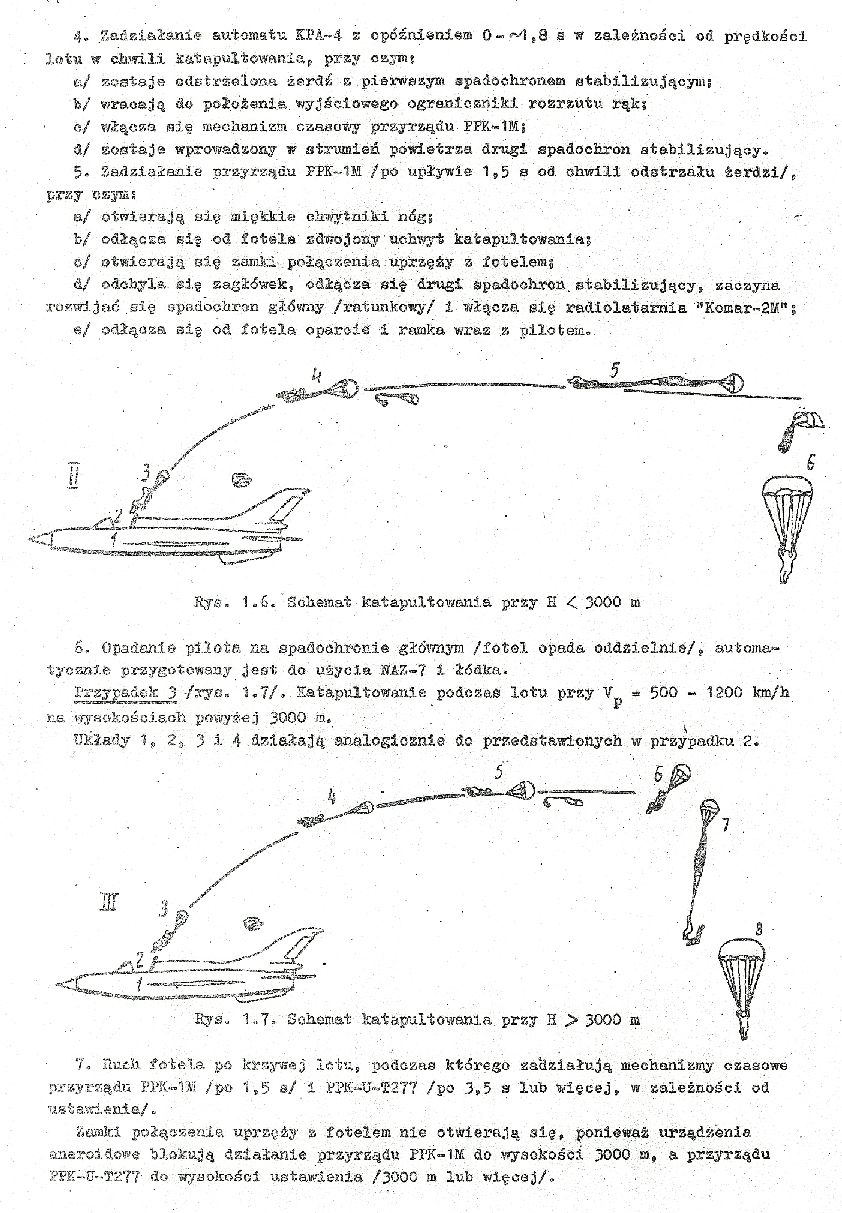
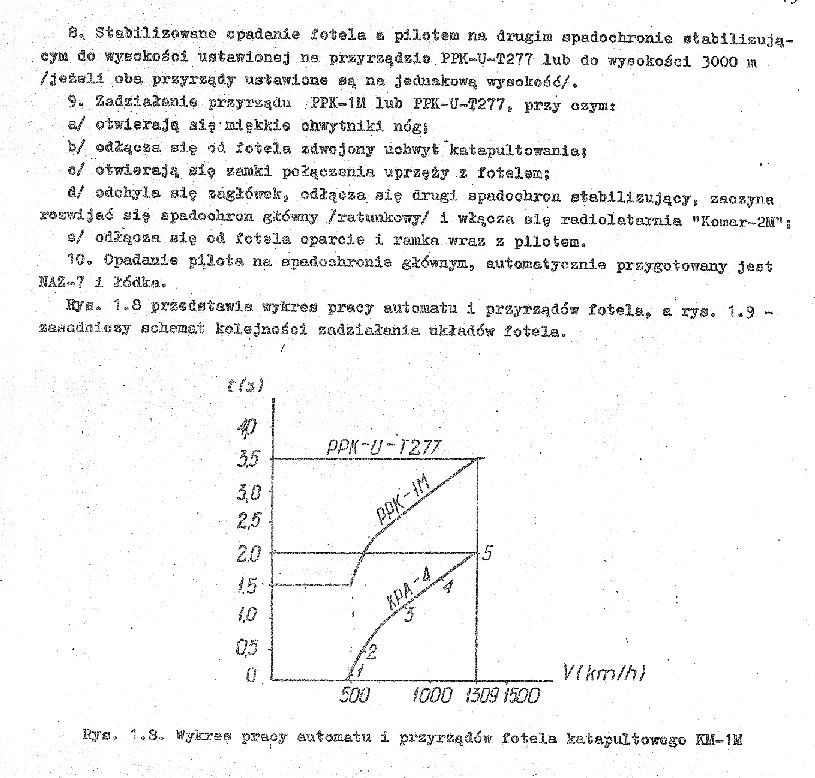
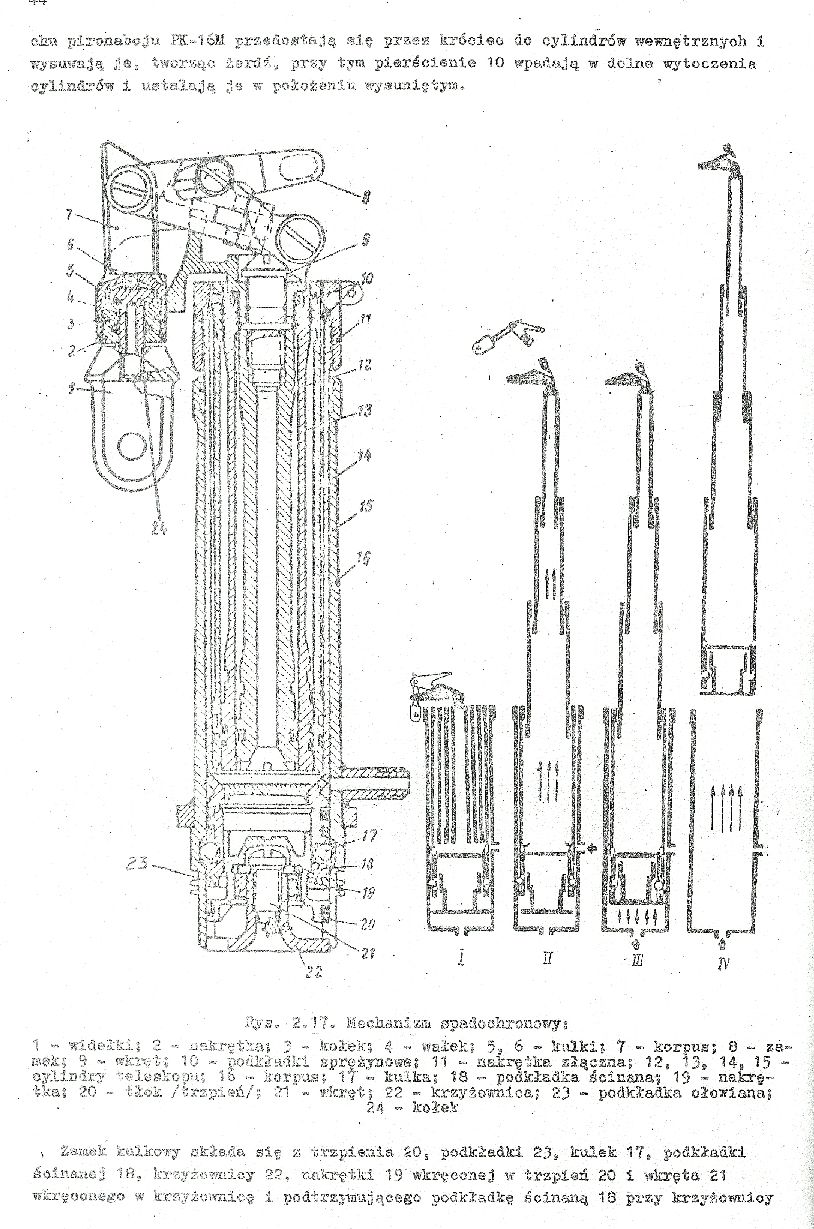
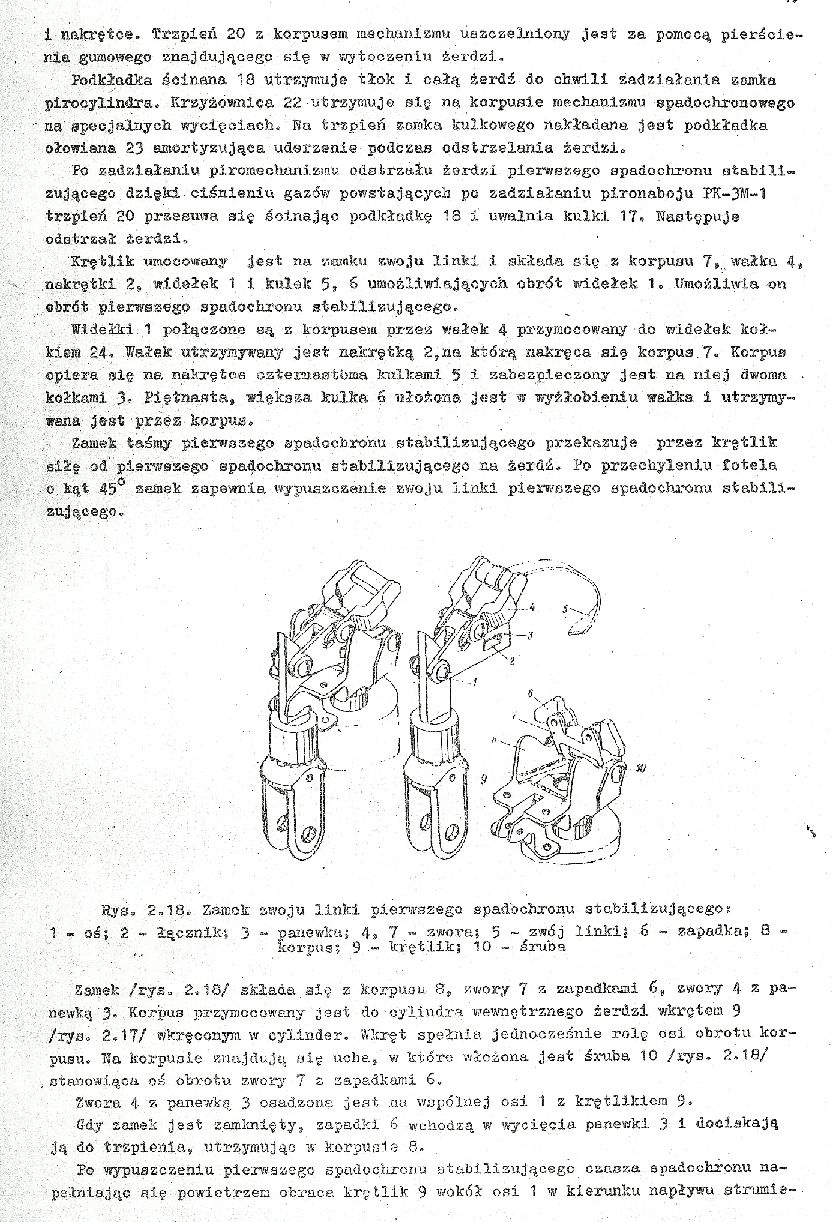
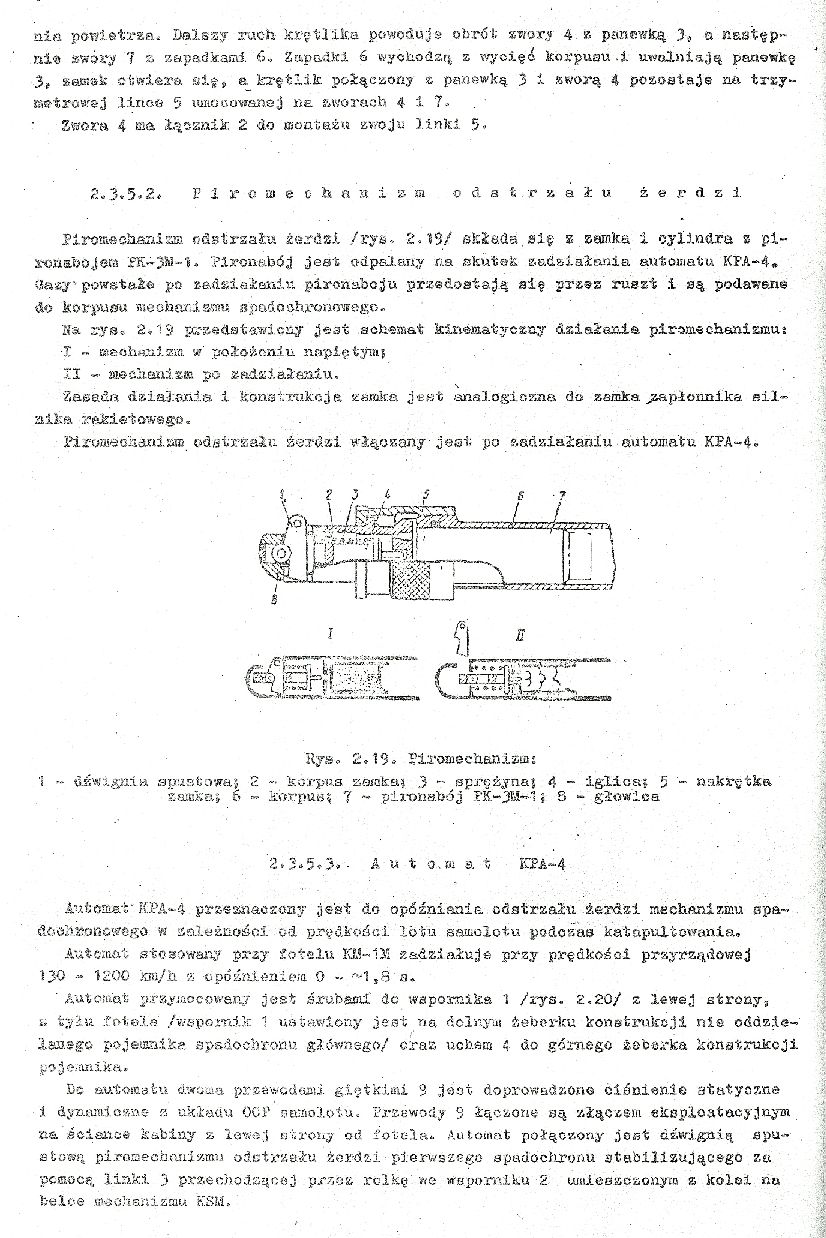
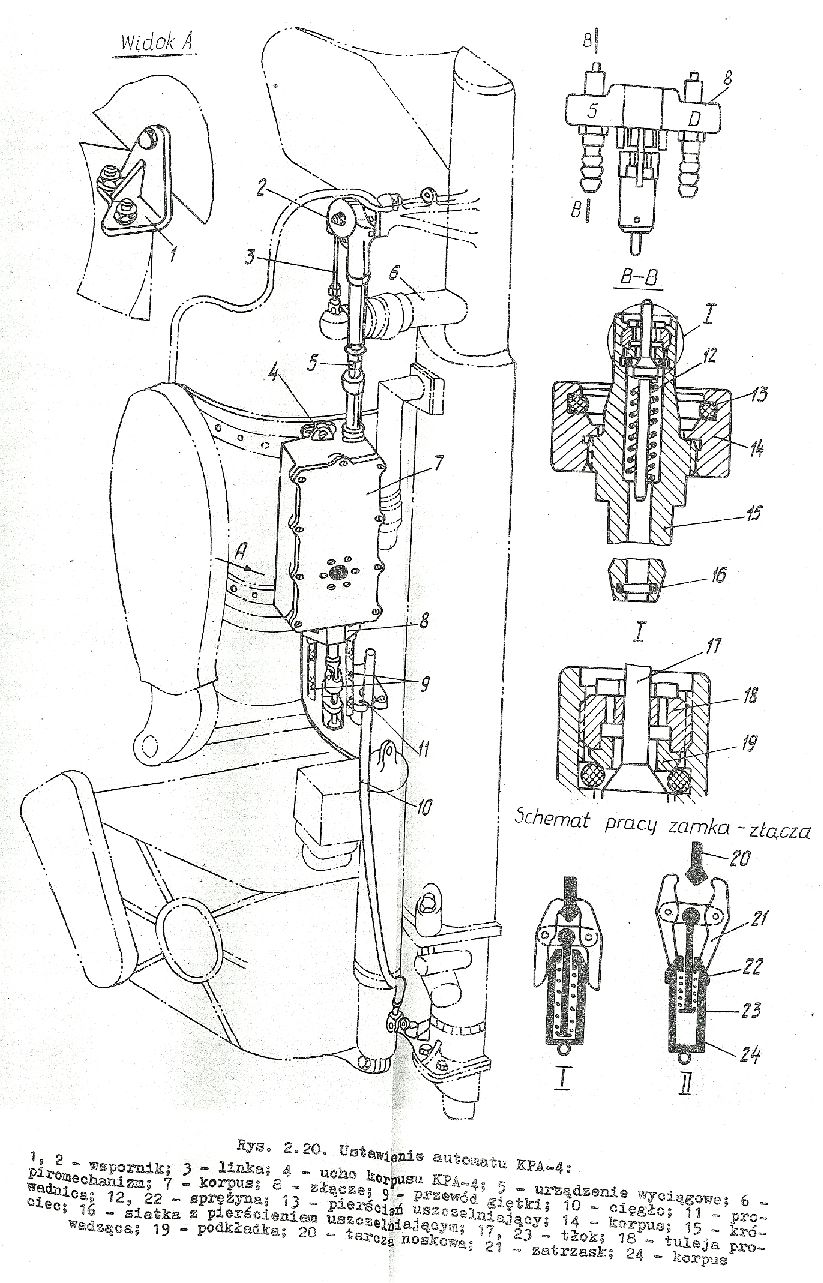
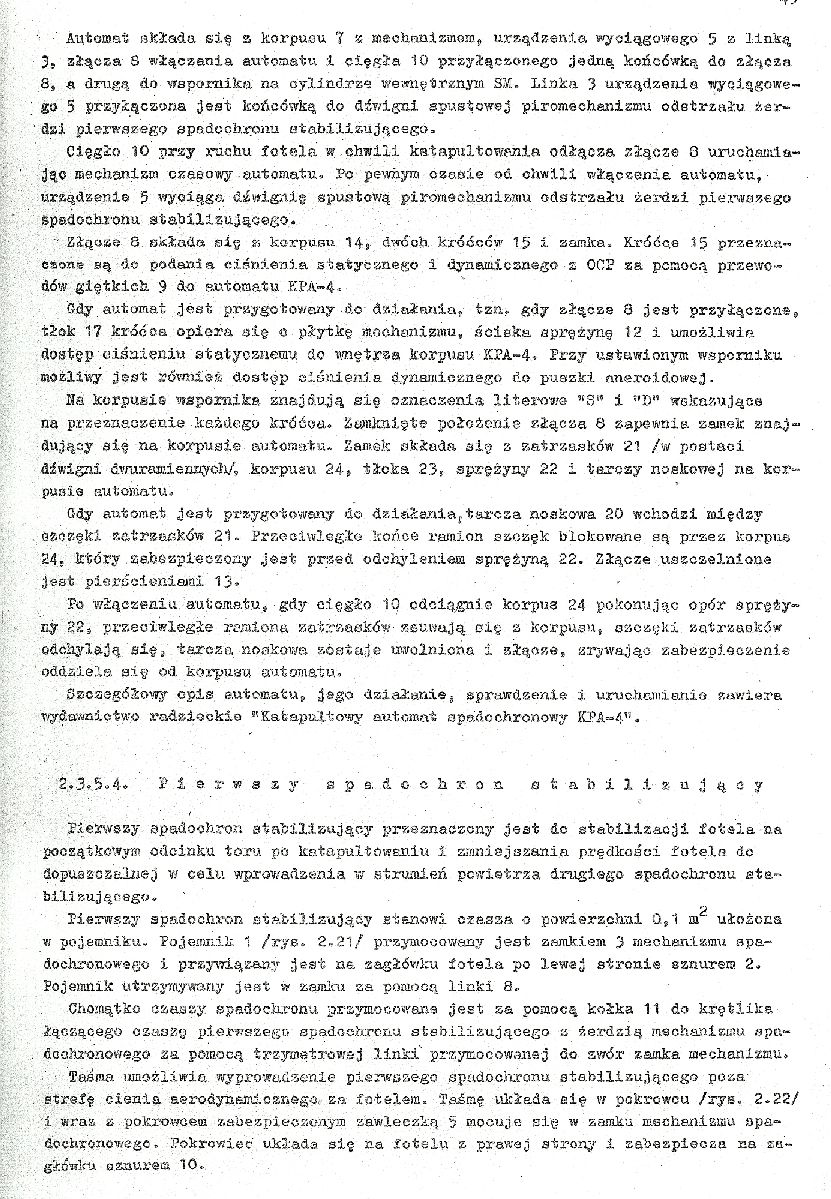
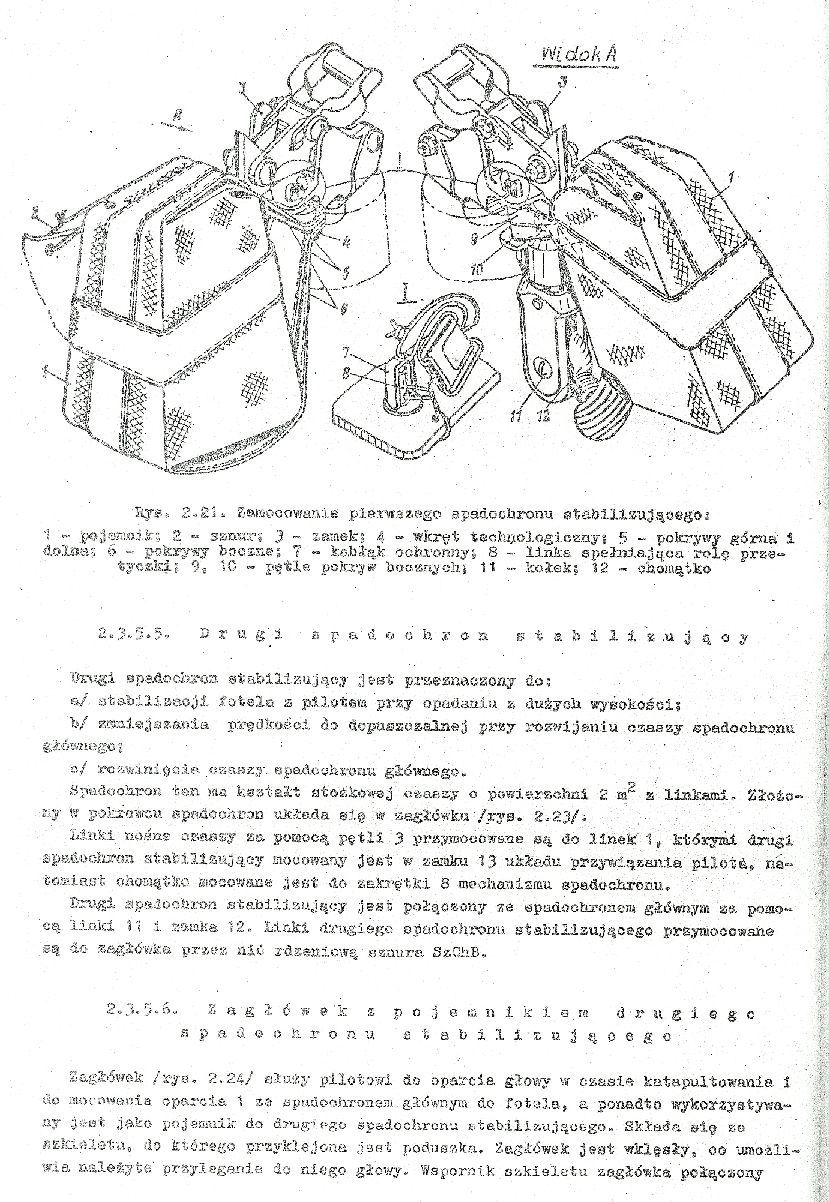
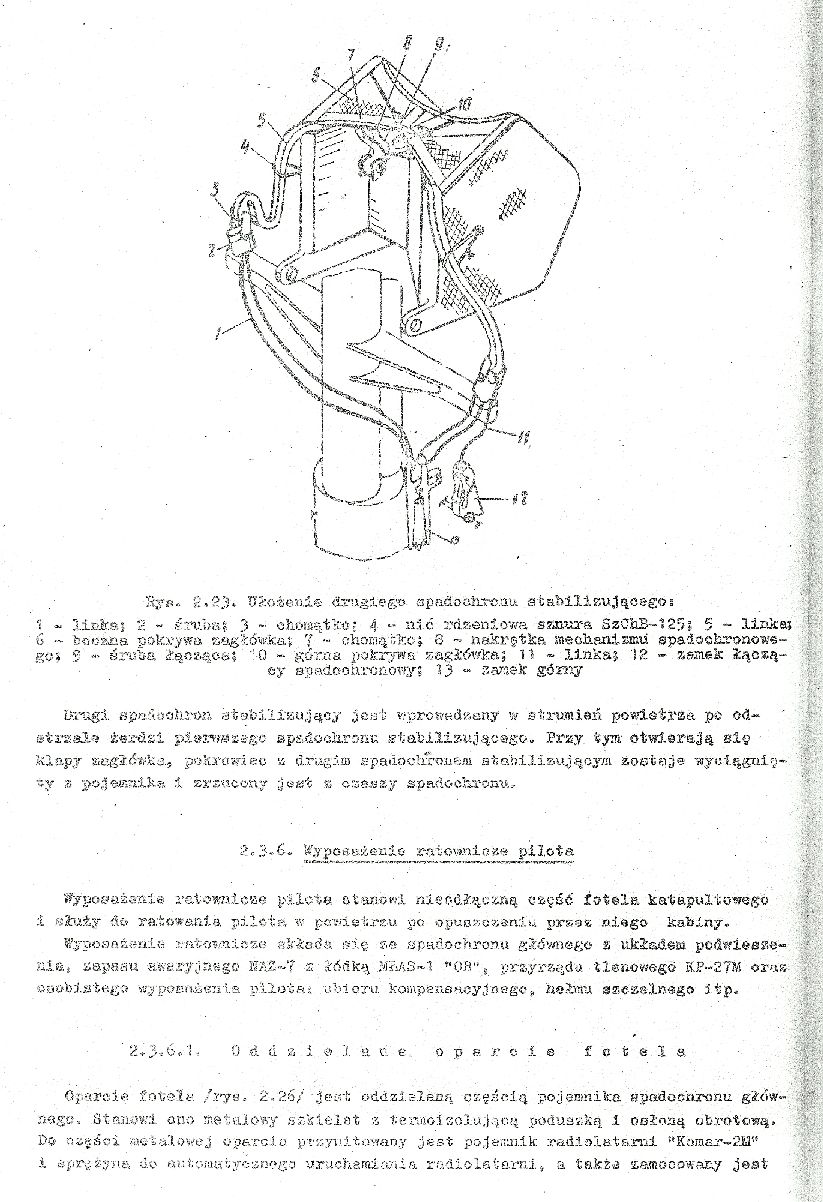
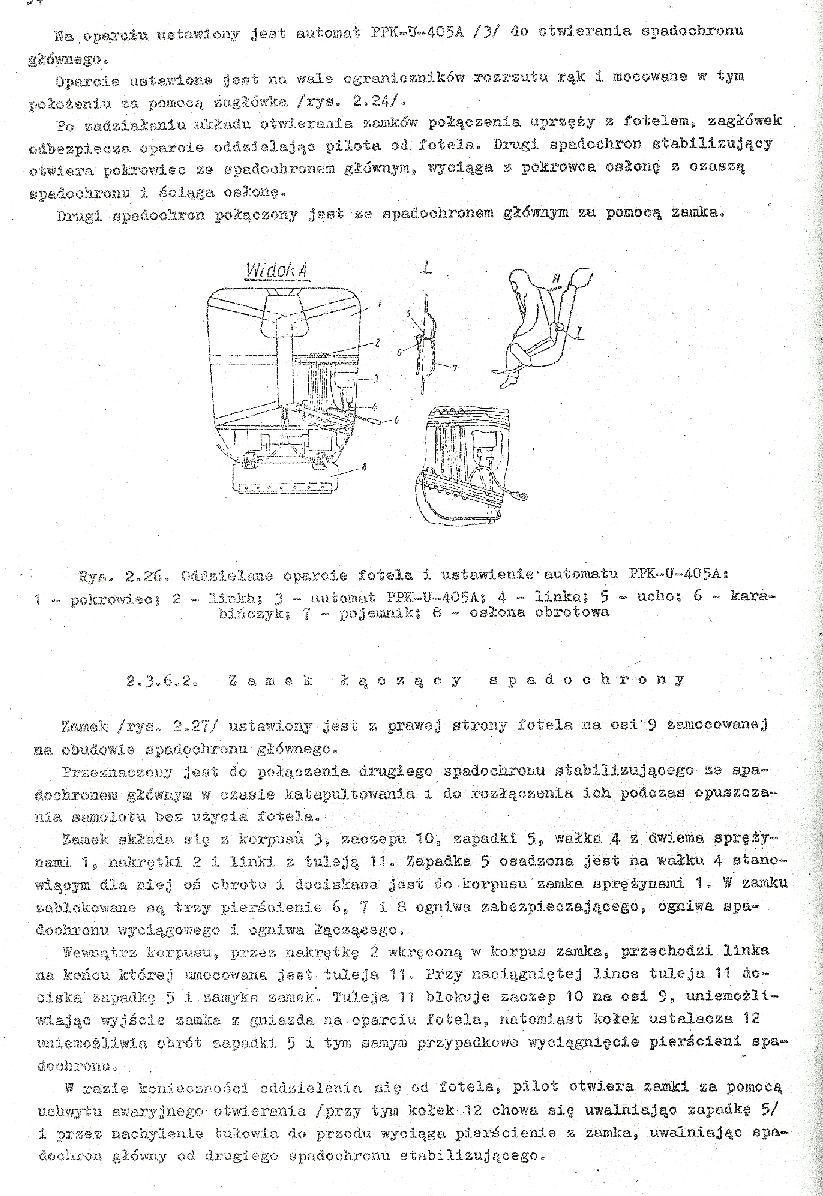
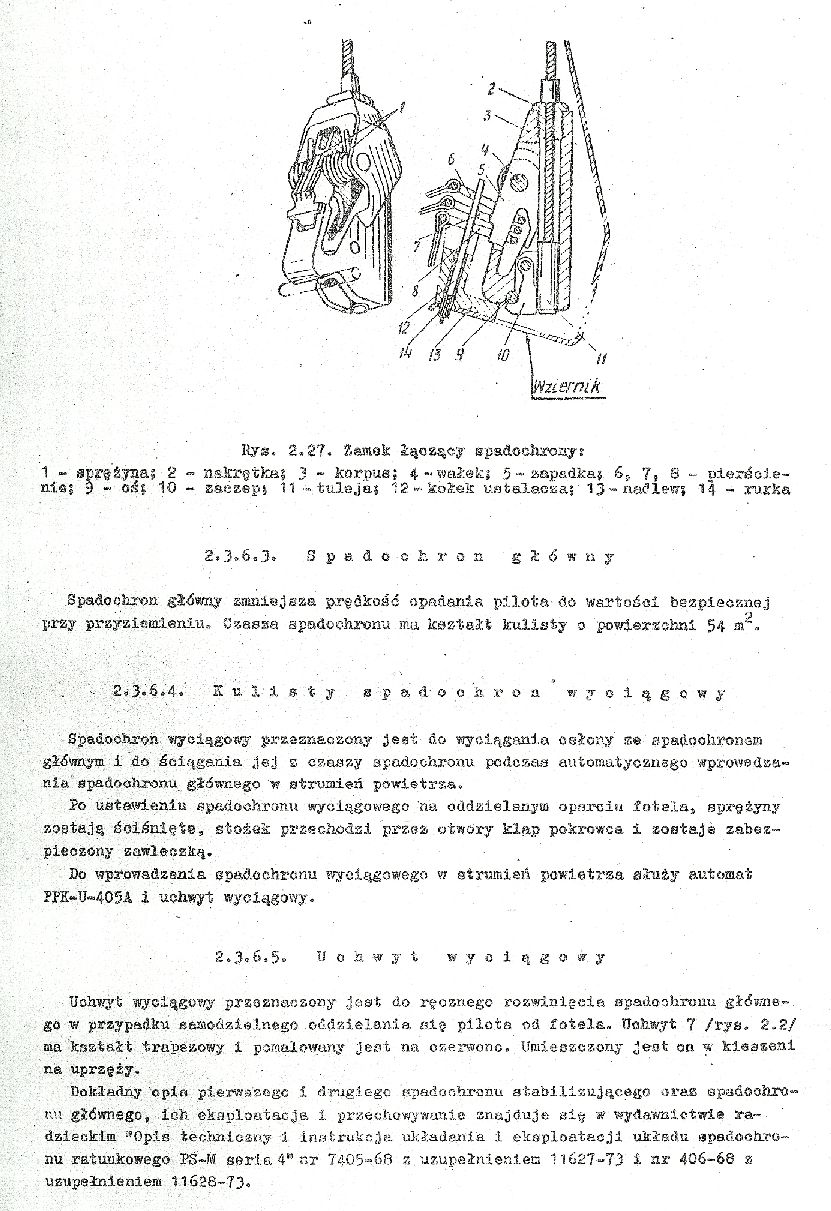
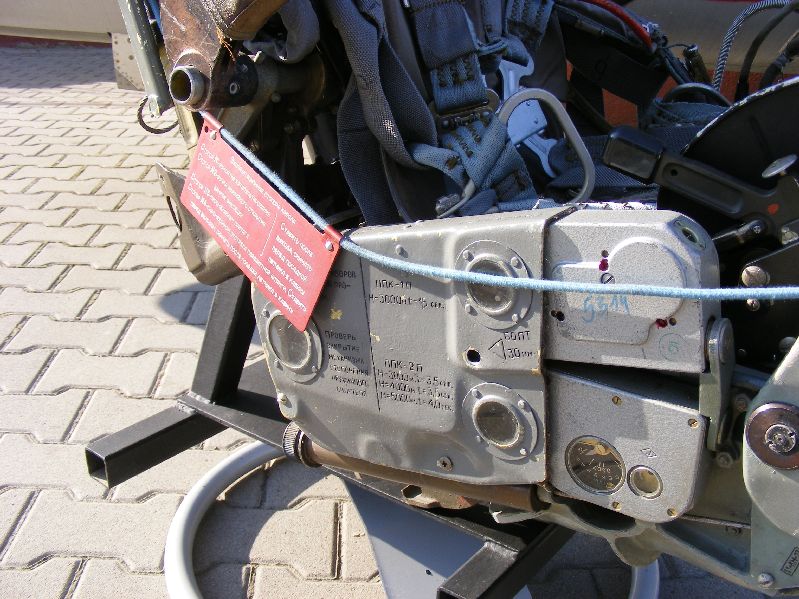
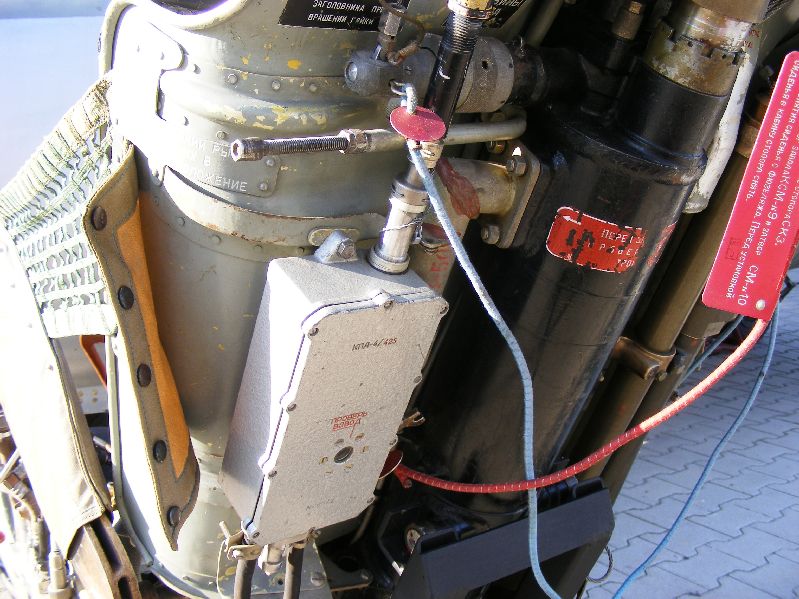
The stabilisation system, consisting of two small stabilising parachutes, tilts the seat and pilot backwards after leaving the cockpit, reduces the forward speed and stabilises the descent from high altitudes. Deployment of the first stabilising parachute, with an area of 0.1 m2, is controlled by the KPA-4 automatic device, which at speeds of 130-1200 km/h operates with a delay of 0-1.6 s. The second stabilising parachute (2.0 m2) reduces the descent speed of the seat and pilot and opens the personal parachute by pulling off its cover. The main parachute canopy, with an area of 54 m2, enters the airflow and separates the pilot from the seat. Opening of the parachute is controlled by the PPK-2P-405 automatic device.
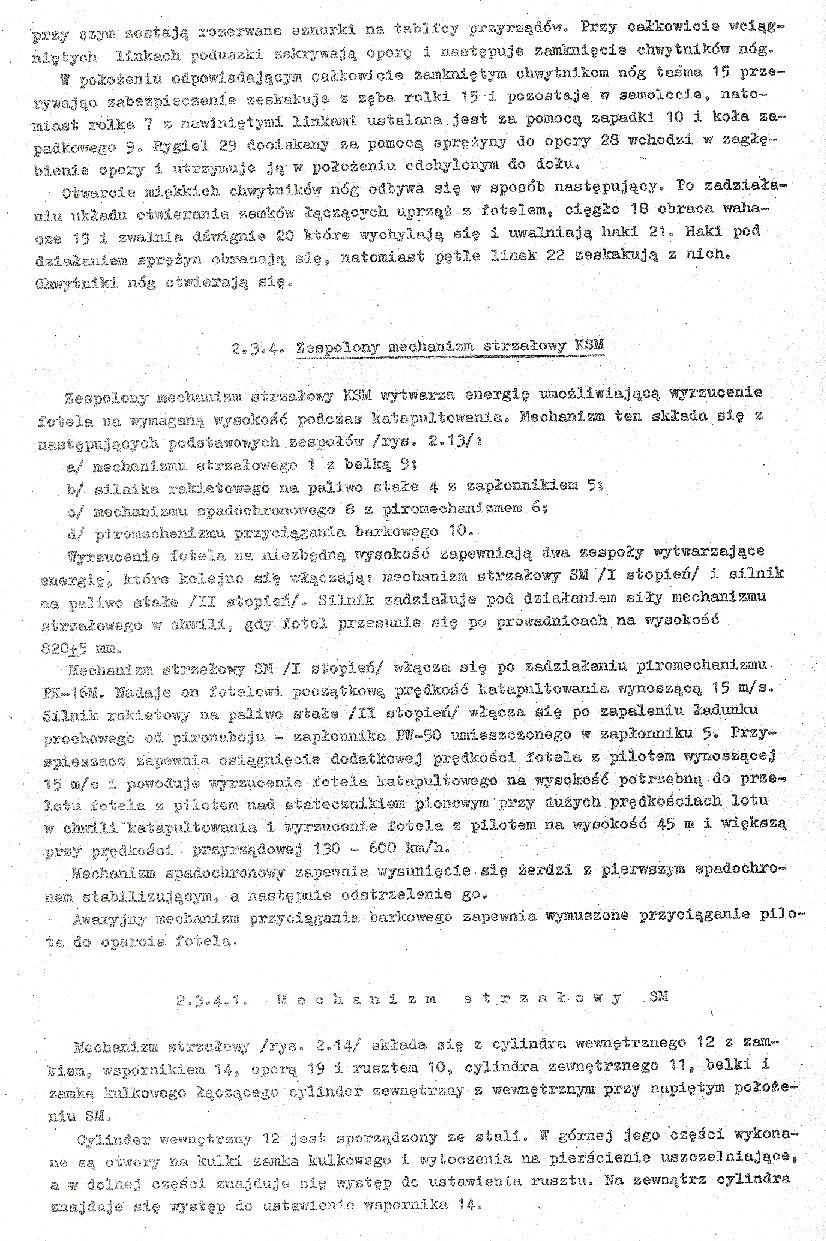
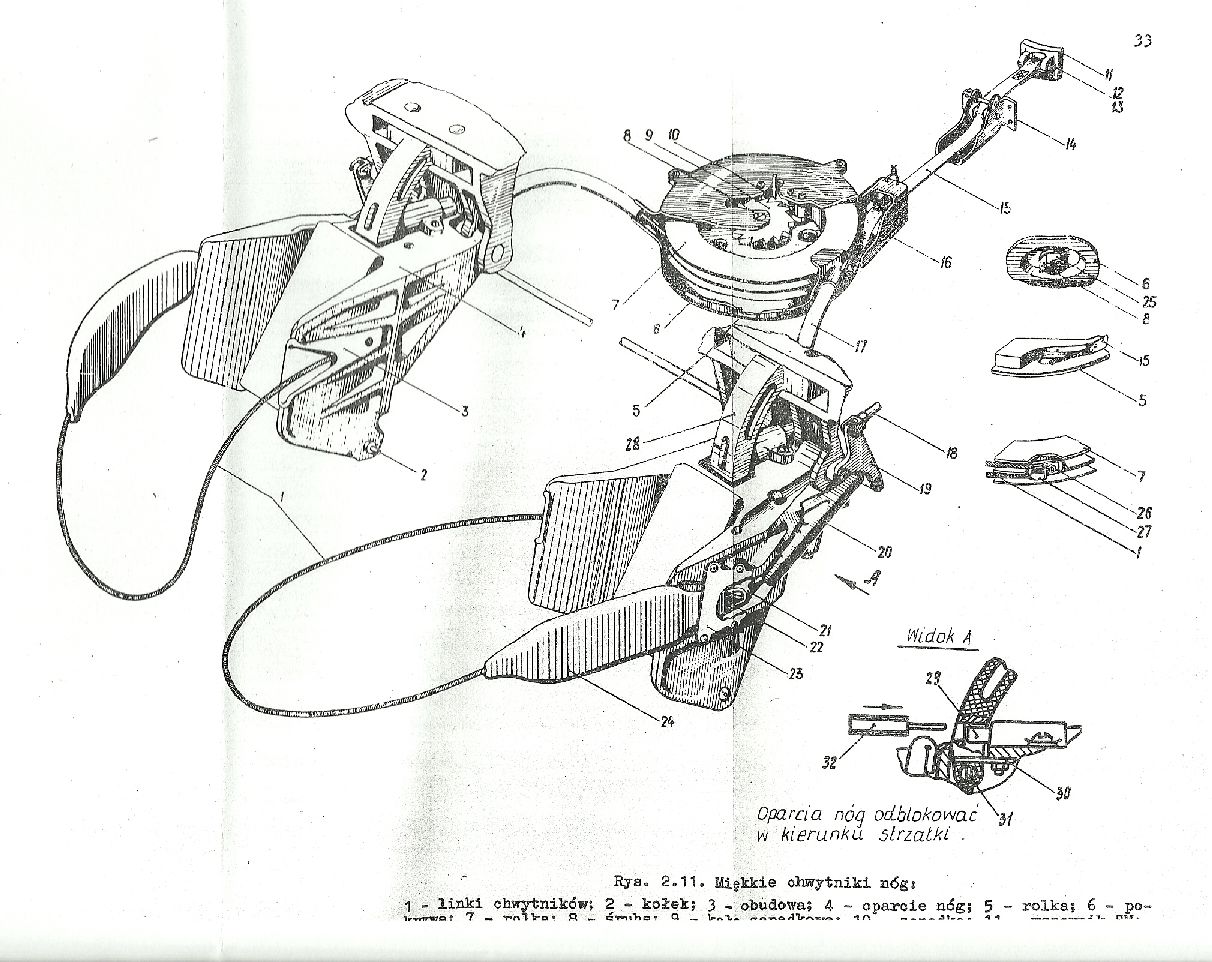
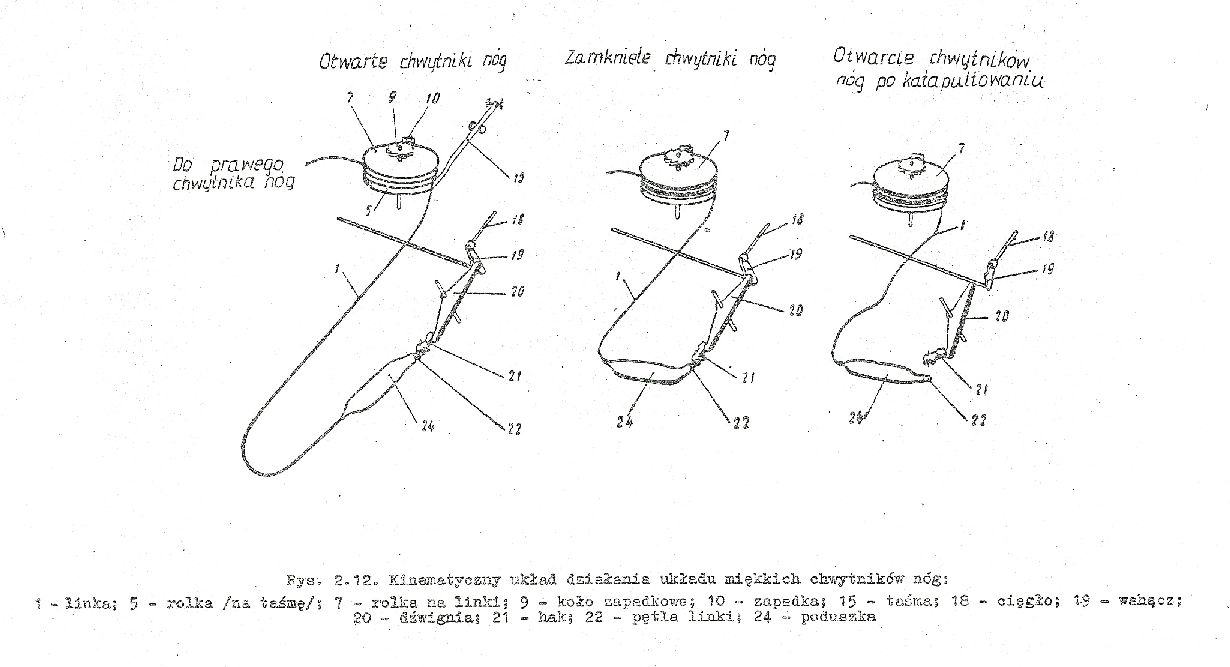
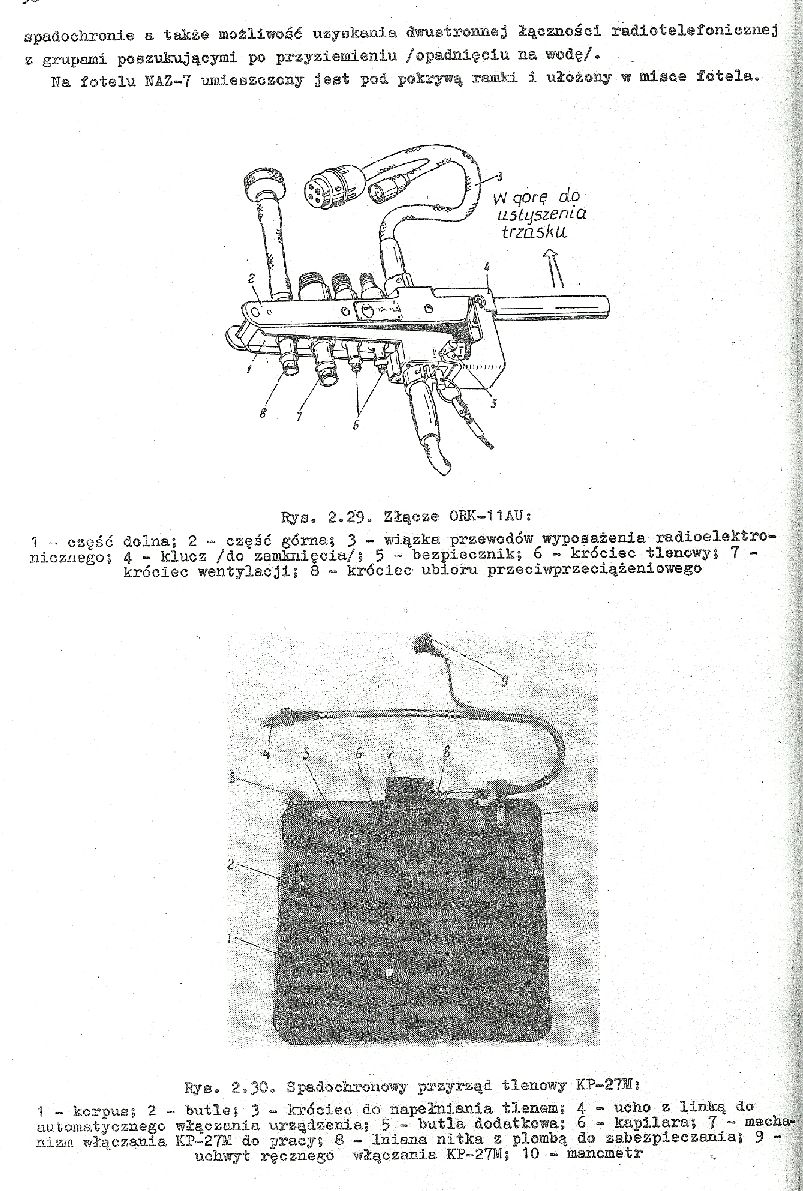
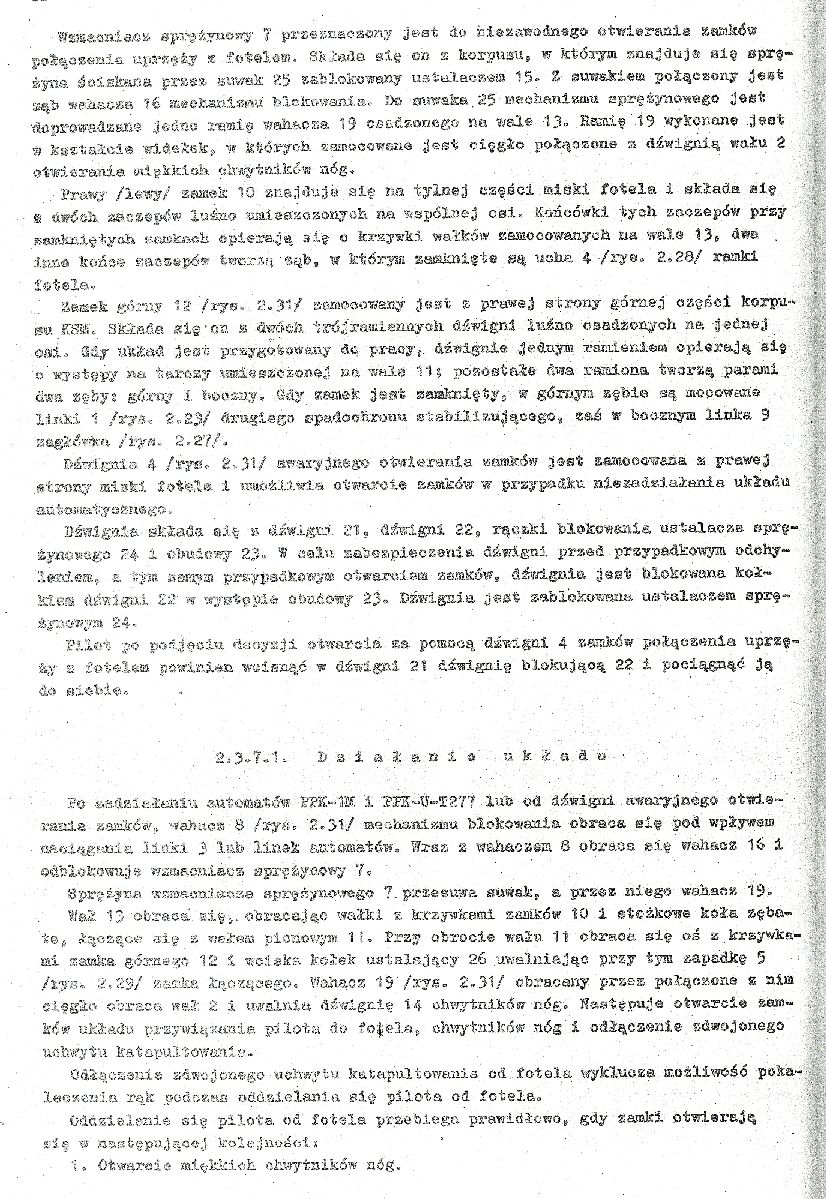
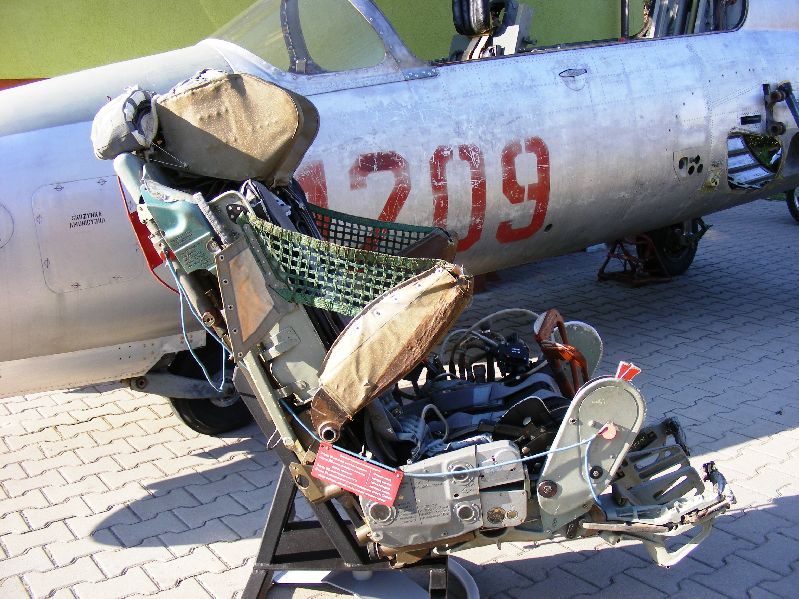
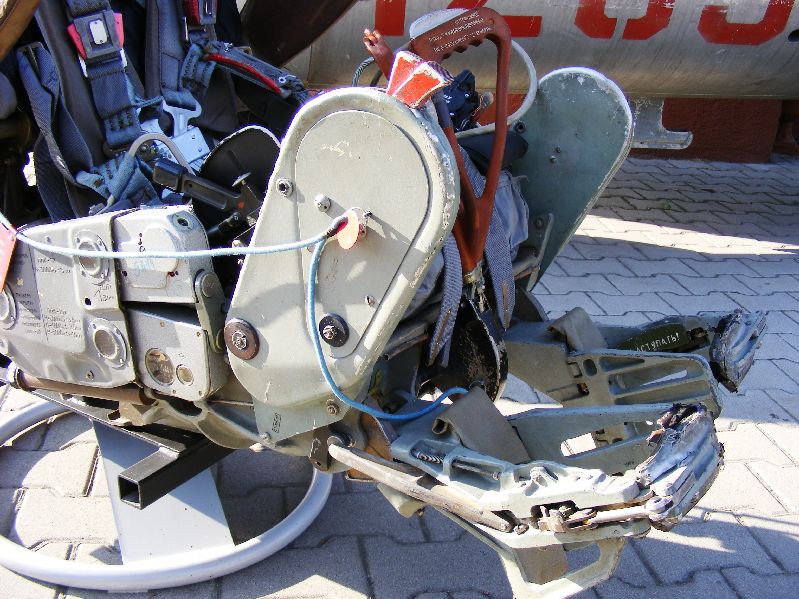
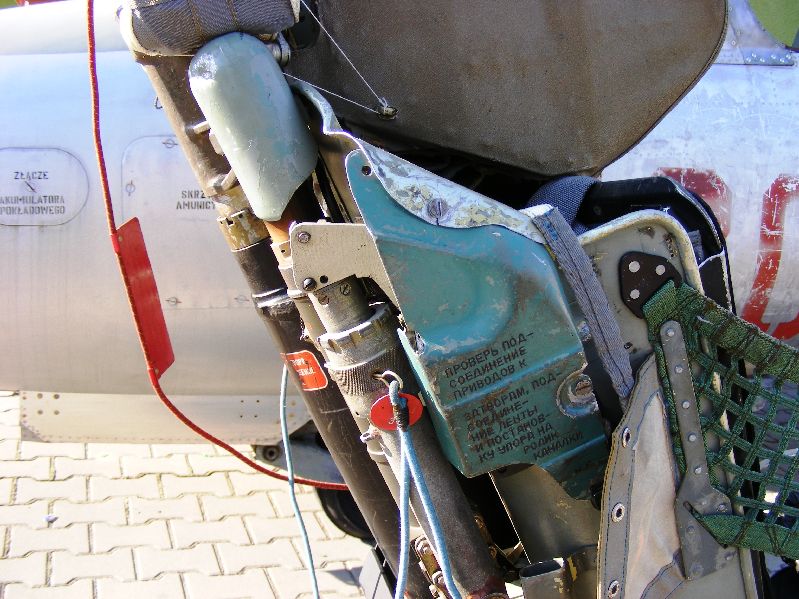
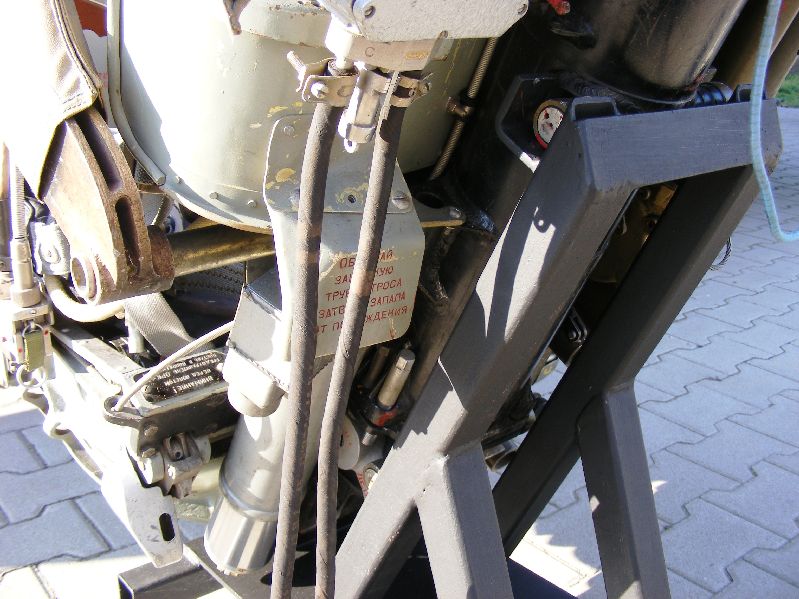
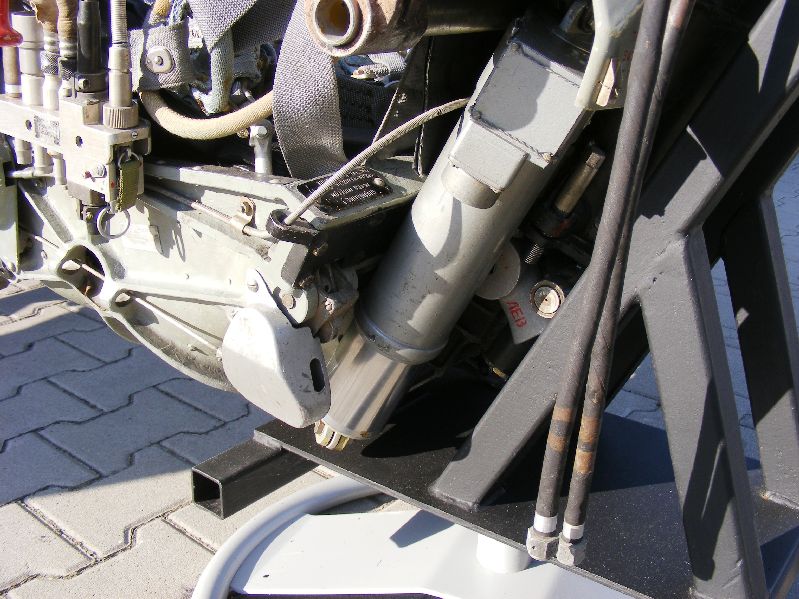
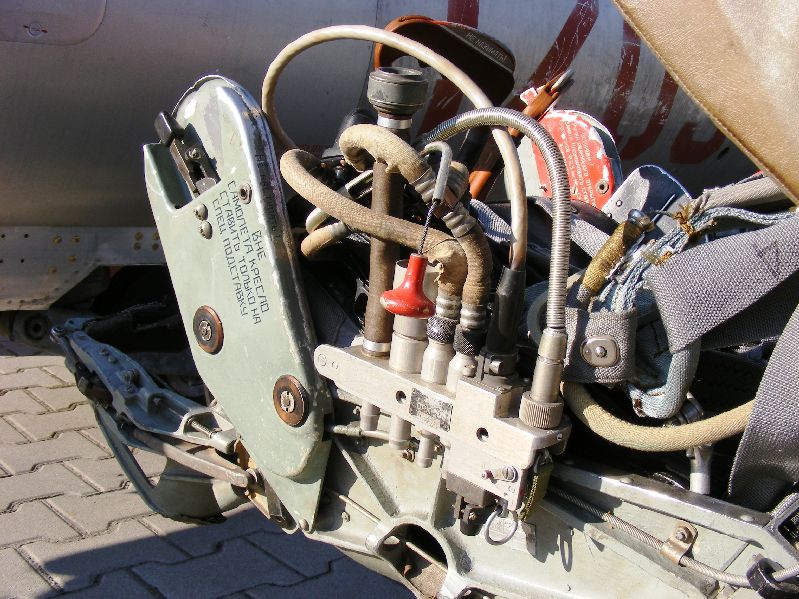
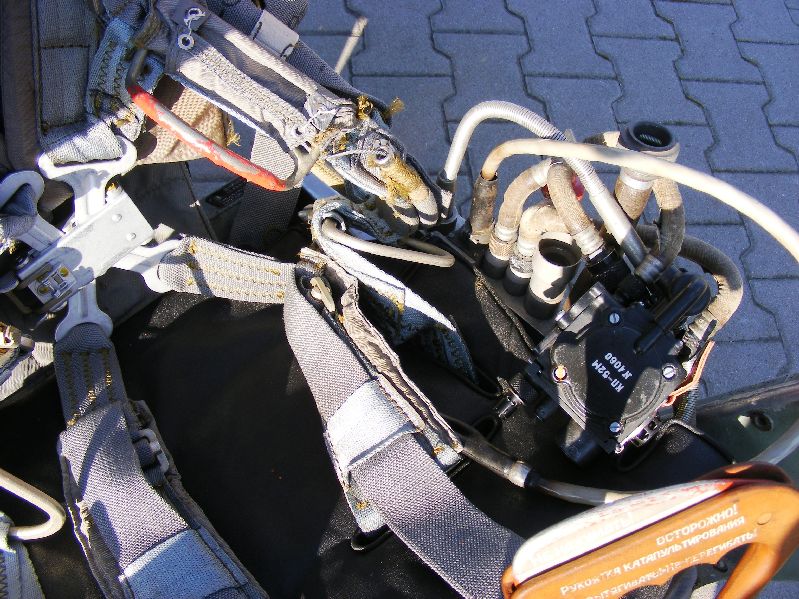
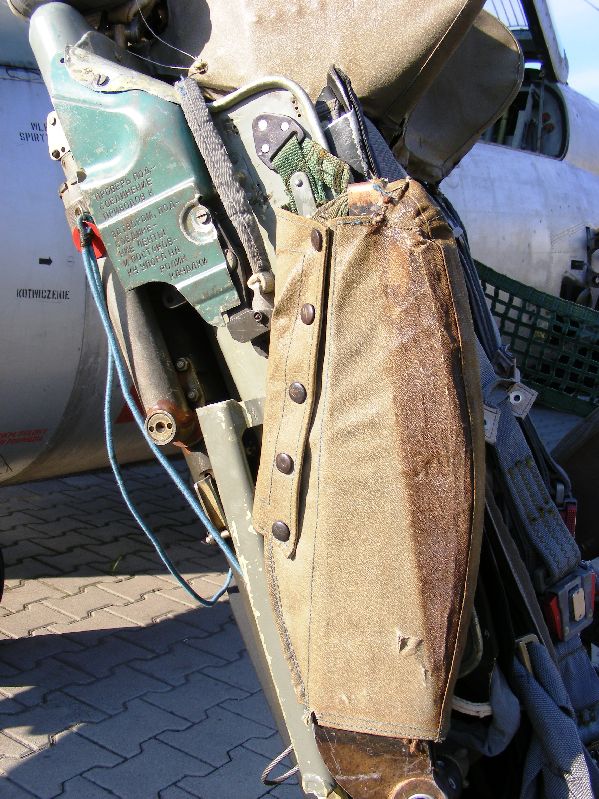
The seat is connected to the aircraft systems by a separable ORK-11 connector, which disconnects all links at the moment of ejection and lets the pilot switch to oxygen from the parachute oxygen apparatus. The connector is on the left side of the seat bucket. The leg restraints act while the seat travels along the guide rails (after about 400 mm) and hold the pilot’s legs in
the correct position until the seat leaves the cockpit. In flight the restraints are in the upper position (close to the seat bucket) so as not to hinder control of the aircraft. When the seat moves upwards during ejection
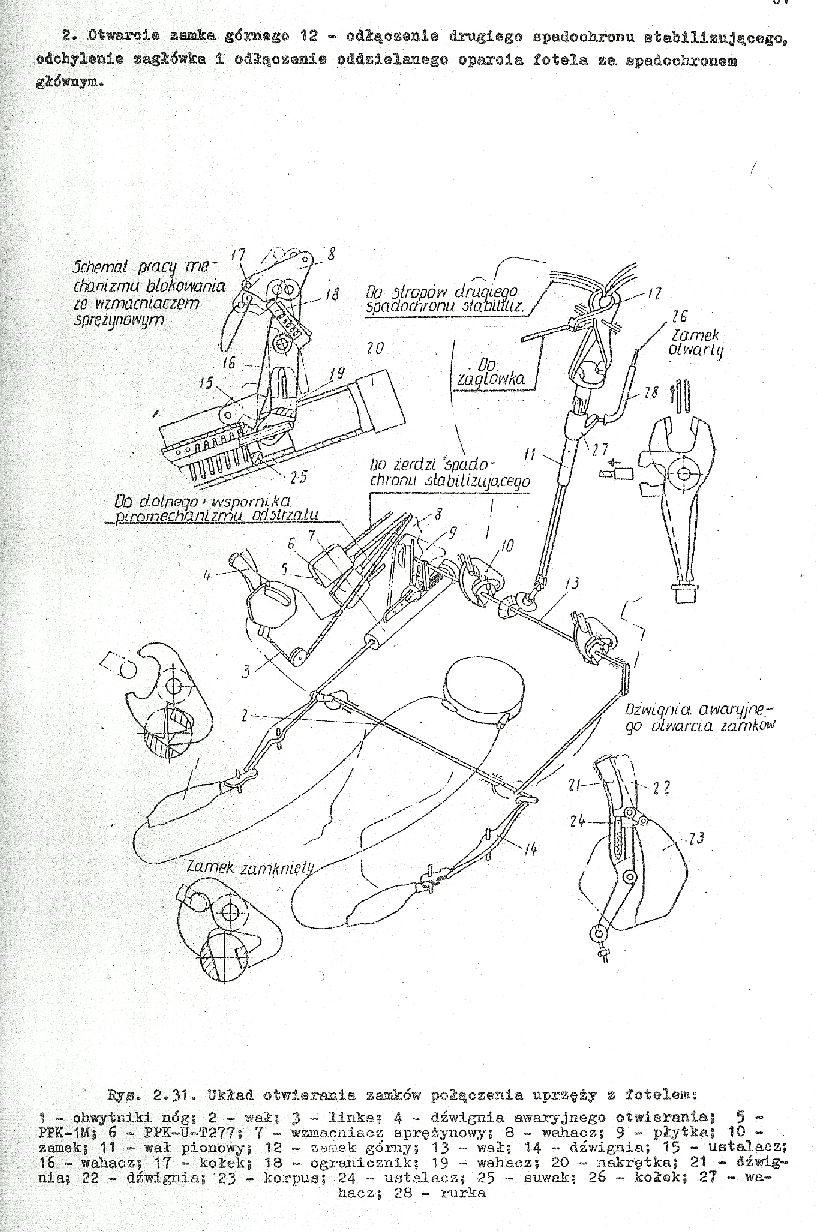
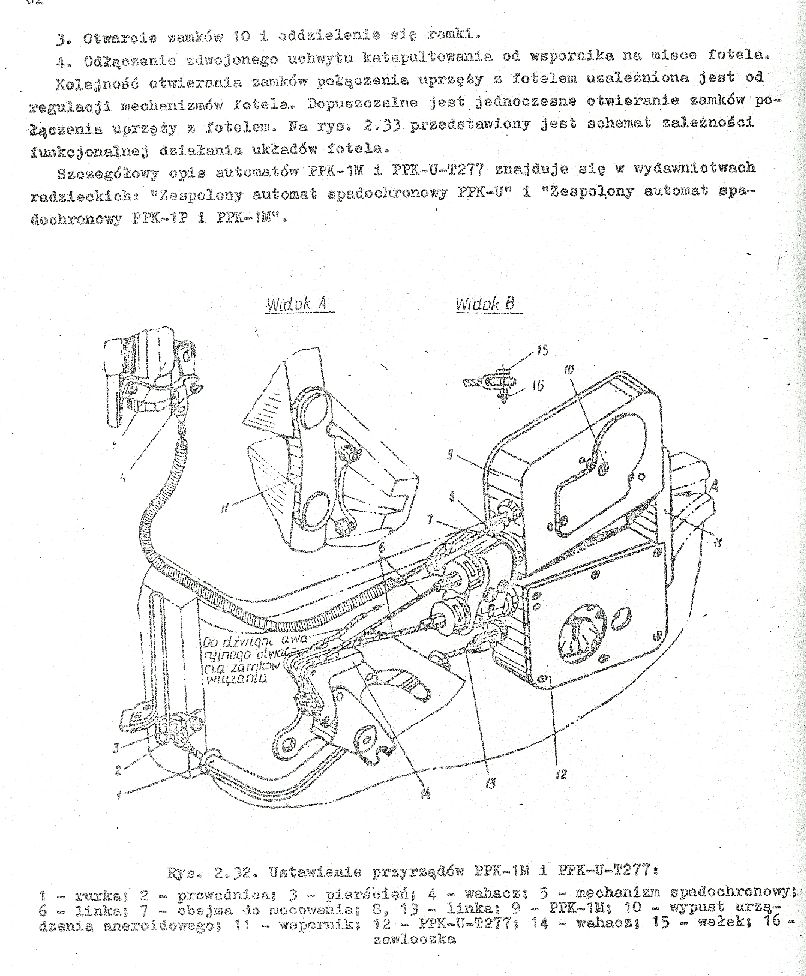
they swing down through 40° into the correct position to immobilise the legs. On the right side of the seat bucket are the PPK-1P and PPK-2P devices, which, depending on the ejection altitude or after a set time, open the harness locks and release the pilot from the seat.
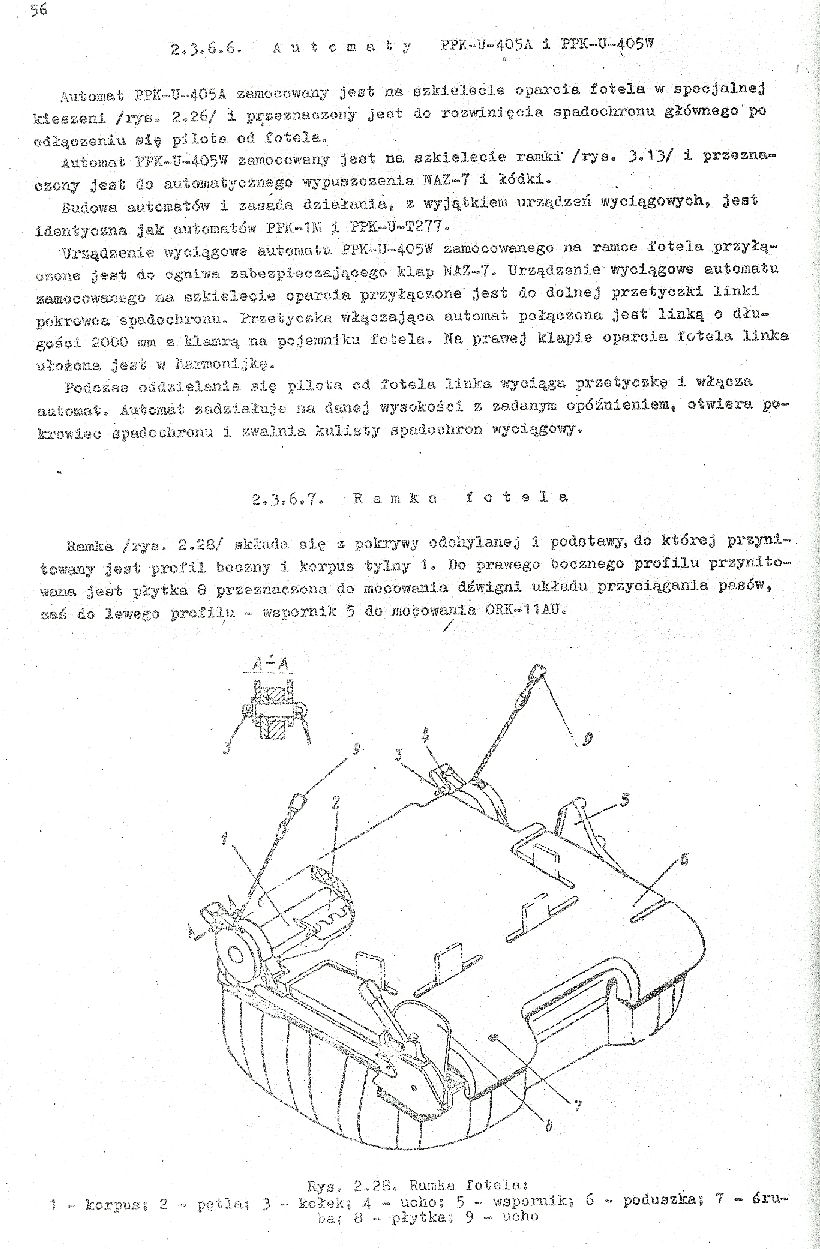
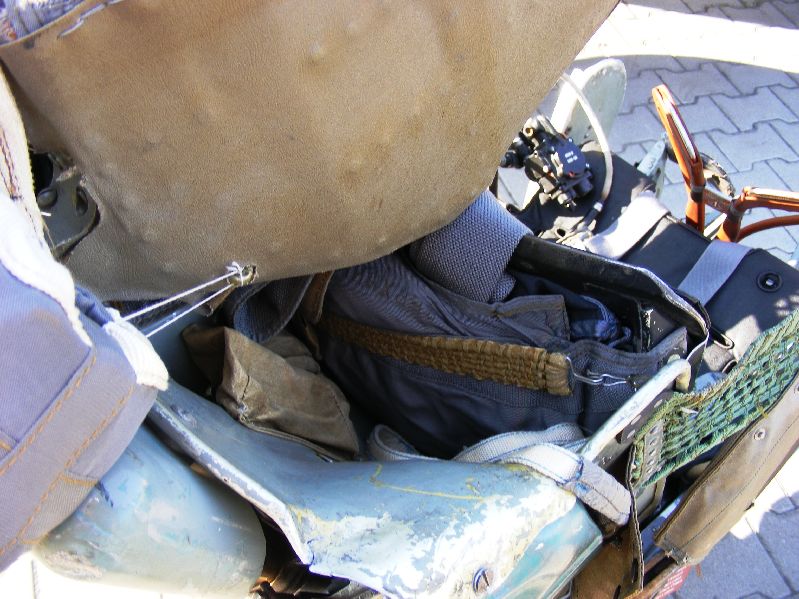
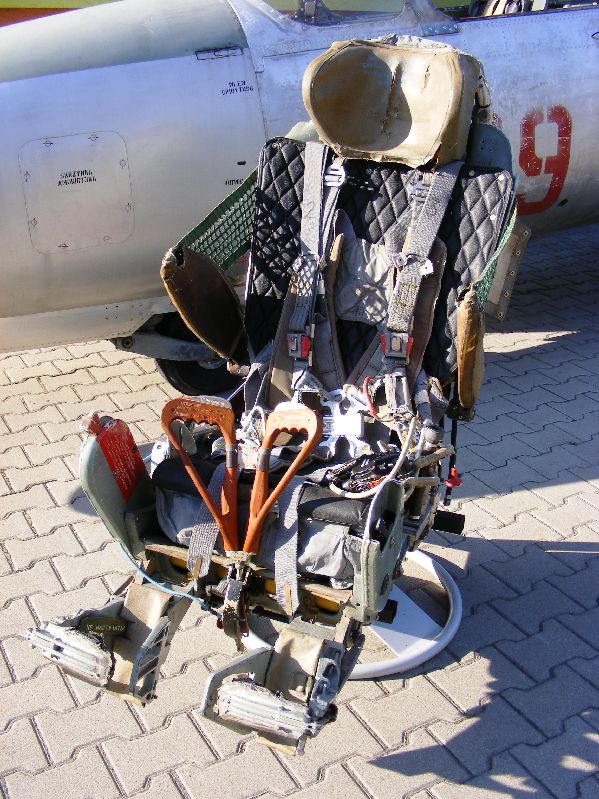
Seats in service come with two variants of frames, double ejection handles, KSM-M guns and harness tightening mechanisms. There are also differences in the type and colour of the upholstery. For example, the frame of the first variant contains:
– the lap belt mechanism,
– the ORK-11 connector,
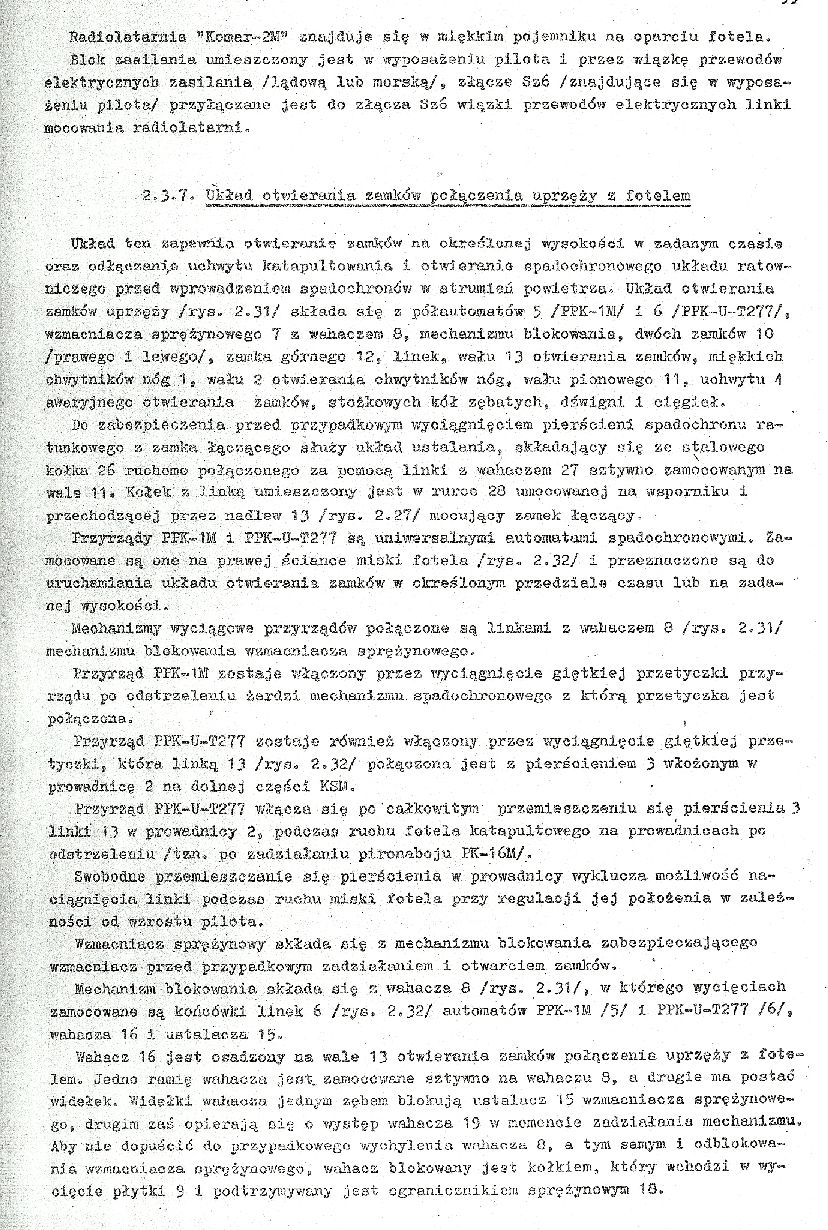
– the KP-27M oxygen apparatus (cylinder capacity 0.825 l; oxygen pressure 150 kgf/cm2);
– the NAZ-7 survival kit,
– the MLAS-1 “OB” dinghy and a foam cushion.
Depending on the climate in which the aircraft is operated, the NAZ-7 survival kits come in different configurations: standard, desert, sea and polar, which differ in their equipment. Each contains a container that doubles as a frying pan, fuel, essential medicines, food and water purification tablets, etc. The standard and desert sets also contain “Taiga” mosquito repellent, and the container-pan of the polar set carries a warning in Russian: “Caution! Polar bear meat is inedible” (!?)
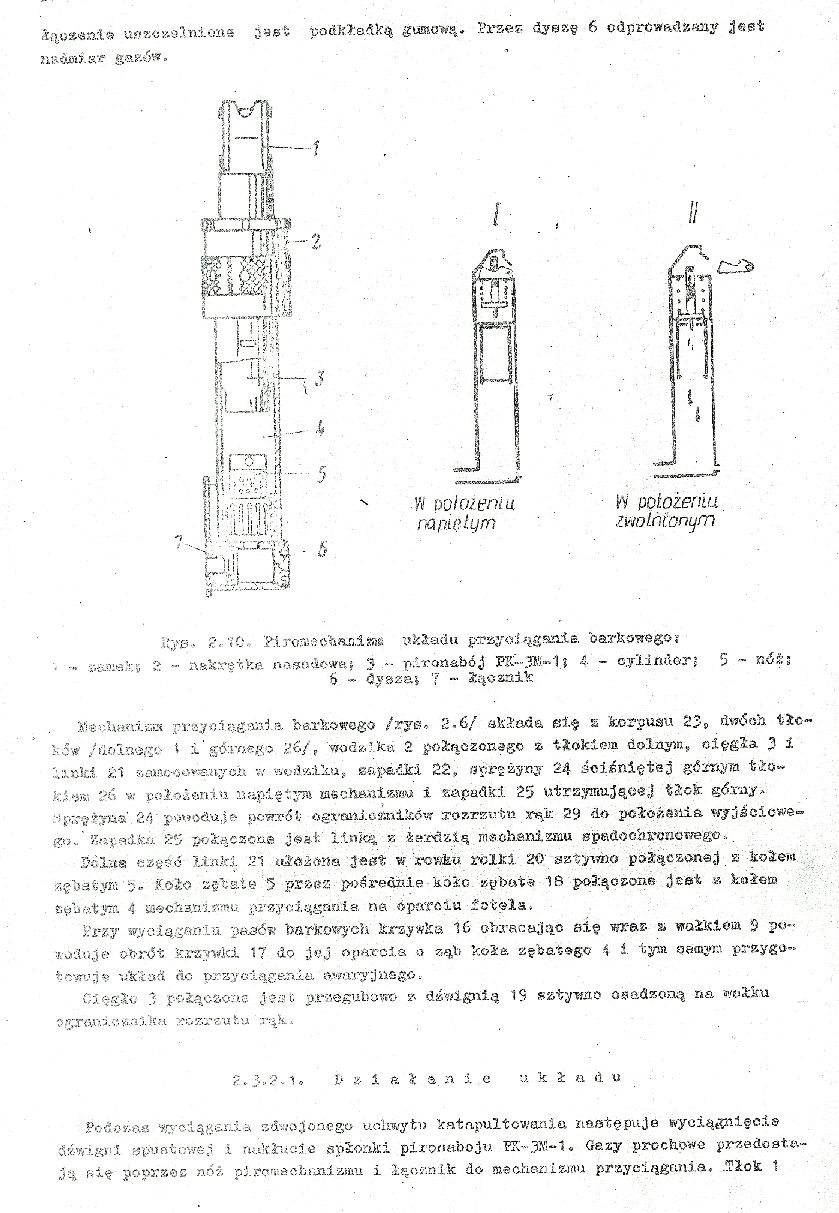
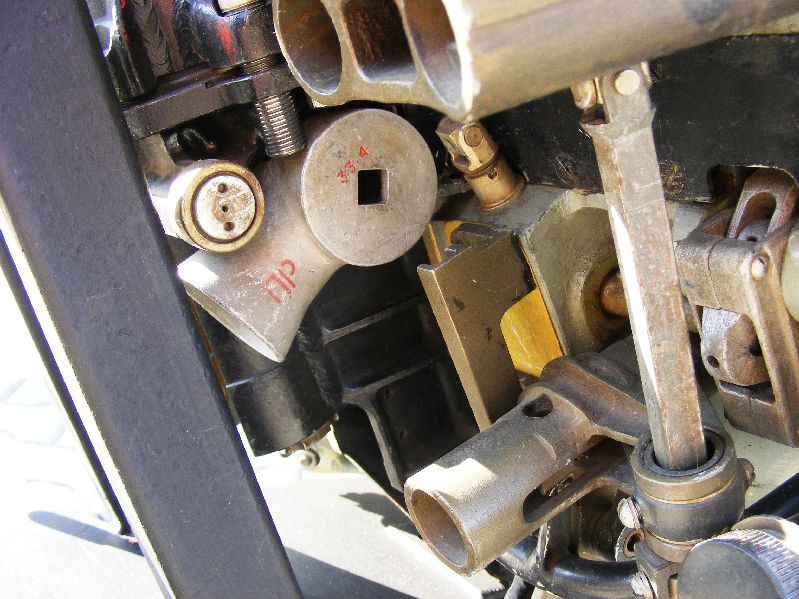
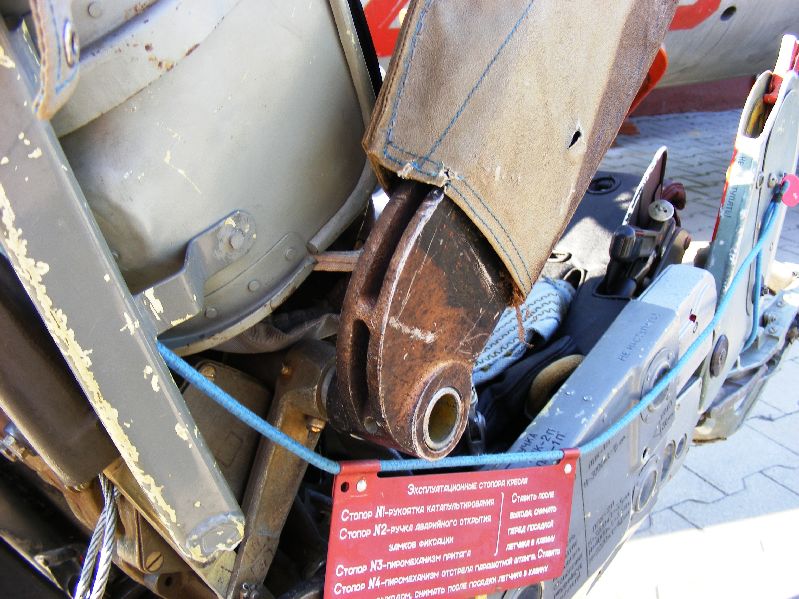
The seat has 4 safety pins against accidental operation of its mechanisms, which must be fitted while the aircraft is on the ground. In total the seat uses 4 pyrotechnic cartridges of various types to fire the individual devices, plus a propellant charge for the rocket motor consisting of 11 sticks with a total weight of 2 kg.
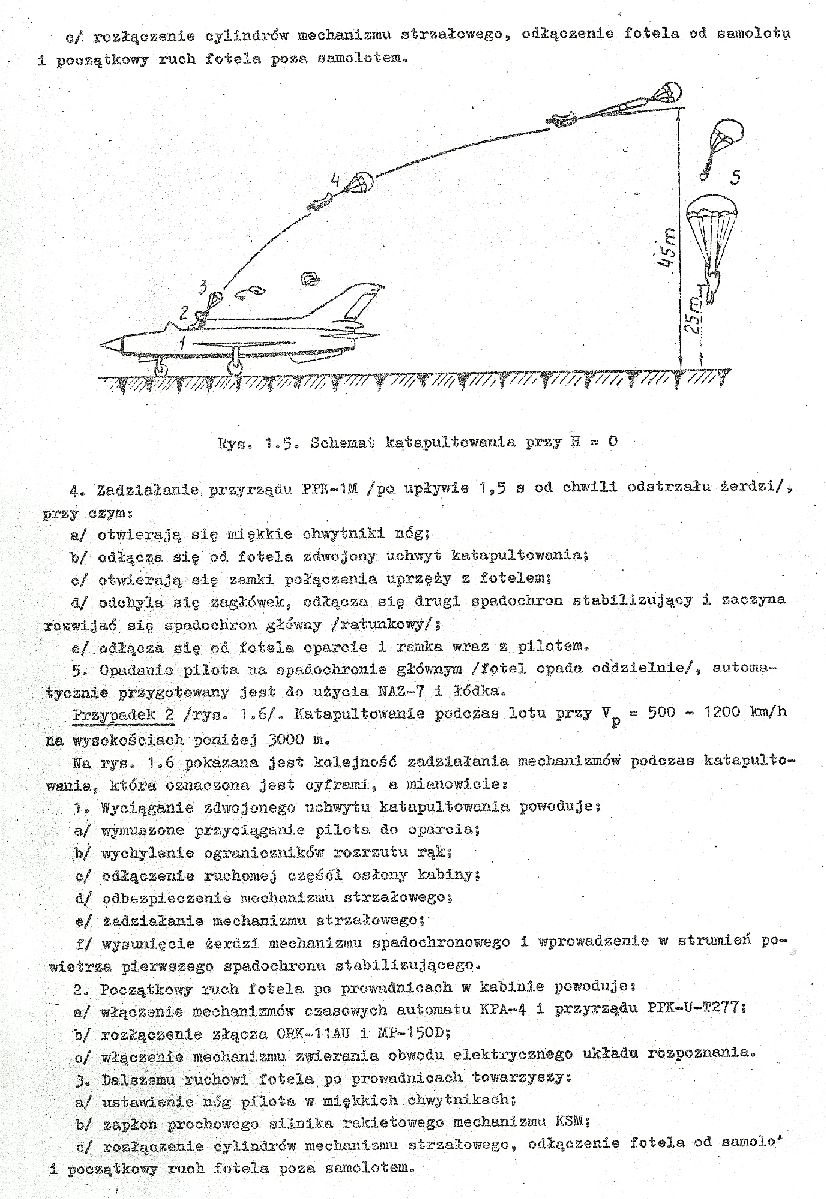
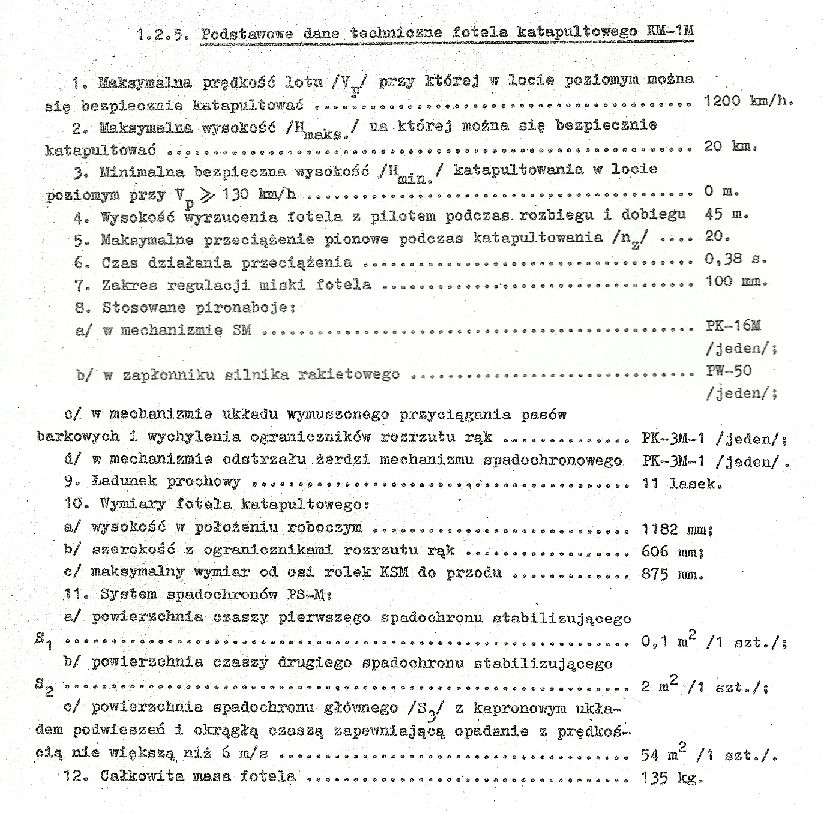
KM-1 technical data: Maximum flight speed for safe ejection – 200 km/h, Max. safe ejection altitude – the aircraft’s service ceiling, Height to which the seat and pilot are thrown when ejecting at H=0 m – 45 m, Maximum vertical g-load during ejection – nz=20, Duration of the g-load – 0.38 s. Seat height – 1182 mm, Seat width with arm restraints – 606 mm, Total seat weight – 135 kg.
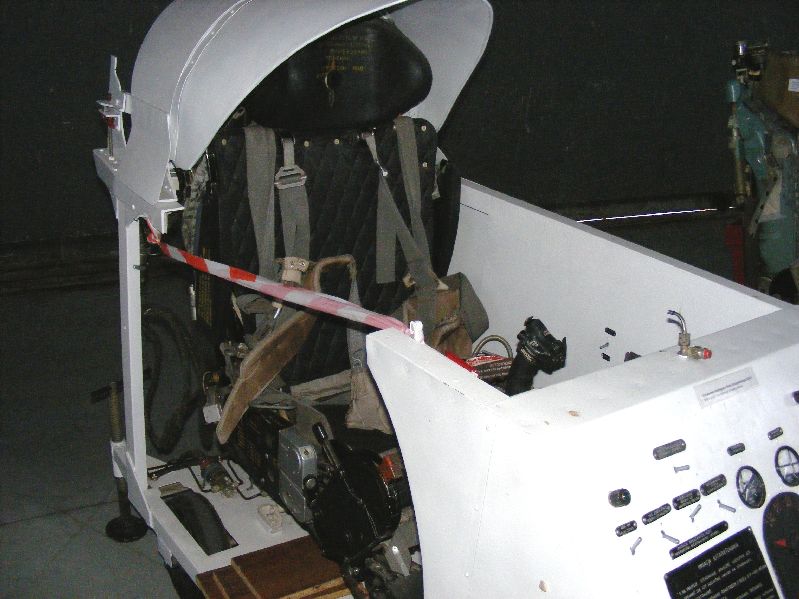
My seat
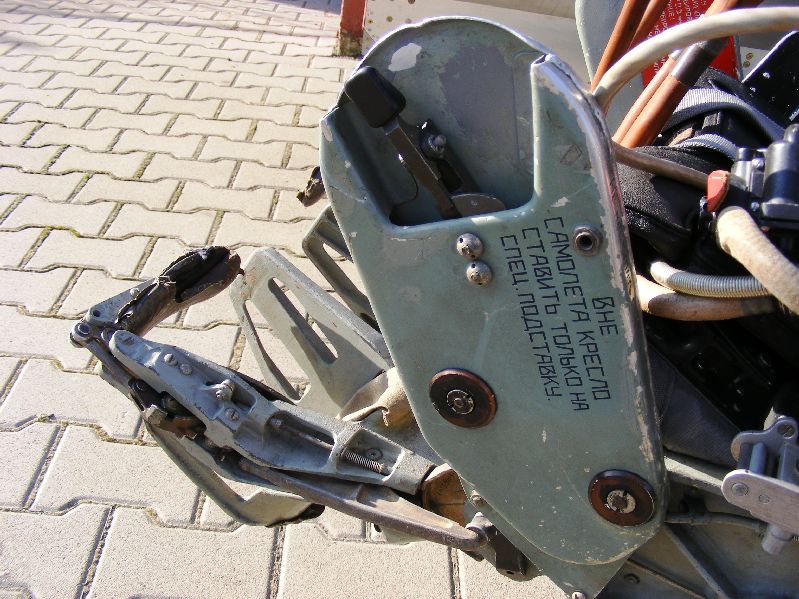
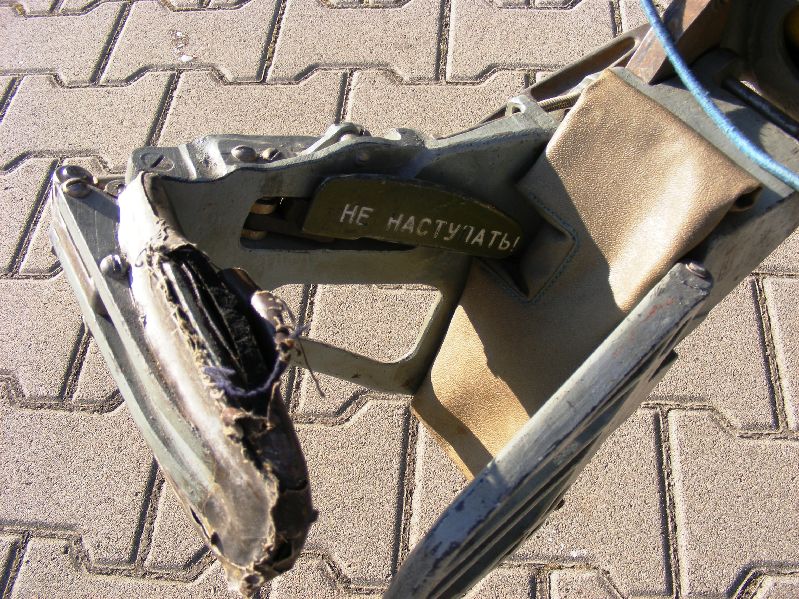
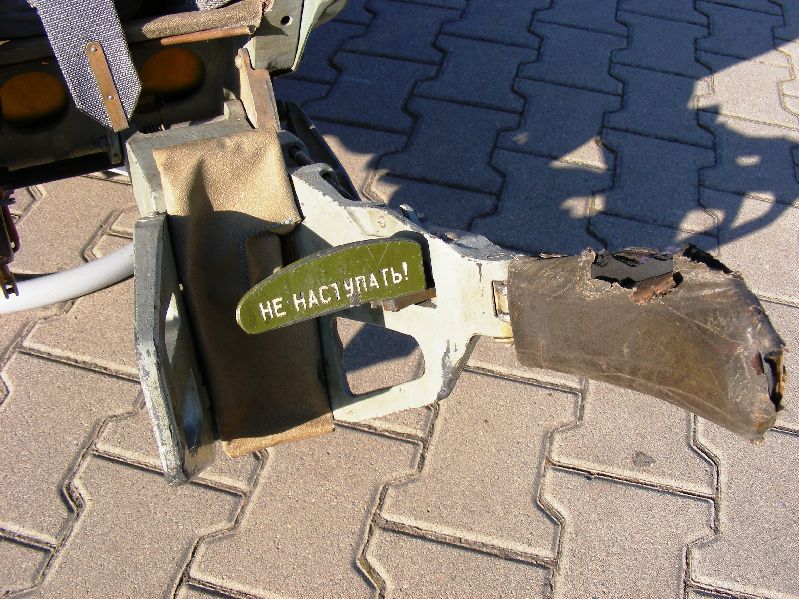
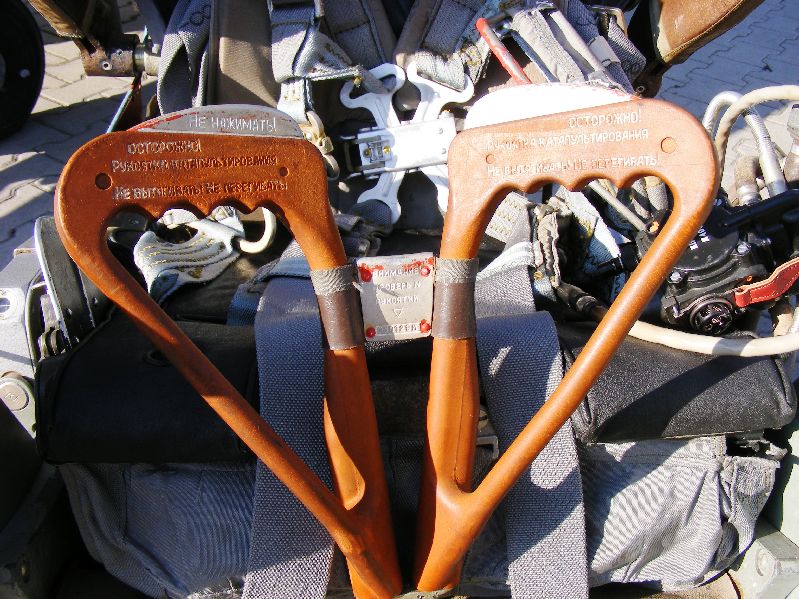
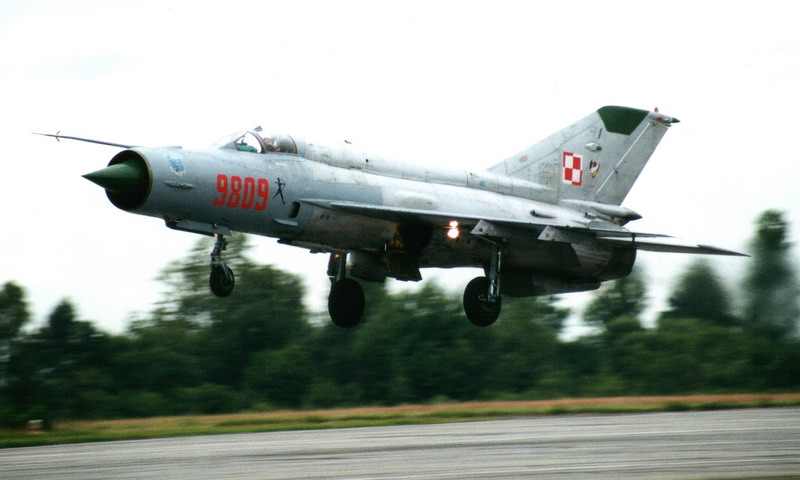
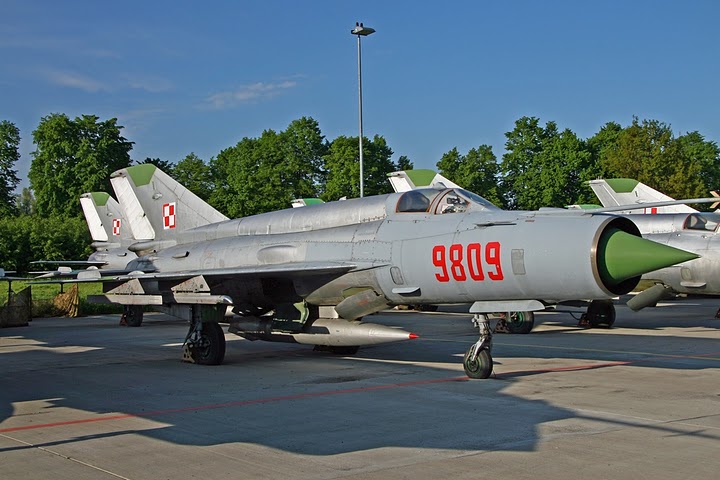
The MiG-21bis aircraft in which my seat was used