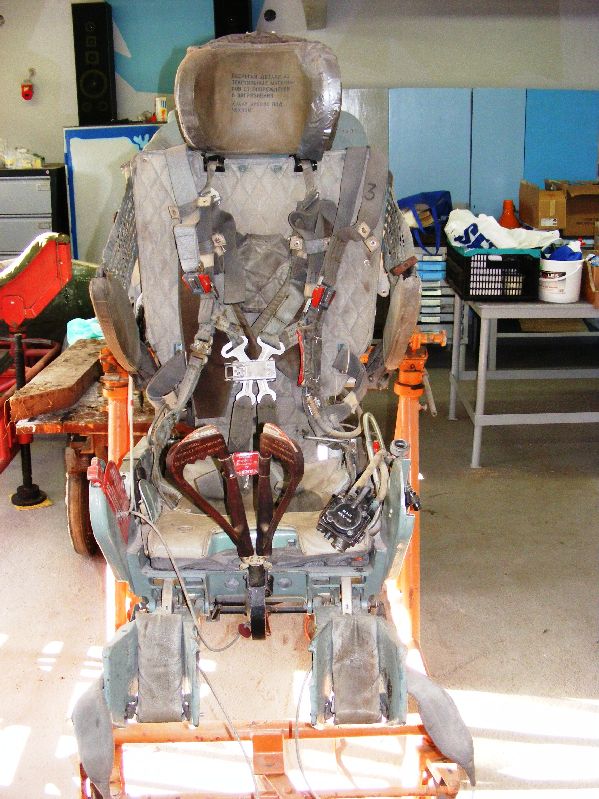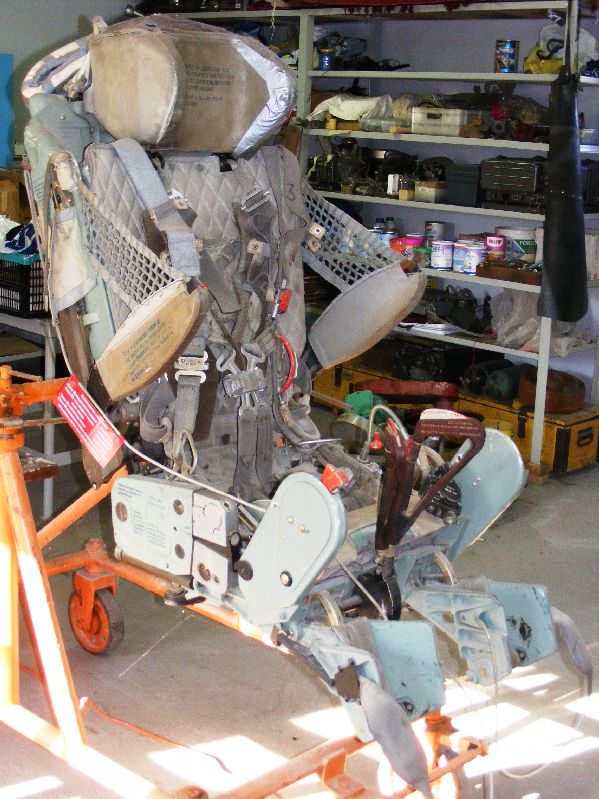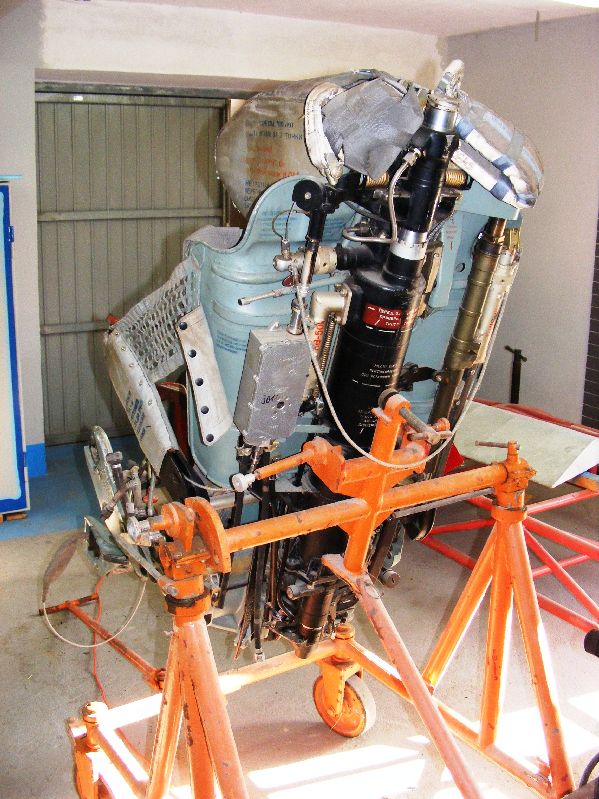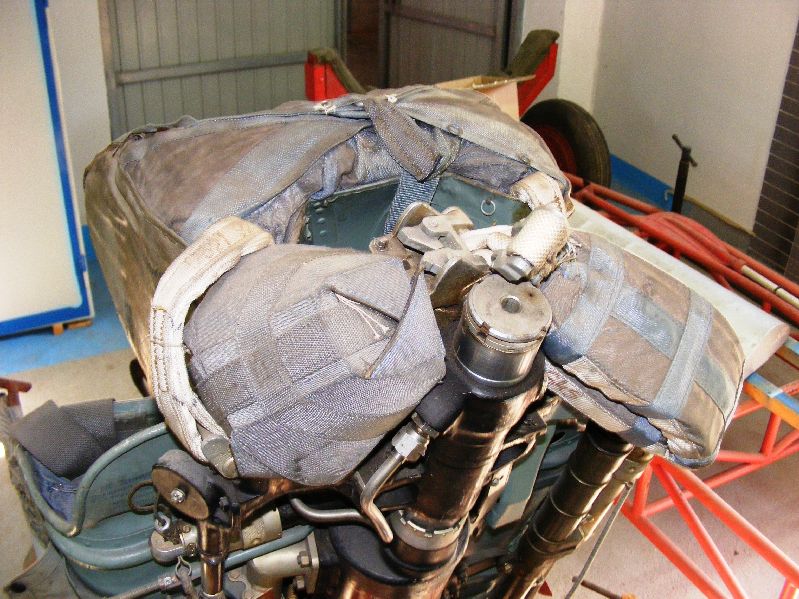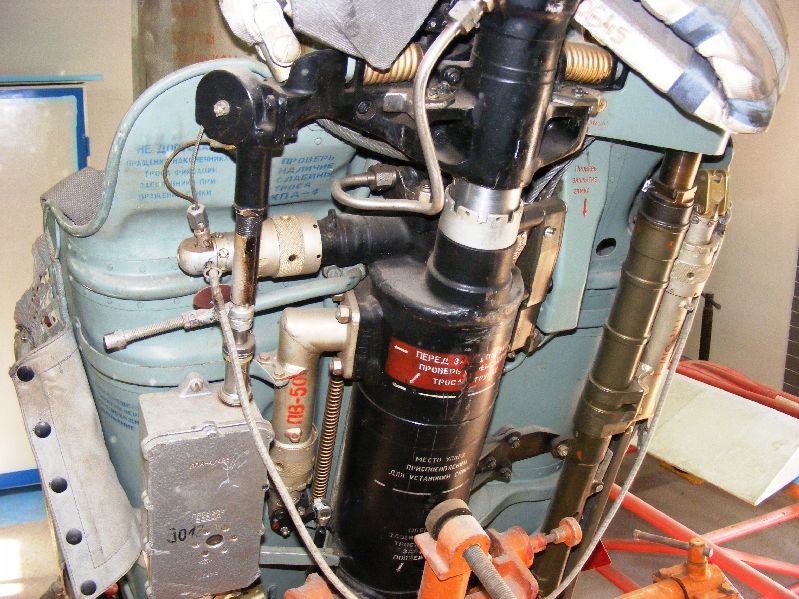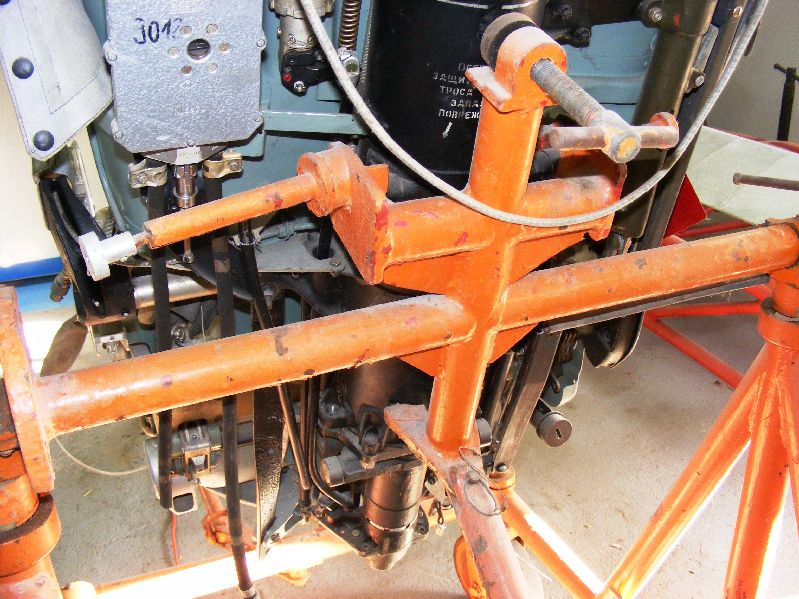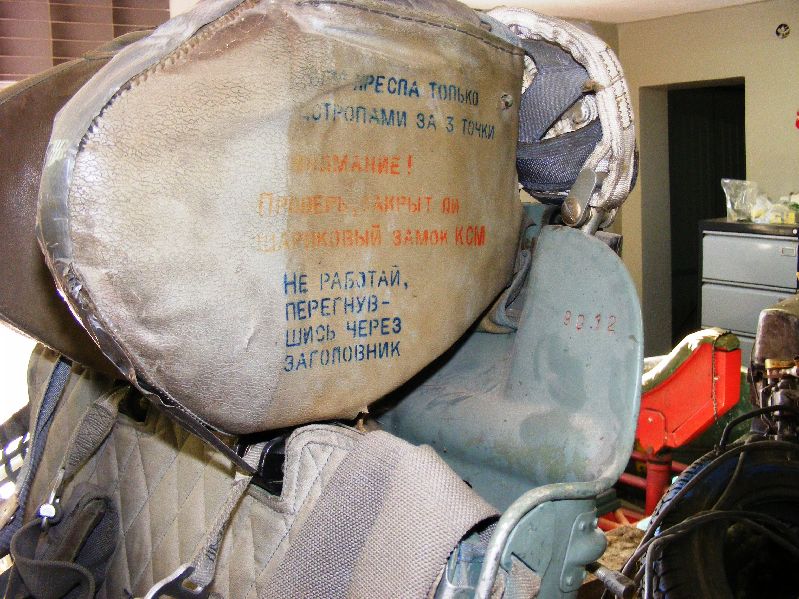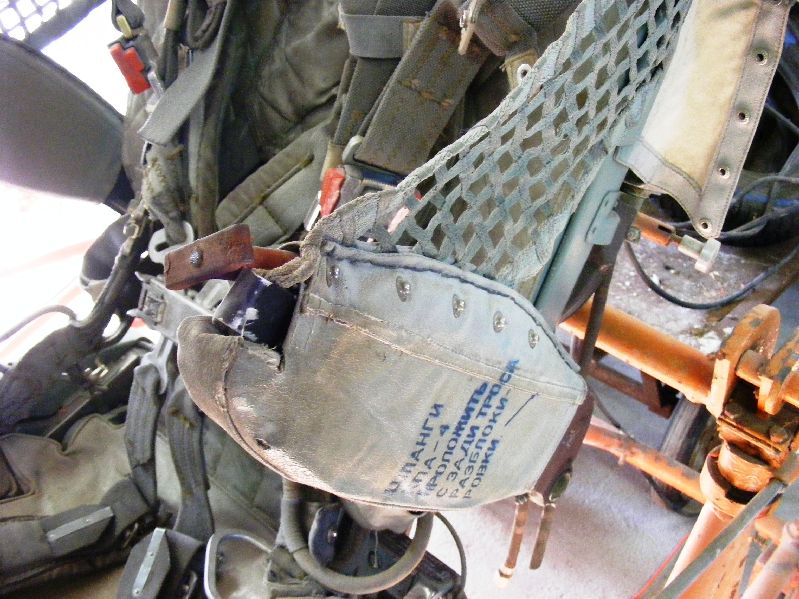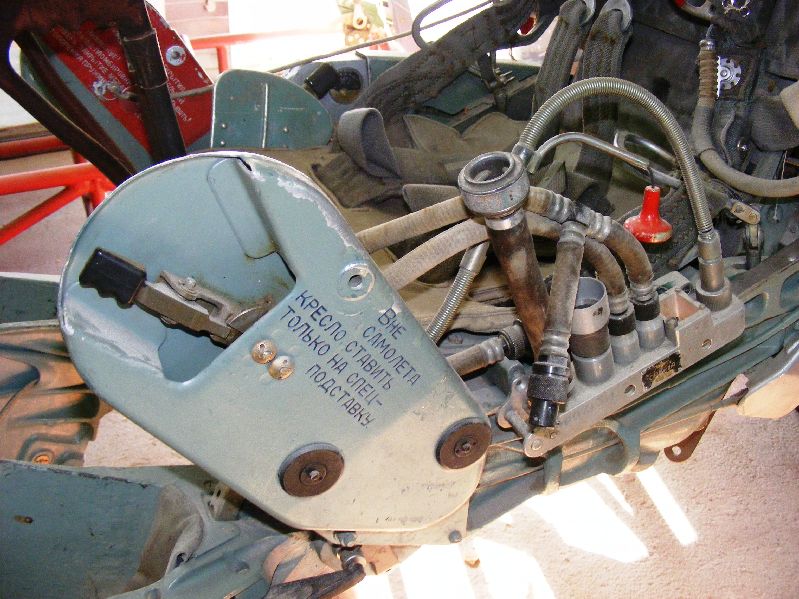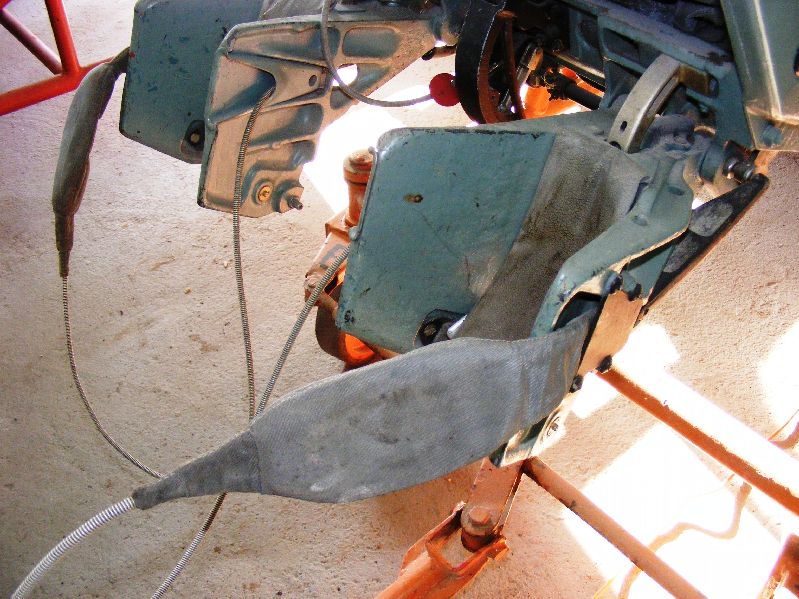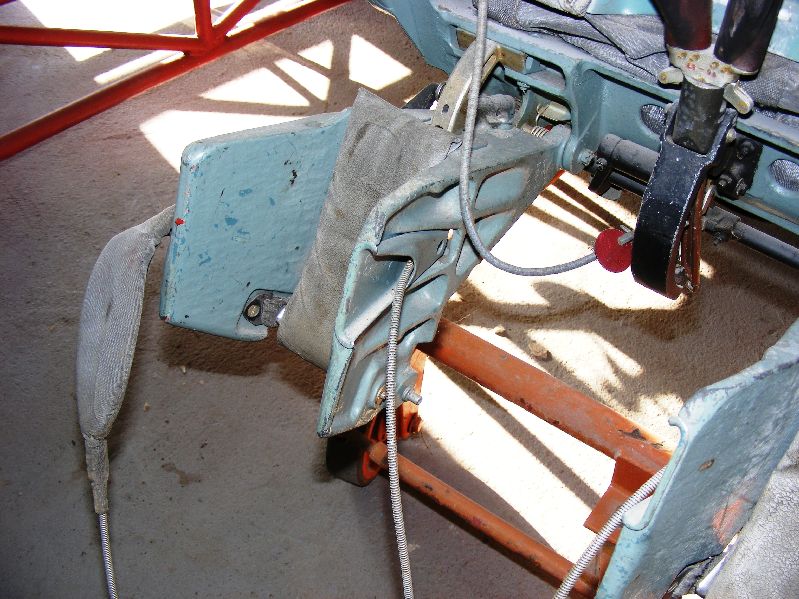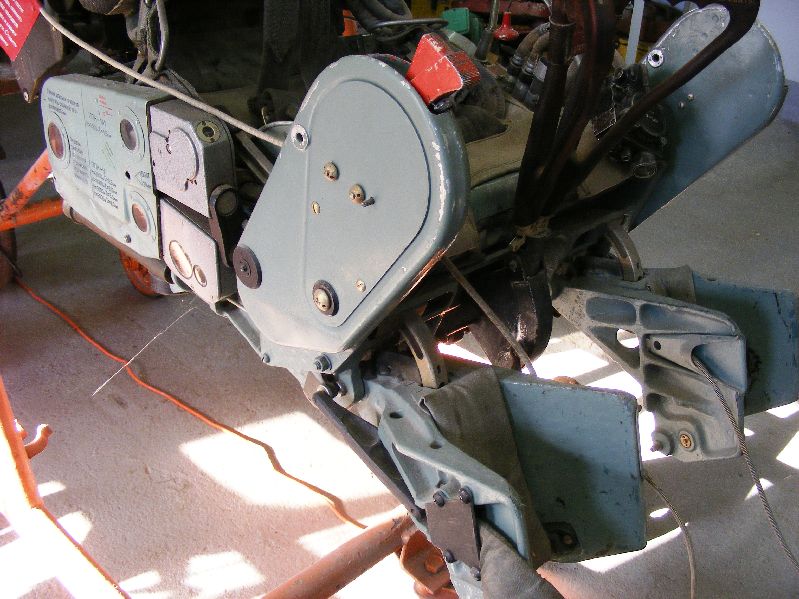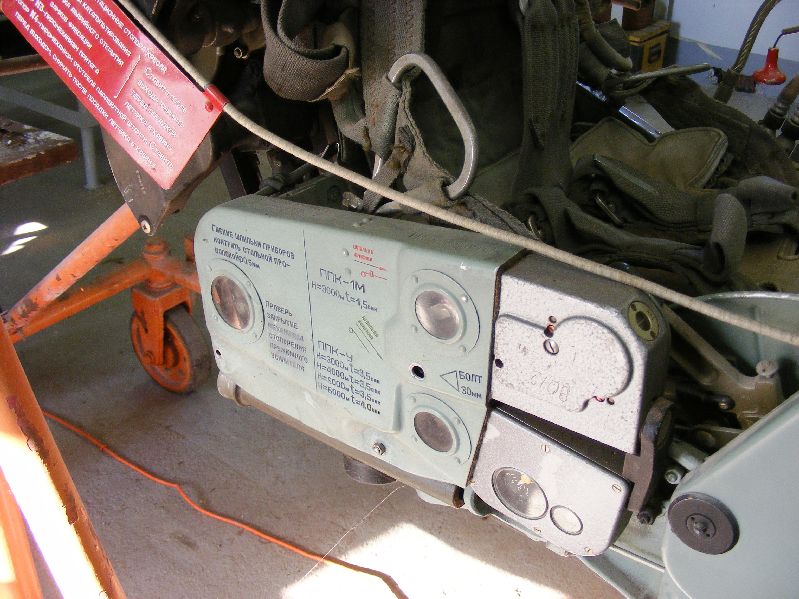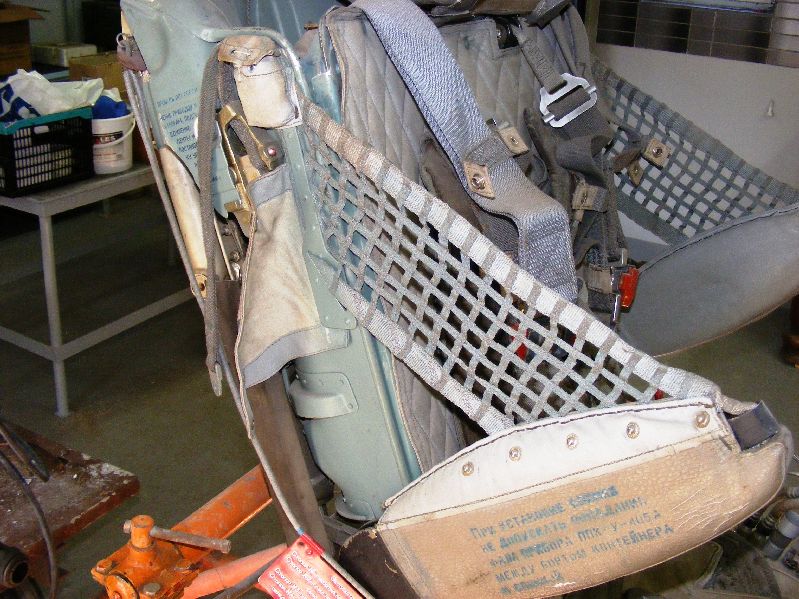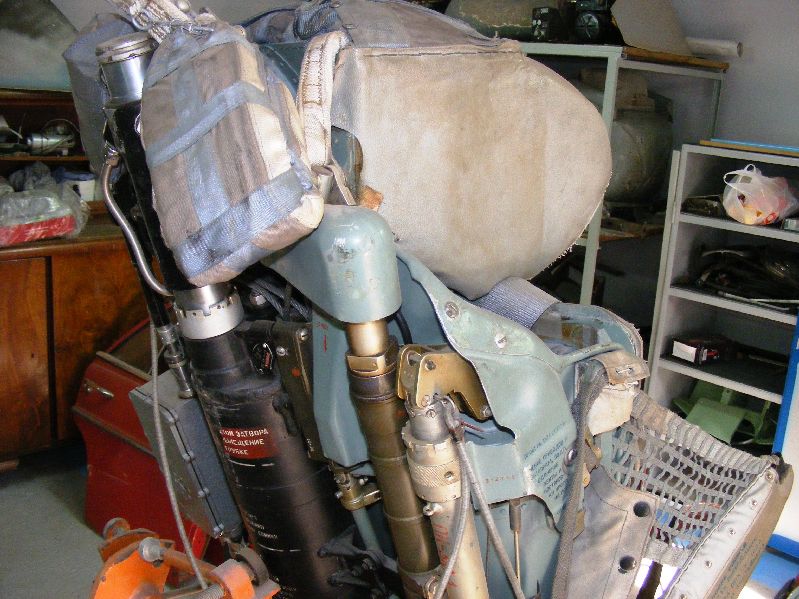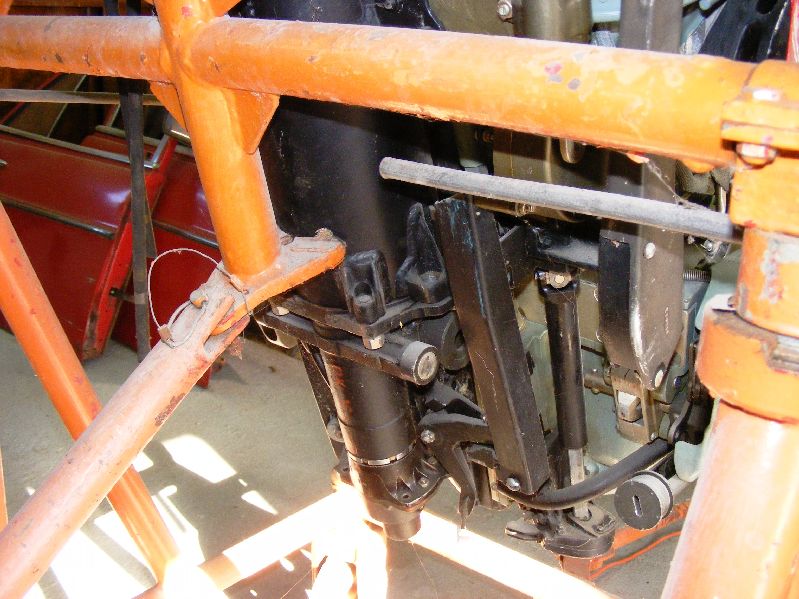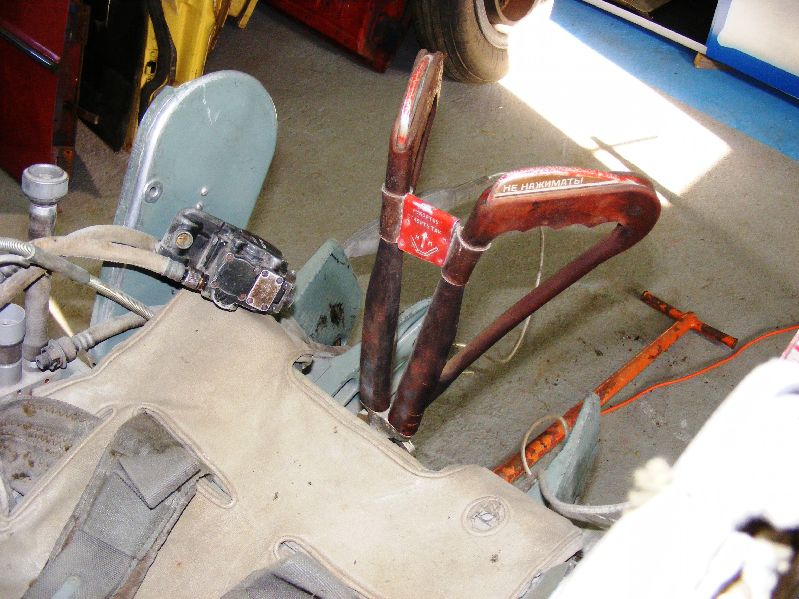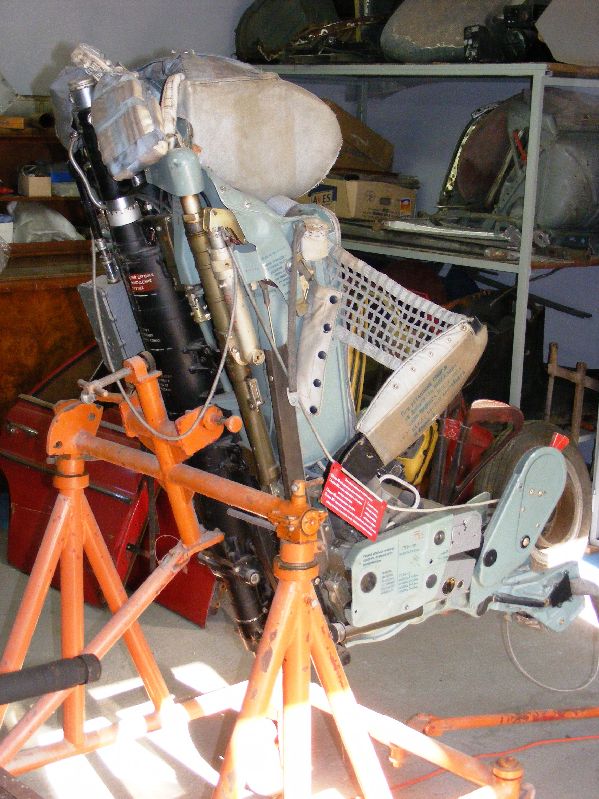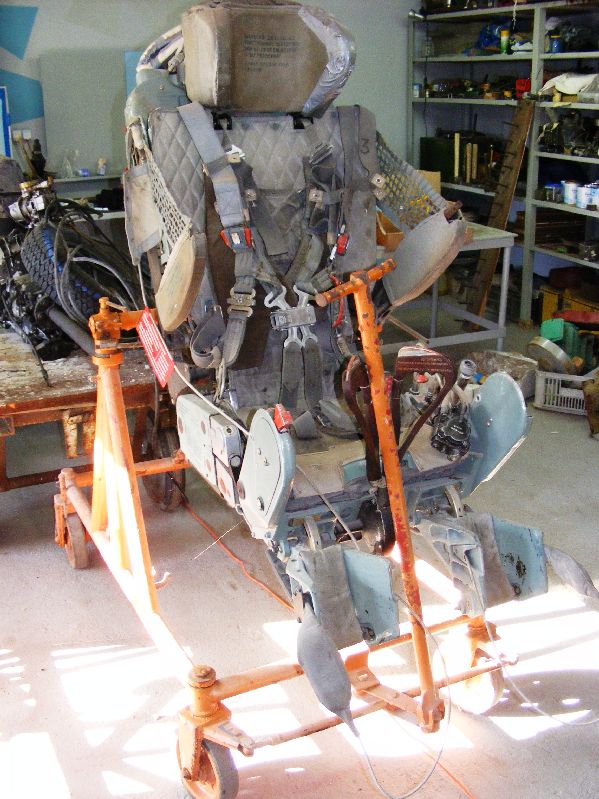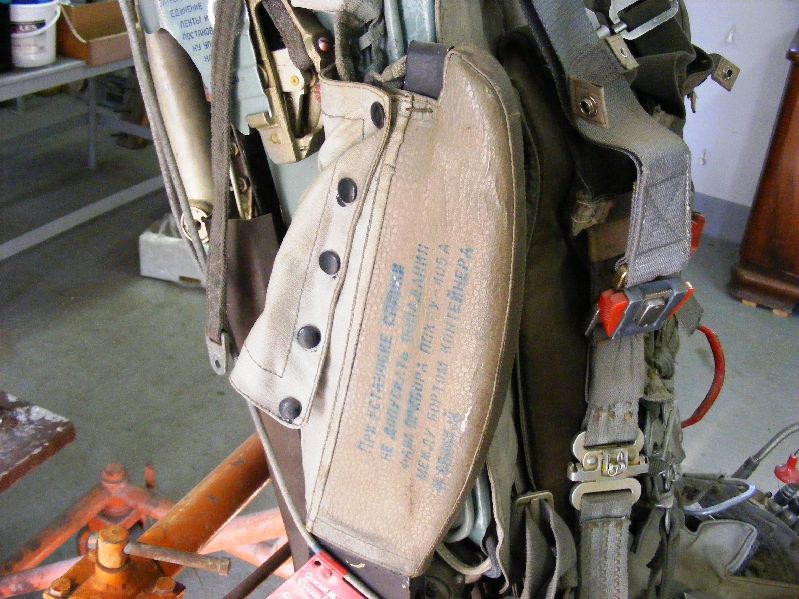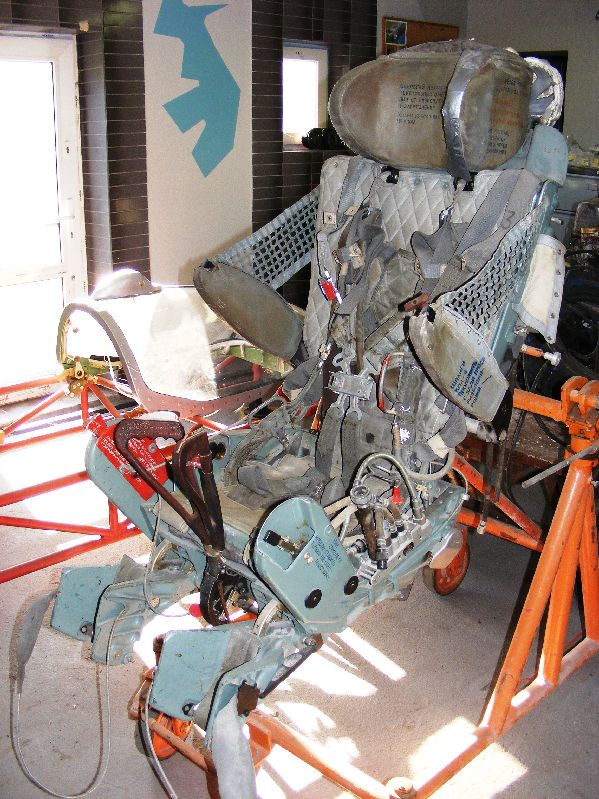
The KM-1M ejection seat is a modified version of the KM-1 and is used in the MiG-23 and MiG-25 as well as the MiG-21MF, bis and UM. In the front (student) cockpit of the two-seaters the KM-1UM variant is fitted, and in the instructor’s cockpit the KM-1IM. In the MiG-21UM this applies to aircraft from serial number 08695155 onwards.
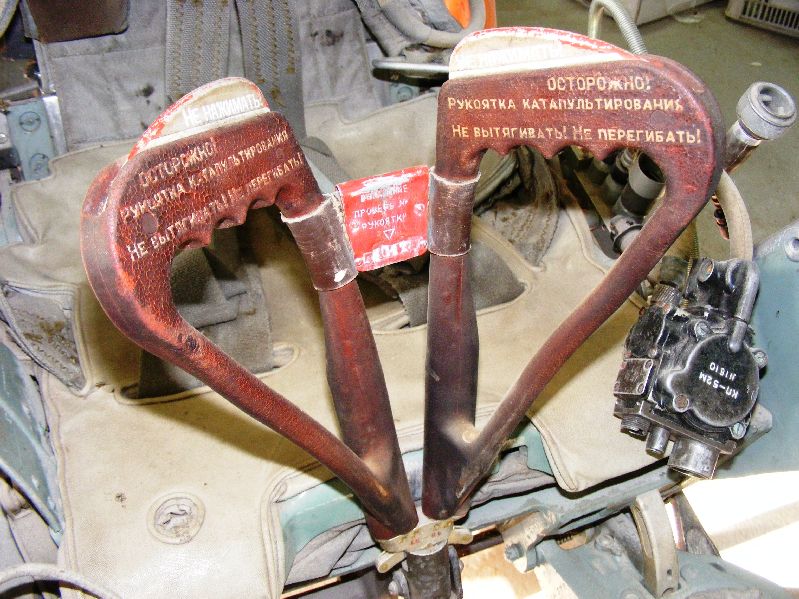
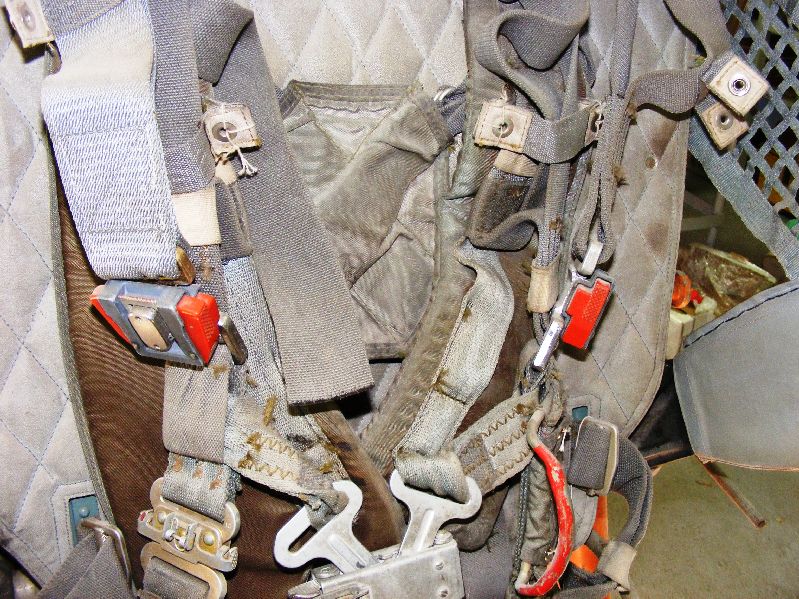
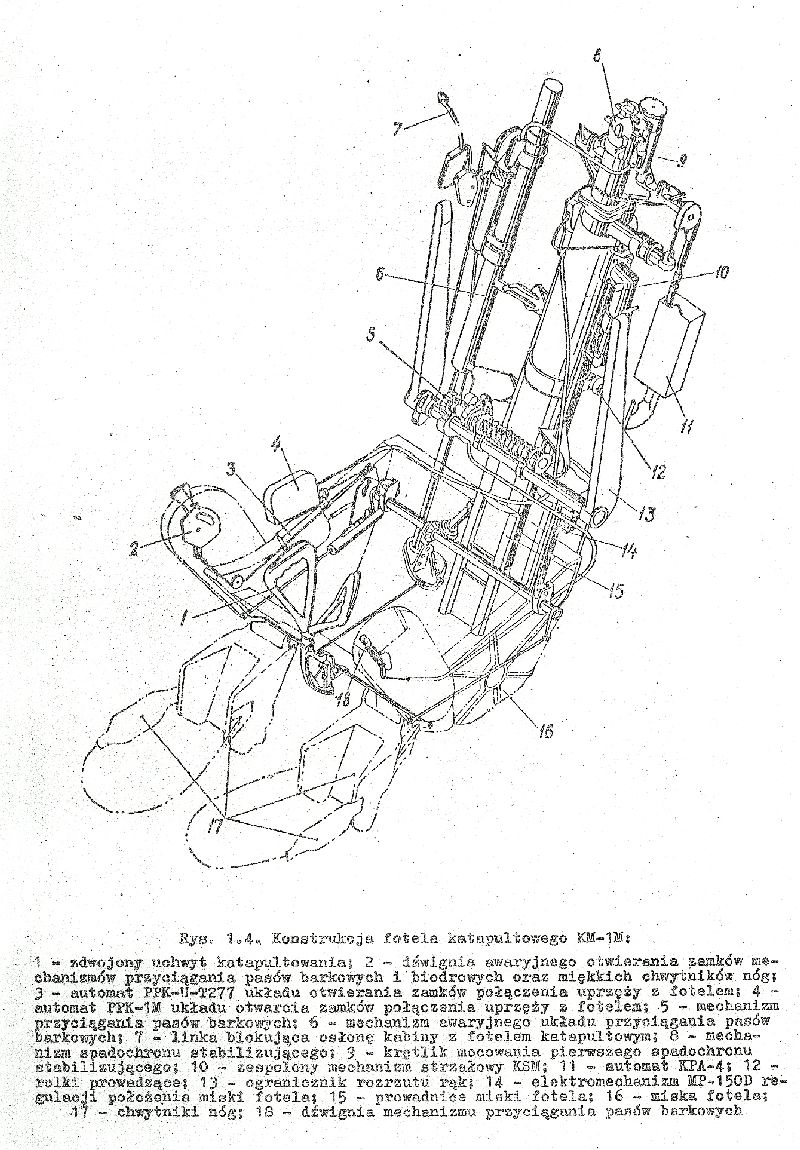
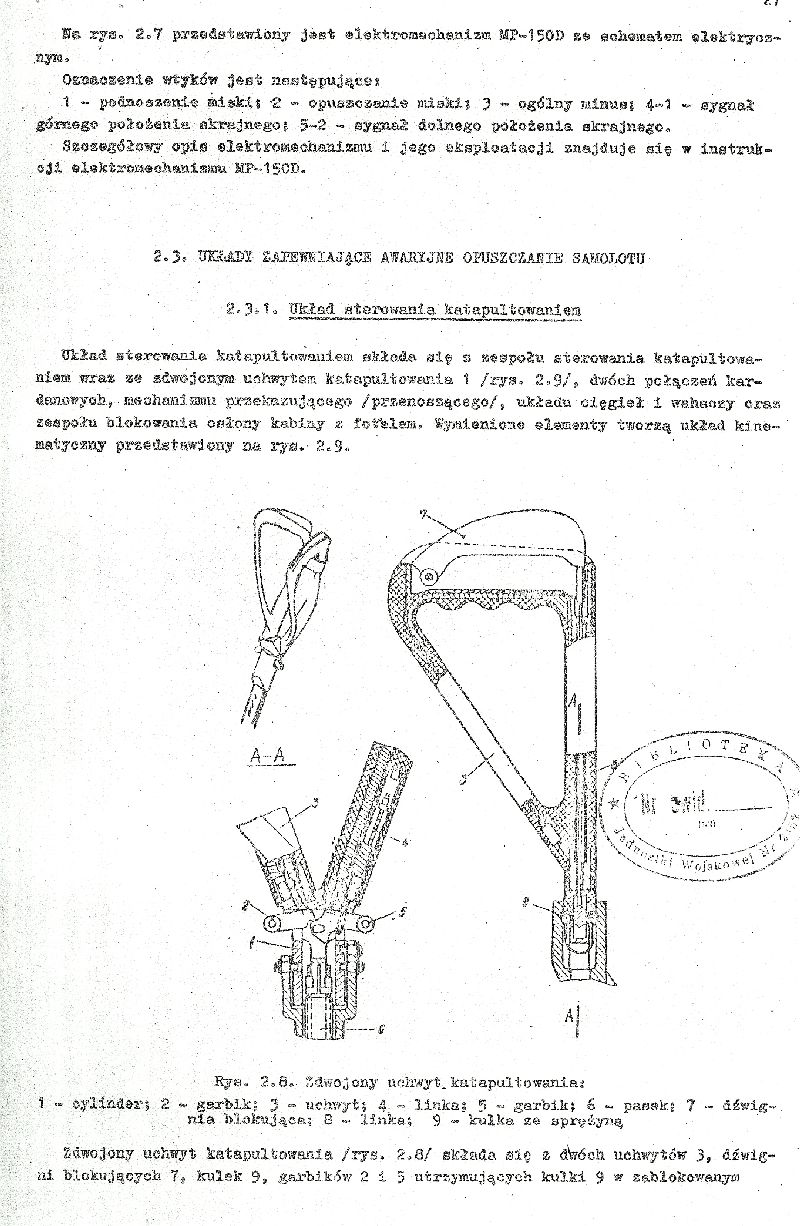
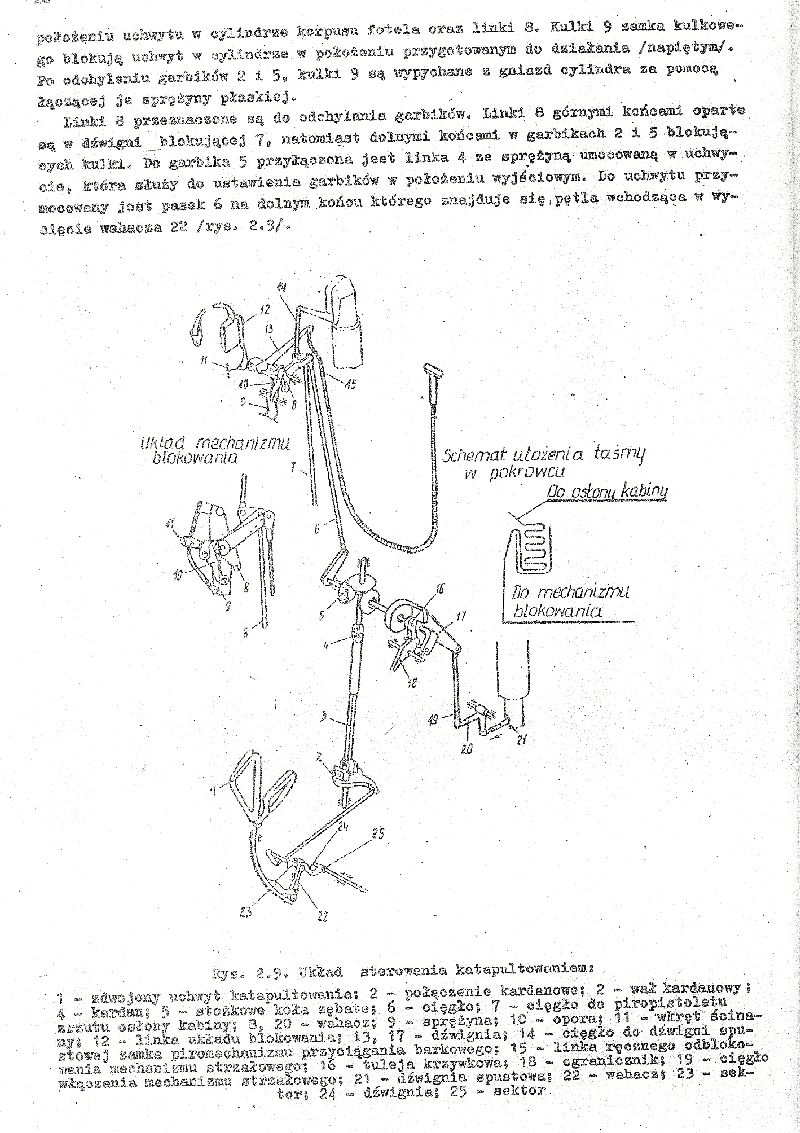
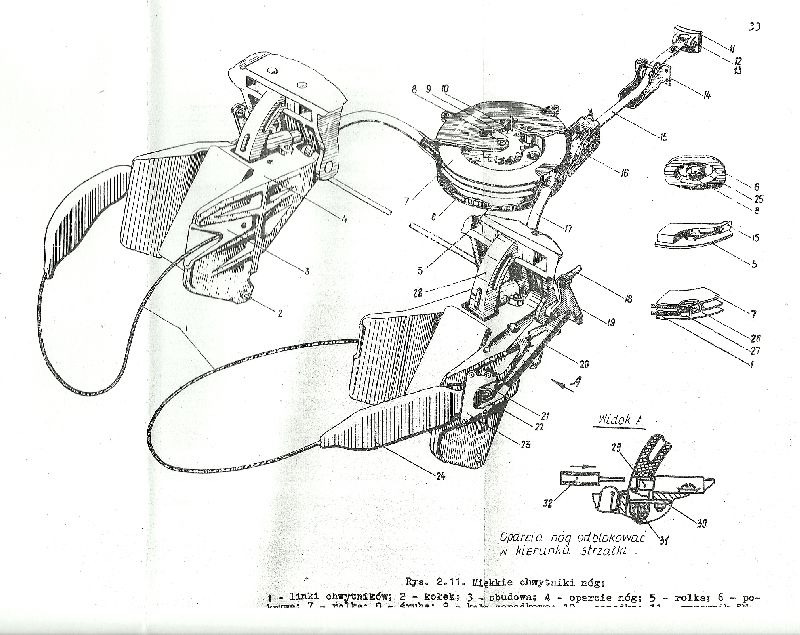
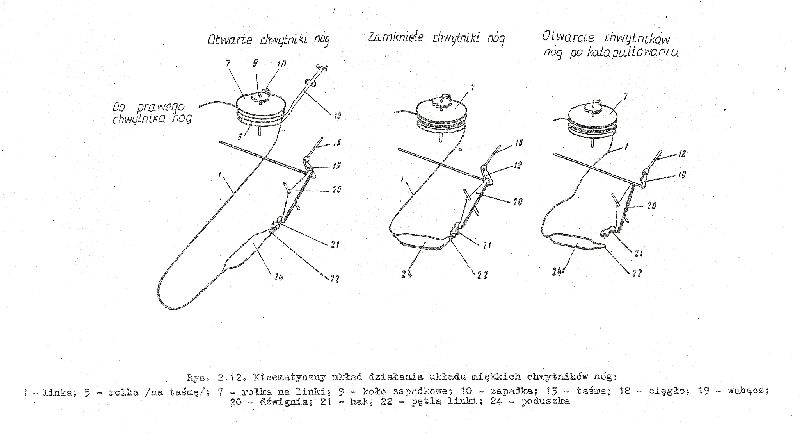
Compared with the KM-1, the KM-1M has, among other things, a shallower bucket, soft leg restraints with a Bowden loop, a different colour scheme of individual components, and a handle that allows the flight safety pin to be removed and ejection through the canopy. At the cost of a smaller bucket, its longitudinal stiffeners on the underside were made taller. The latest variants of this seat have different upholstery and harness and are entirely black. They were found in some MiG-21bis aircraft at Malbork and in Czech MiG-23MLs. They are probably designated KM-3.
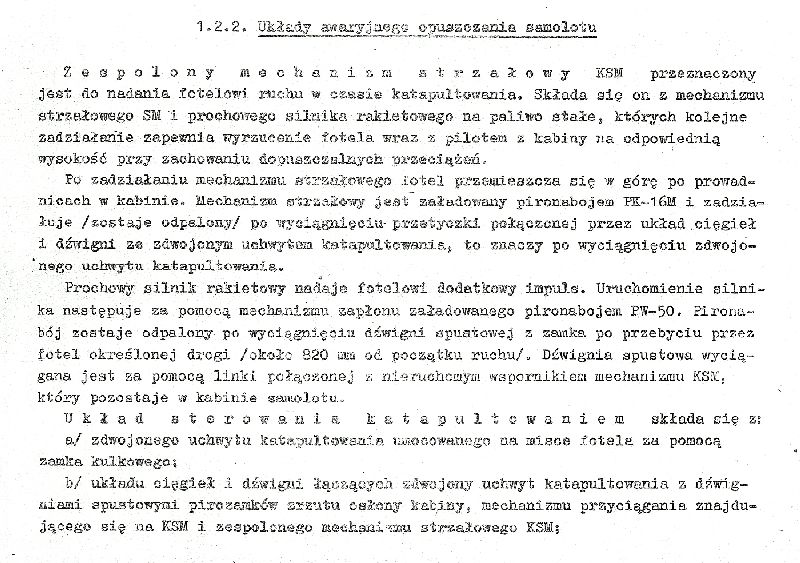
The KM-1M seat ensures crew rescue at all flight altitudes at indicated airspeeds from 130 km/h to 1200 km/h. The pilot is protected from the airblast during ejection by the GSh-6M pressure helmet and the VKK-6M high-altitude pressure suit. In the two-seaters, the canopy jettison and ejection control systems share a common interlock, thanks to which a predetermined order of canopy jettison and ejection is maintained. The instructor always leaves the cockpit first, then the student, after the canopies have been jettisoned in the reverse order.
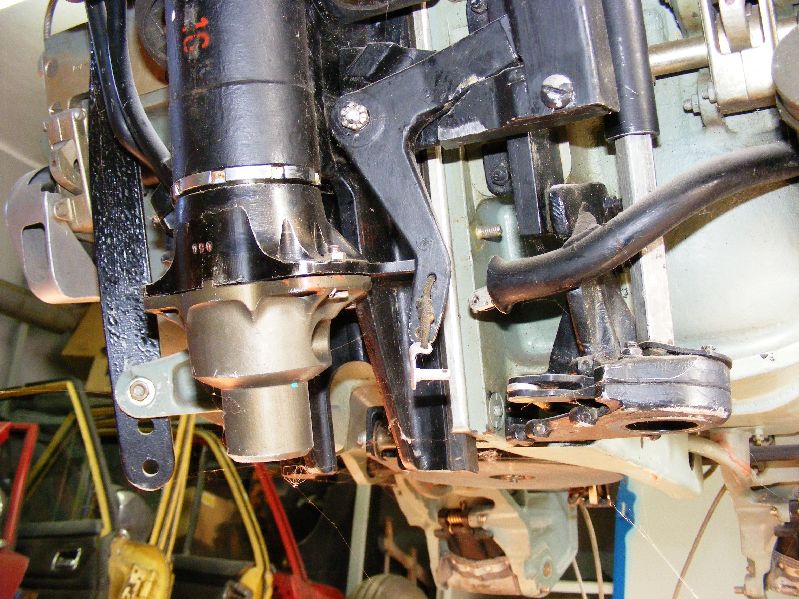
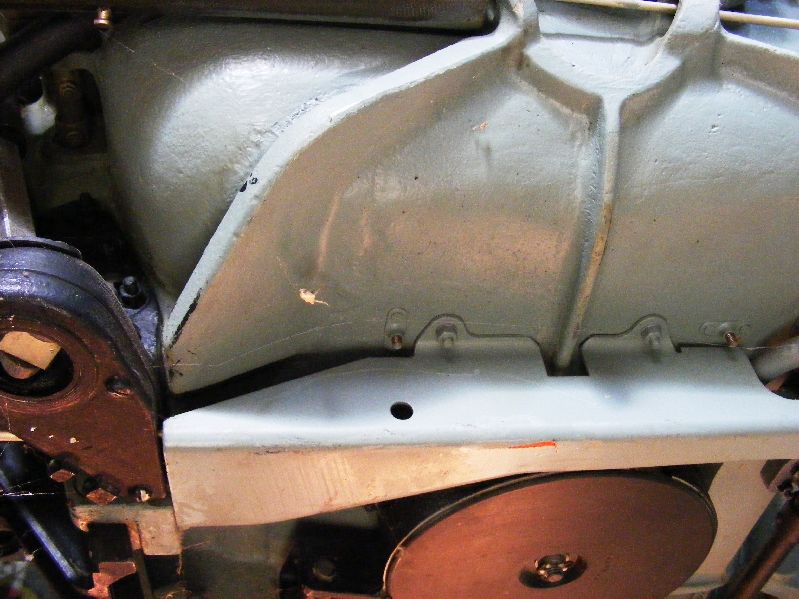
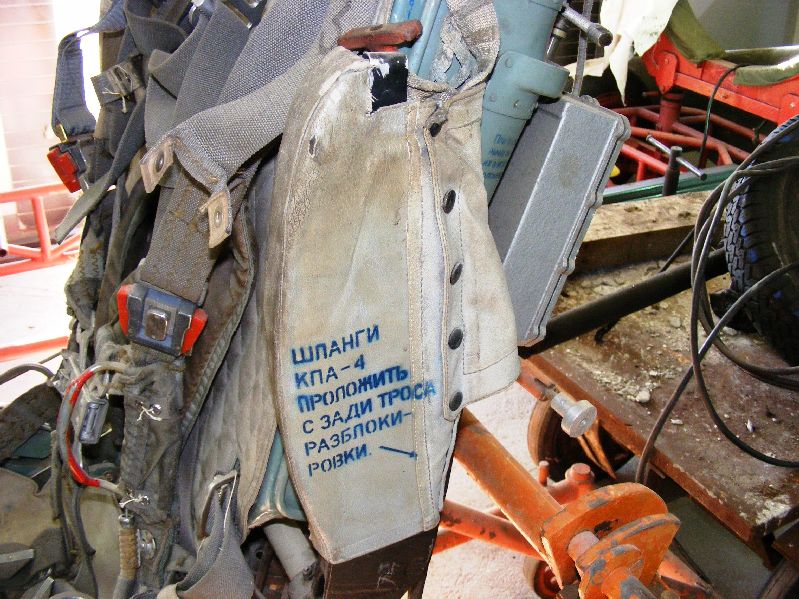
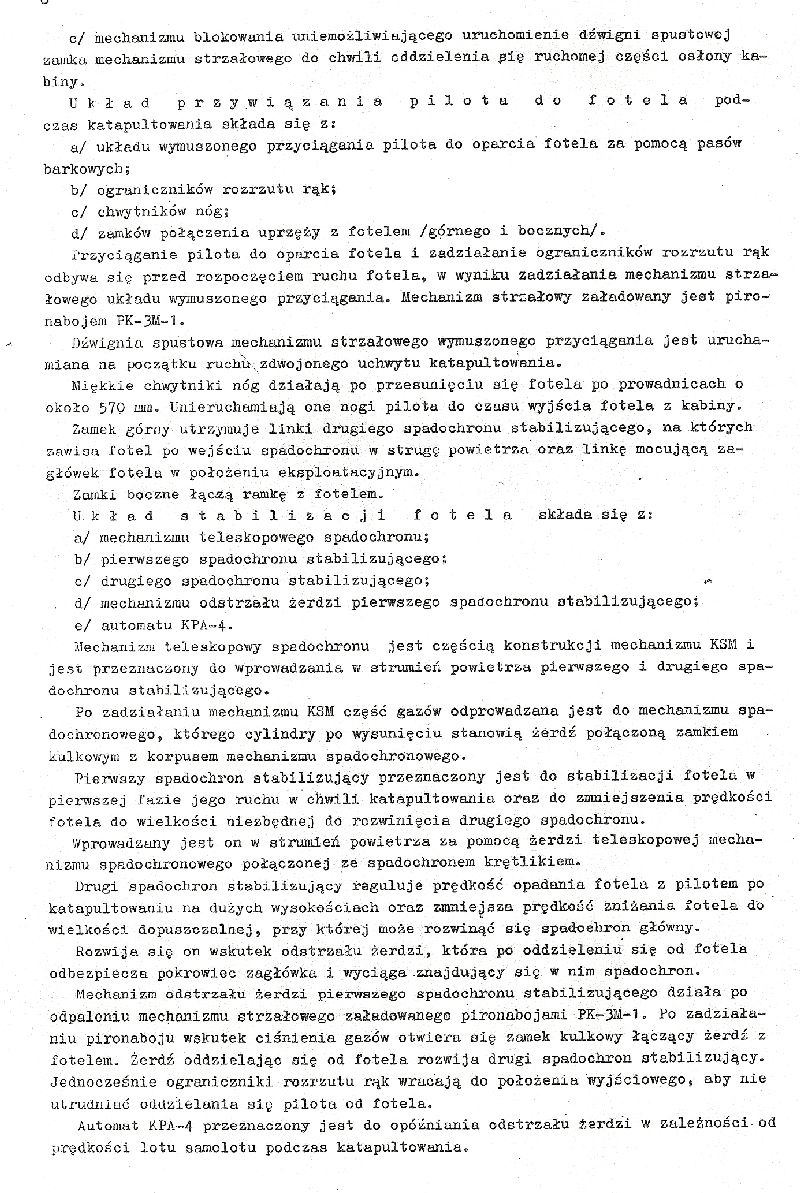
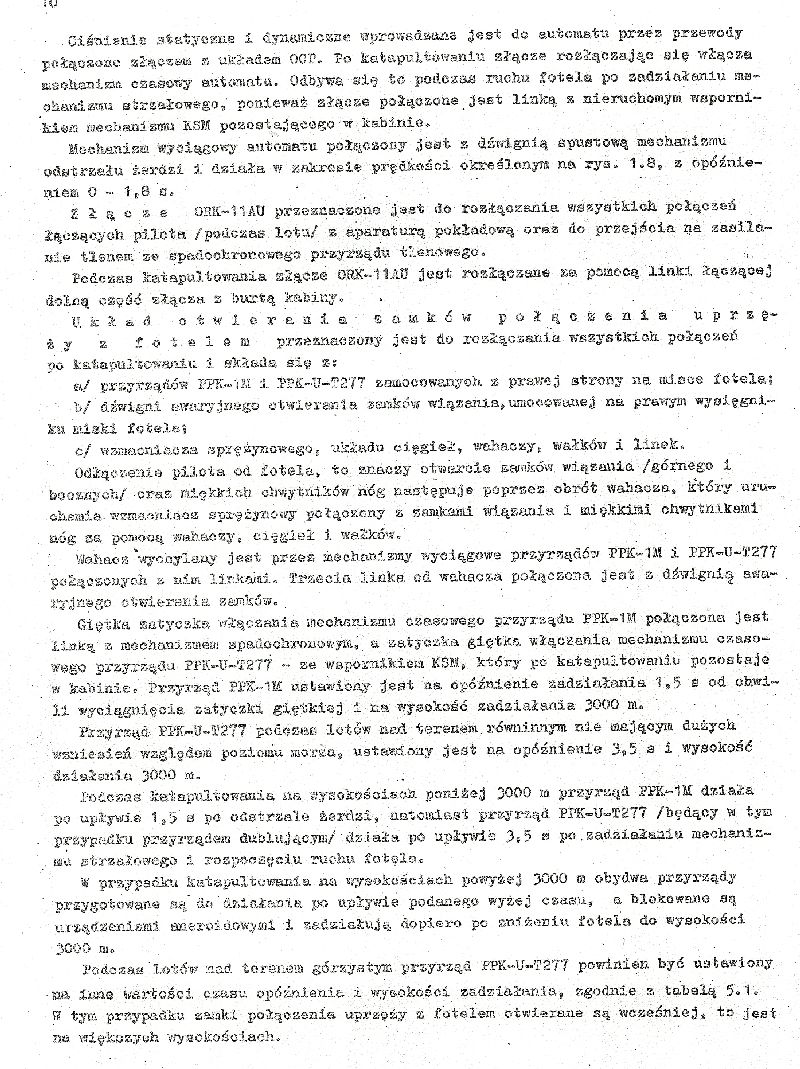
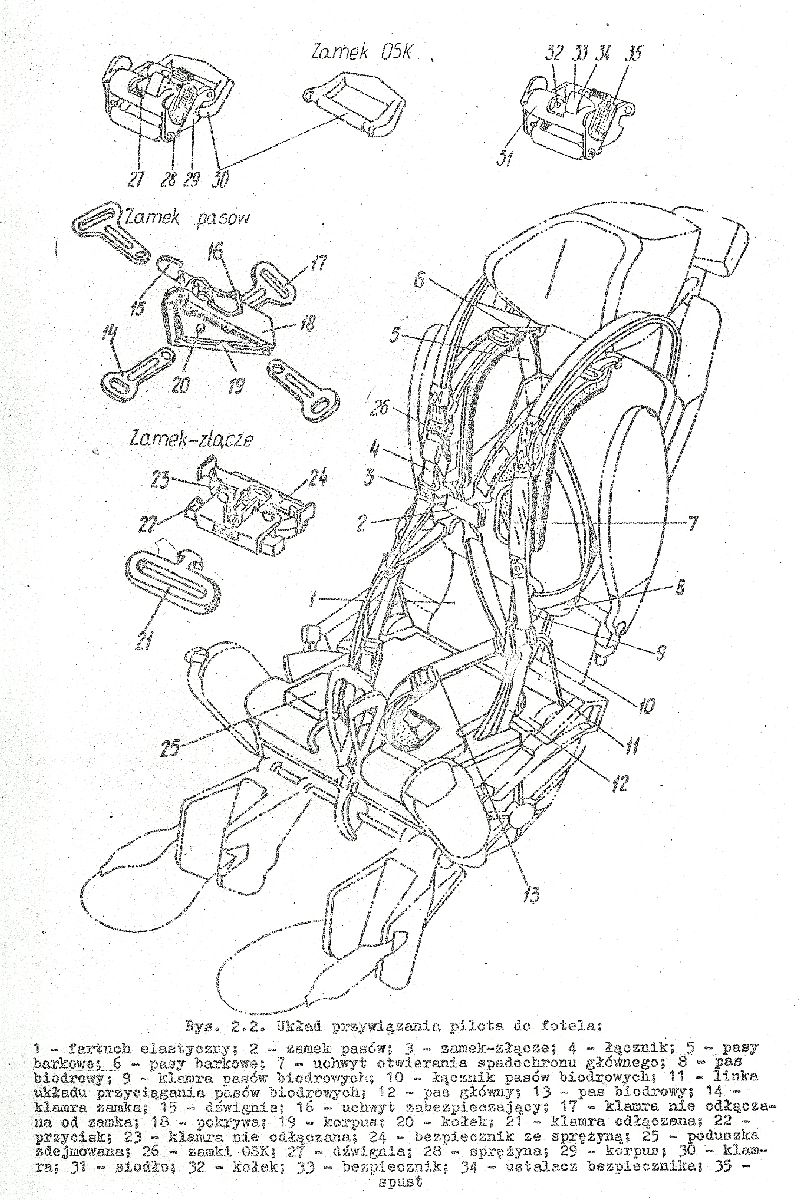
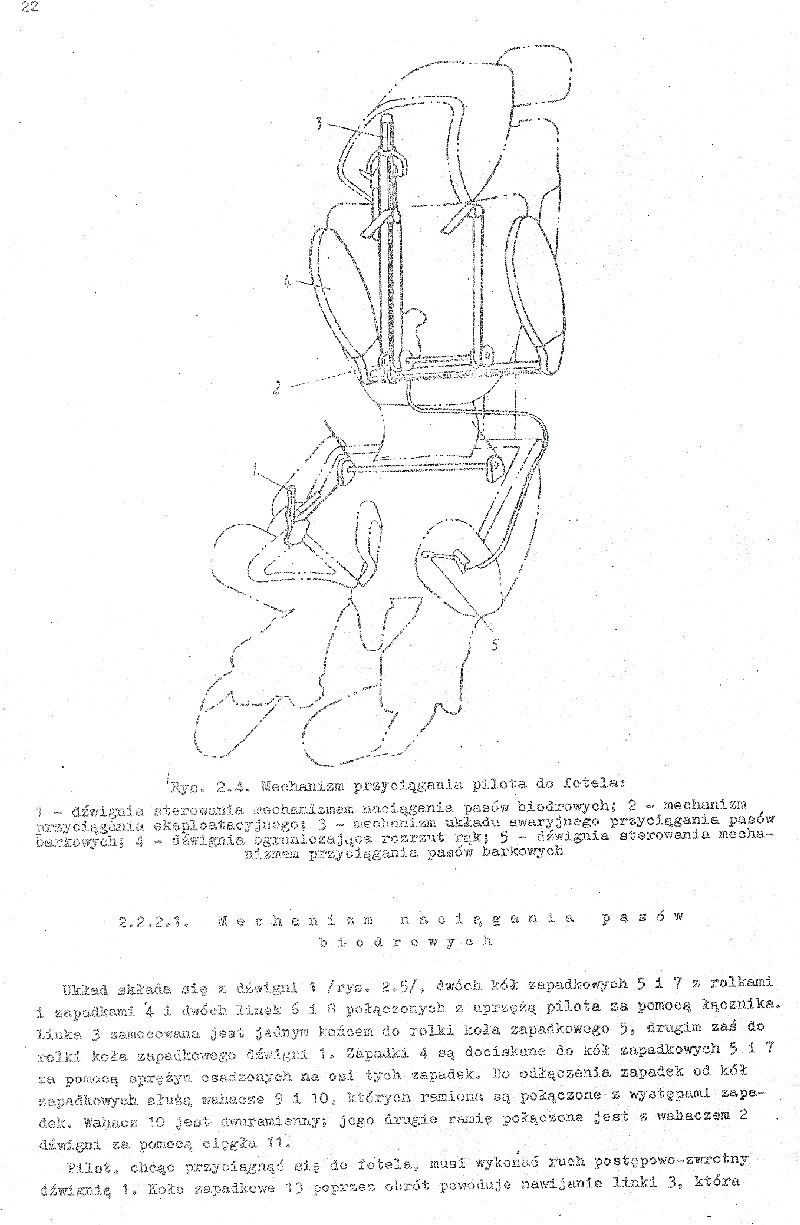
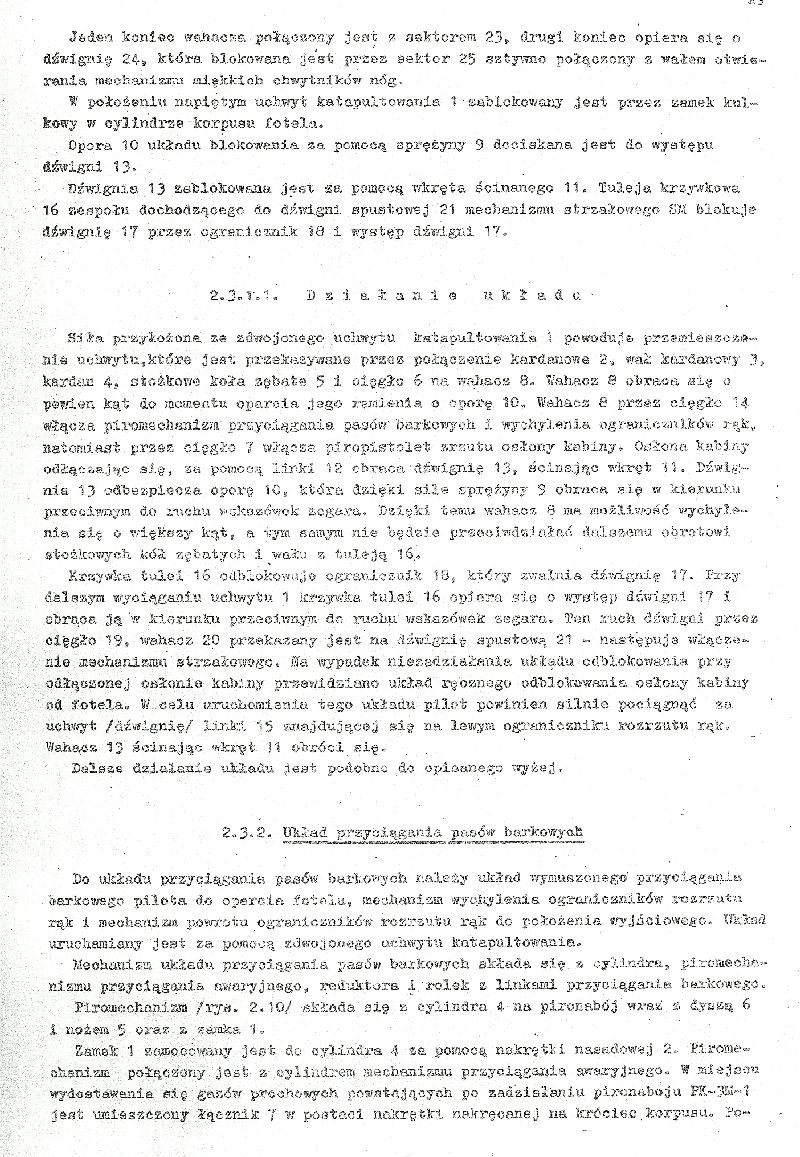
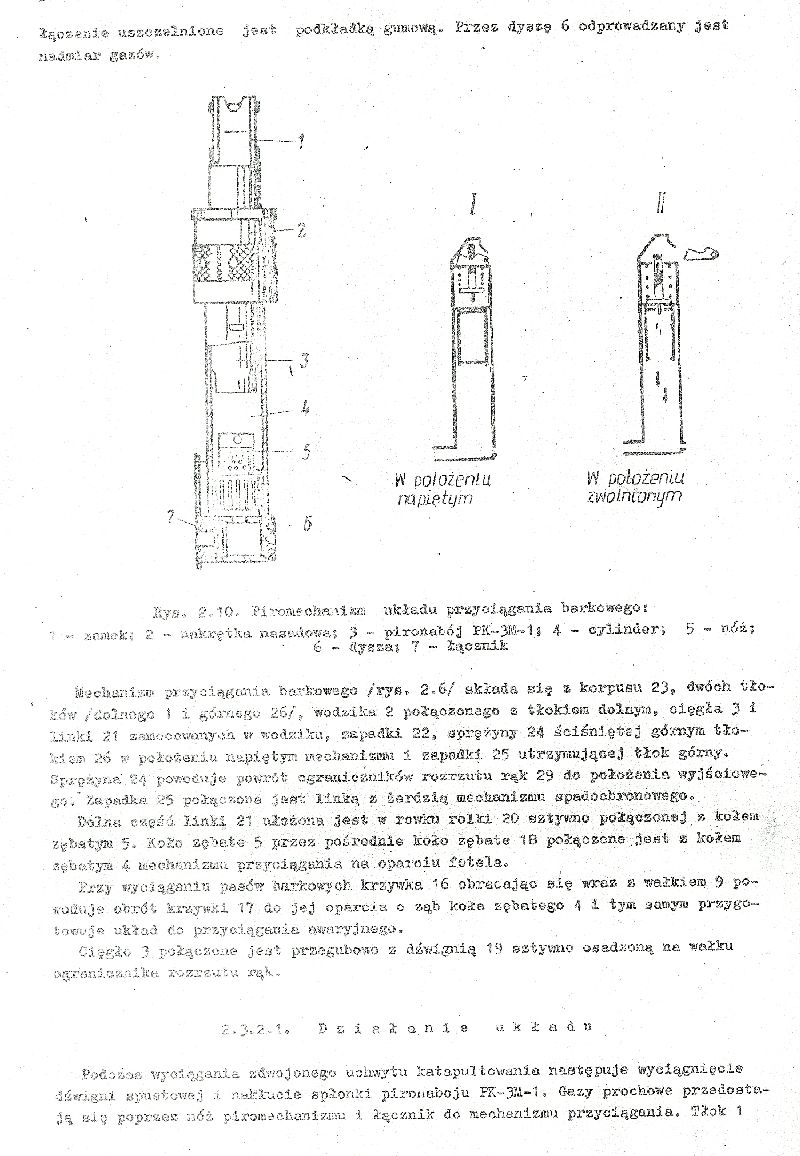
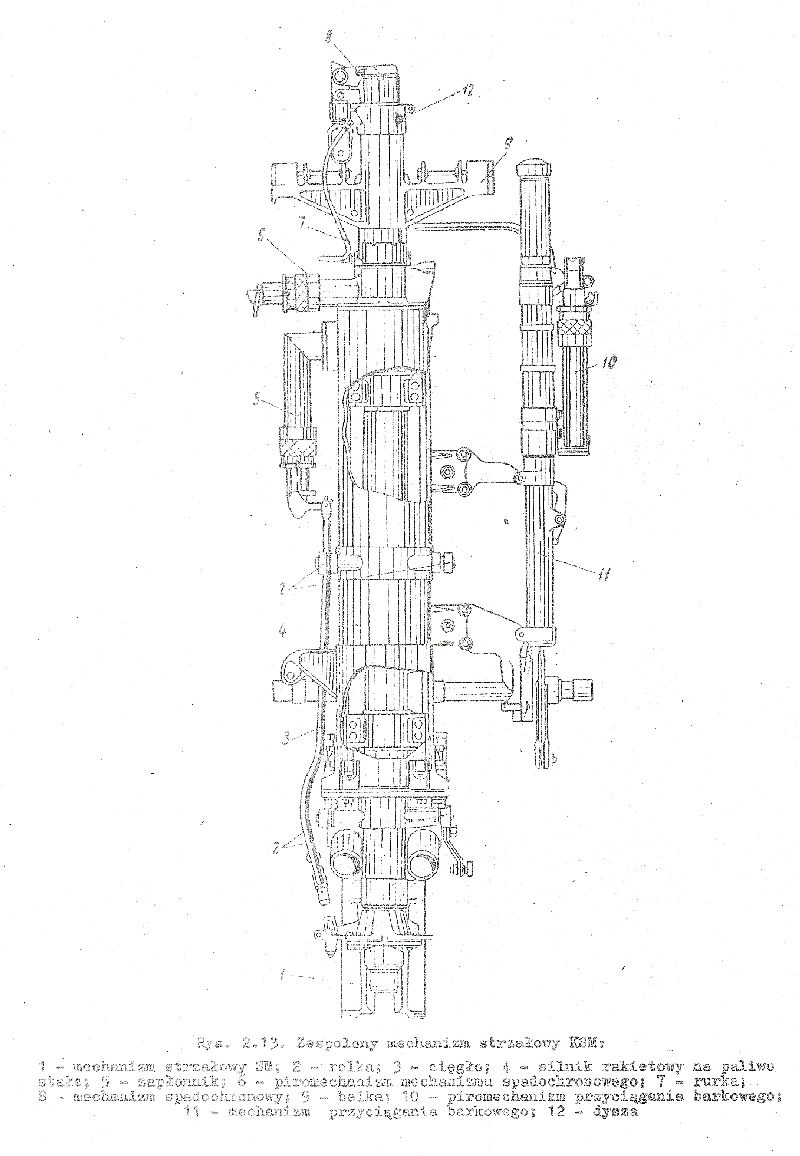
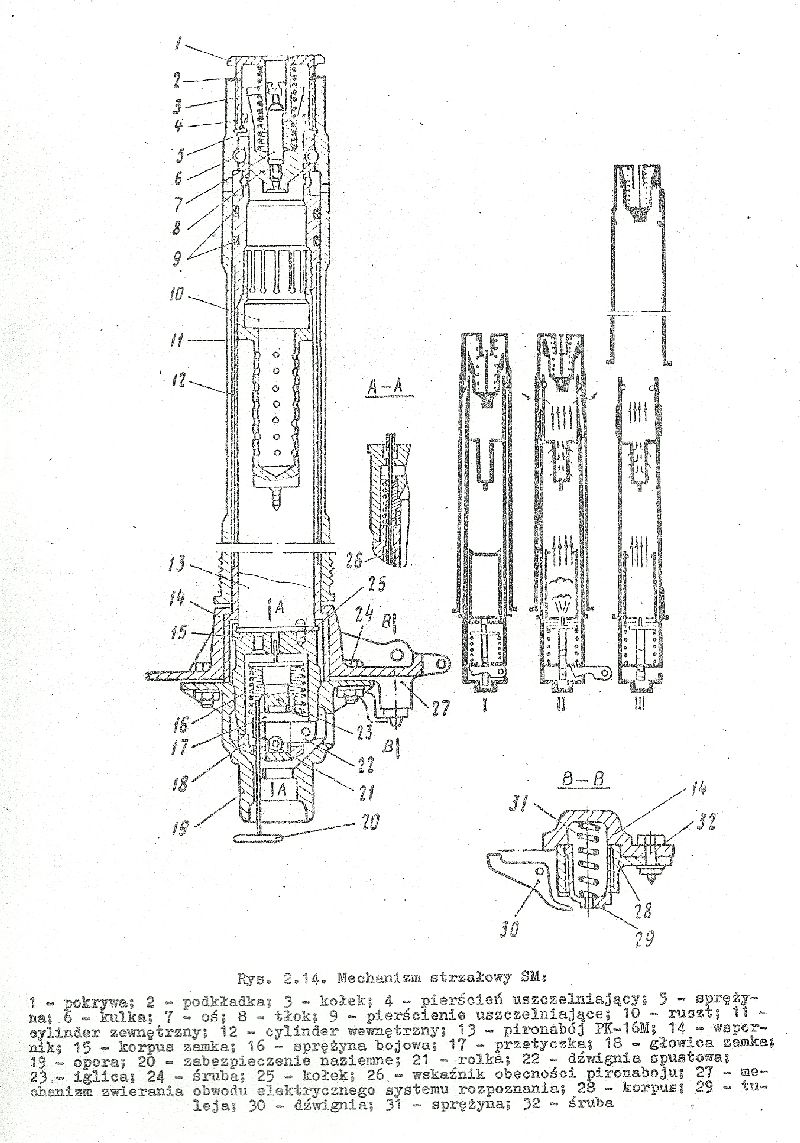
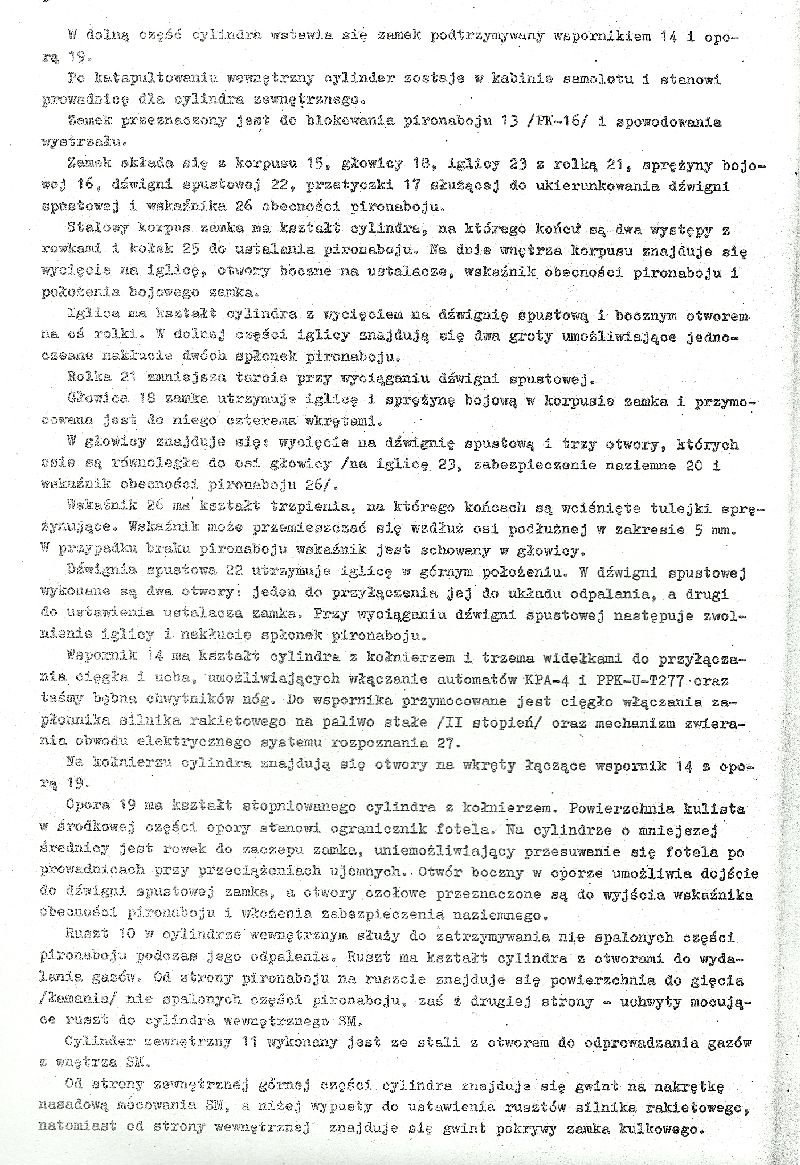
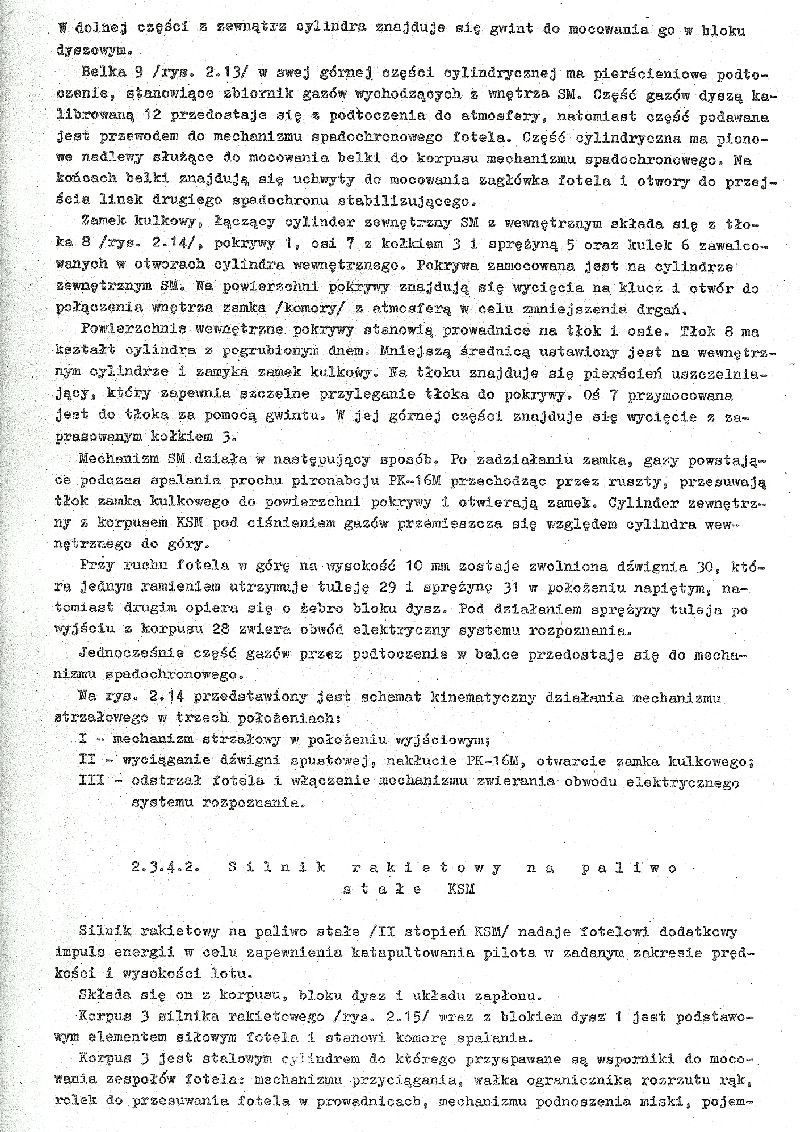
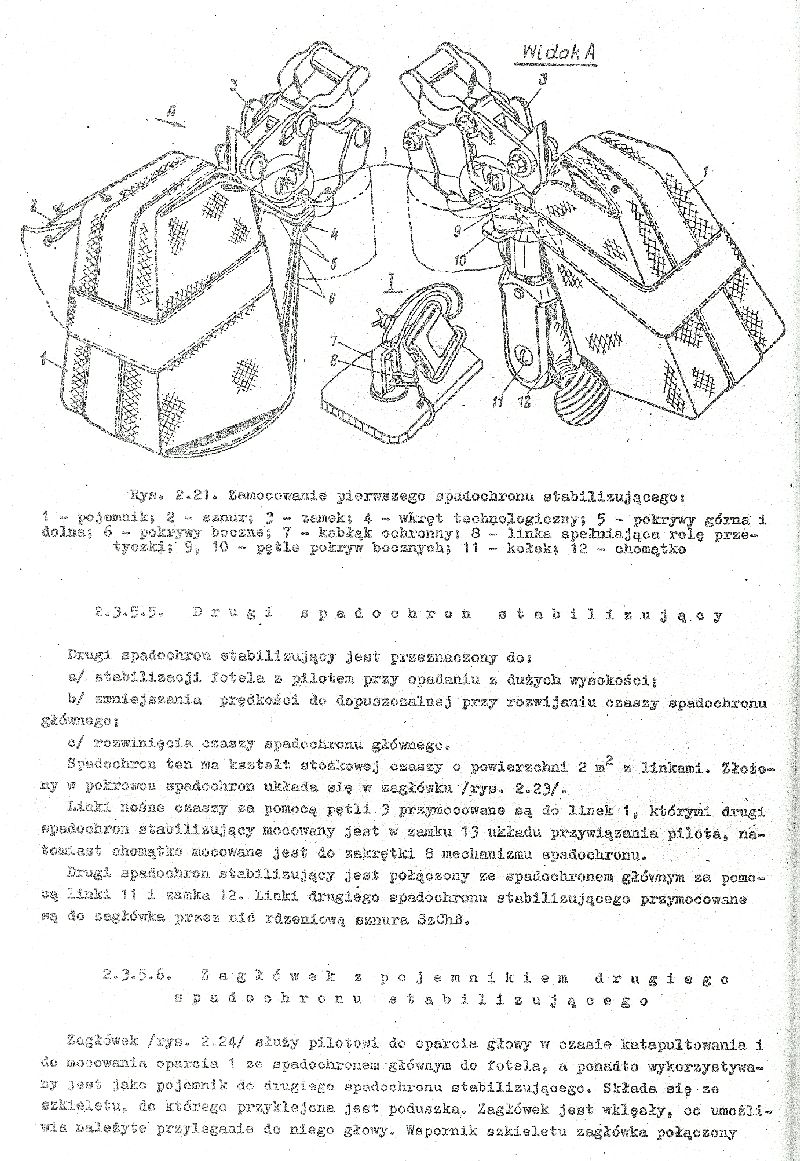
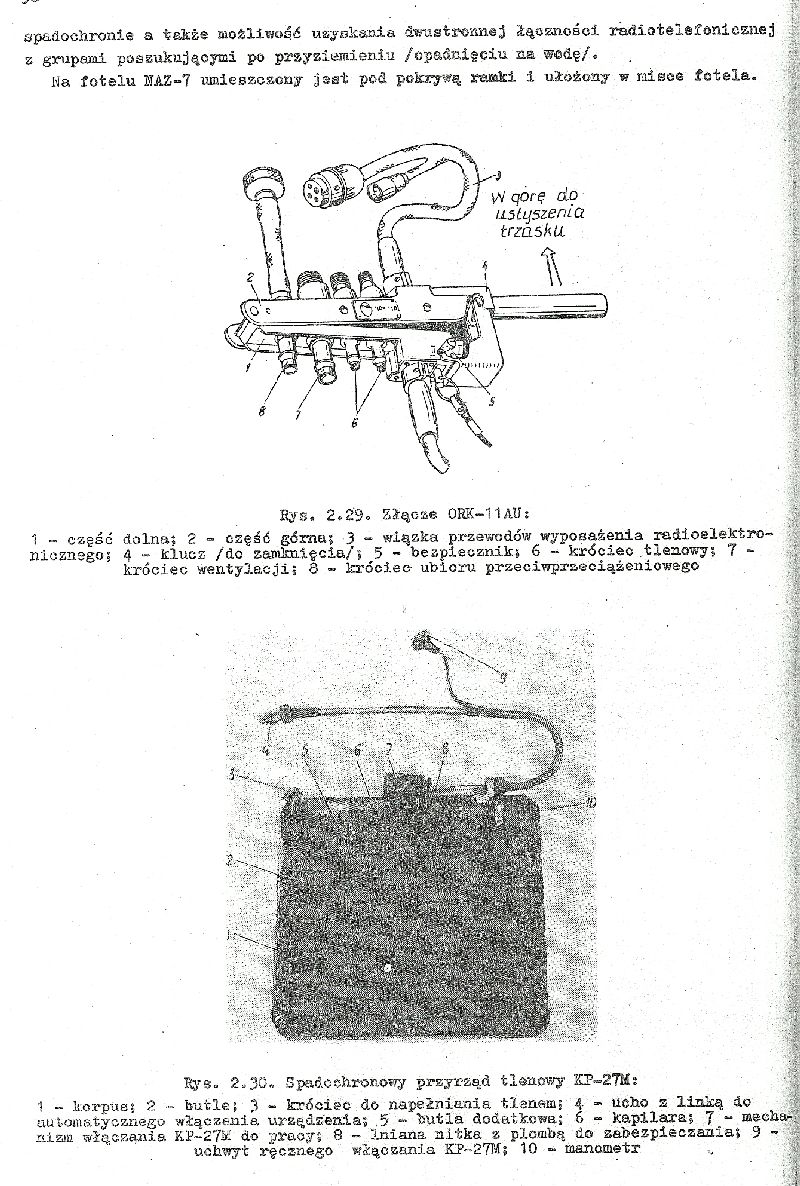
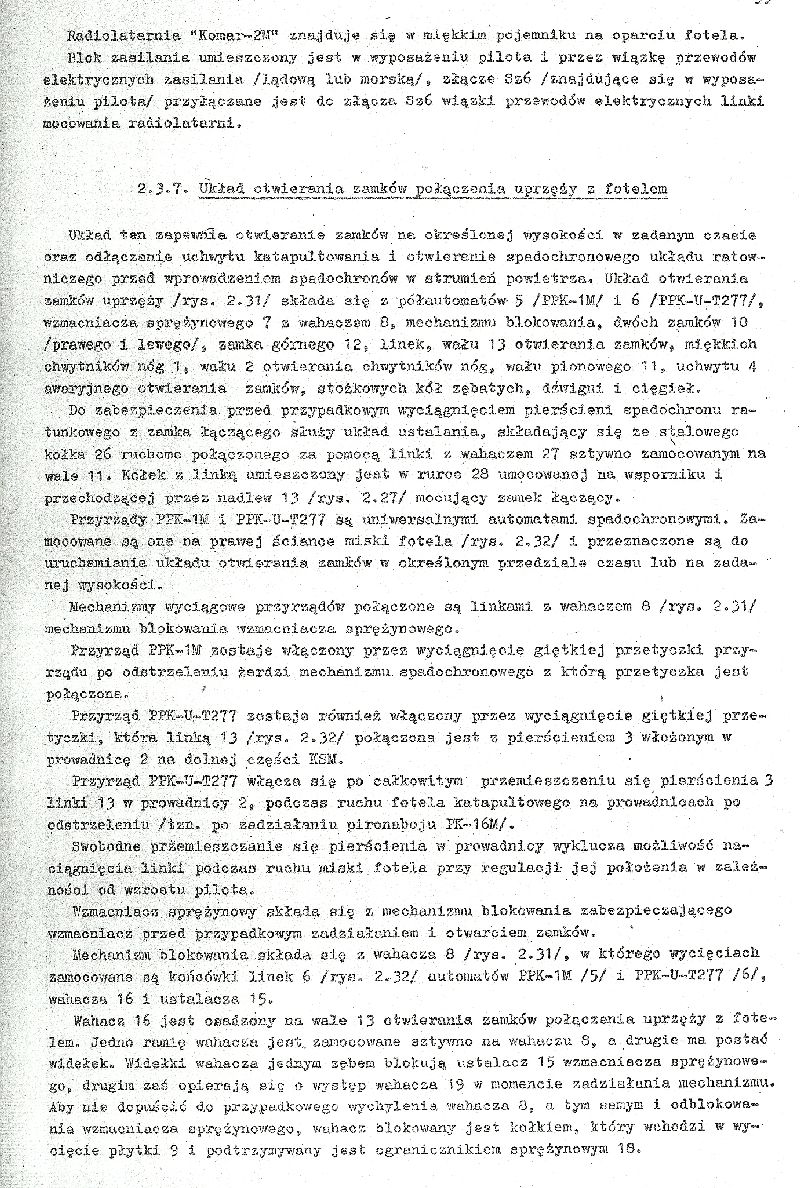
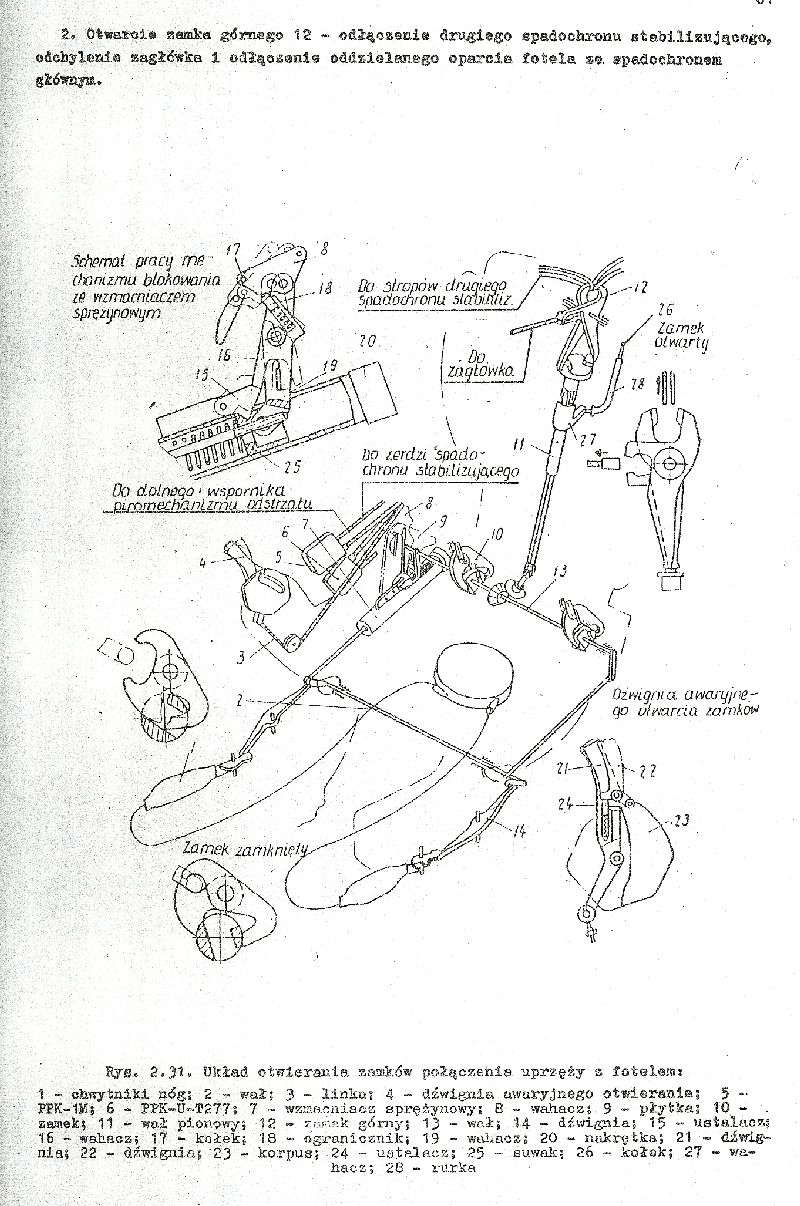
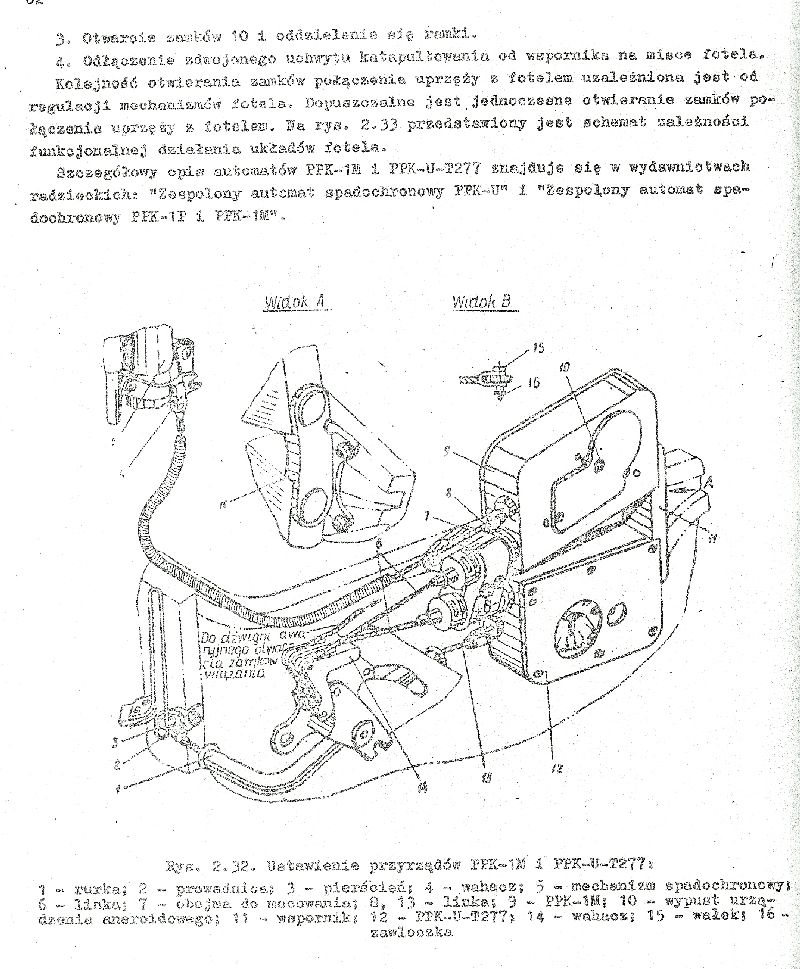
The KM-1M is mounted in the cockpit on two guide rails and held in place by the ejection gun rod. The Bowden loops of the leg restraints are attached to the lower edge of the instrument panel. The ORK-11 multi-connector on the left side of the bucket disconnects all the lines linking the pilot to the aircraft (in flight) and switches the pilot to oxygen from the KP-27M parachute apparatus. During ejection the ORK-11 connector is pulled apart by a cable attached to the cockpit side. The KPA-4 automatic device, acting according to the aircraft’s speed at the moment of ejection, then separates the first stabilising parachute from the seat, rotates the arm restraints, deploys the second stabilising parachute, which stabilises the flight of the seat with the pilot, and activates the PPK-1P and PPK-2P devices. When one of them operates, it opens the harness locks, opens the leg restraints, separates the pilot with the survival kit from the seat, and jettisons the headrest with the second stabilising parachute, which pulls the cover off the personal parachute and opens it. The PPK devices are mounted on the right side of the bucket, and the KAP-4 behind the seat back.
To prevent accidental operation of its mechanisms, the seat has the following operational safety devices:
– ground pins – 4 + 3-4 in the canopy jettison system (depending on the aircraft version)
– installation pins – 2, fitted after the seat has been removed from the cockpit.
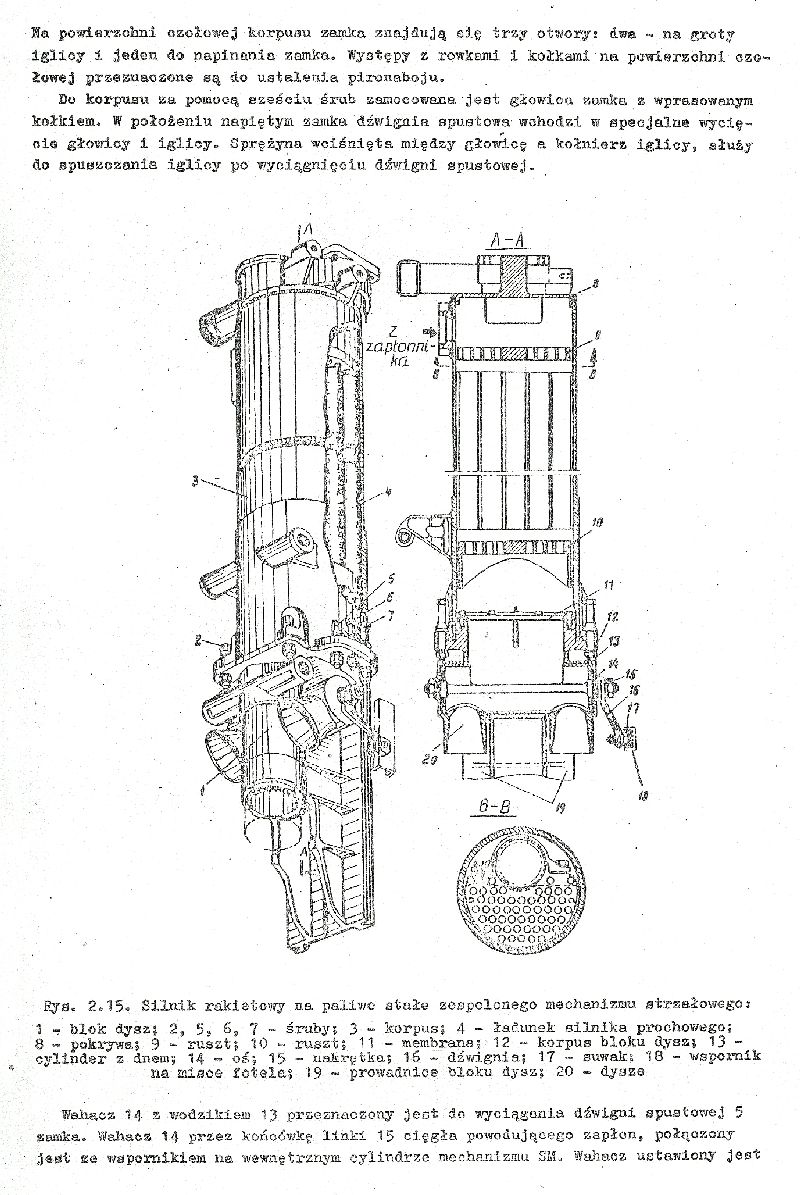
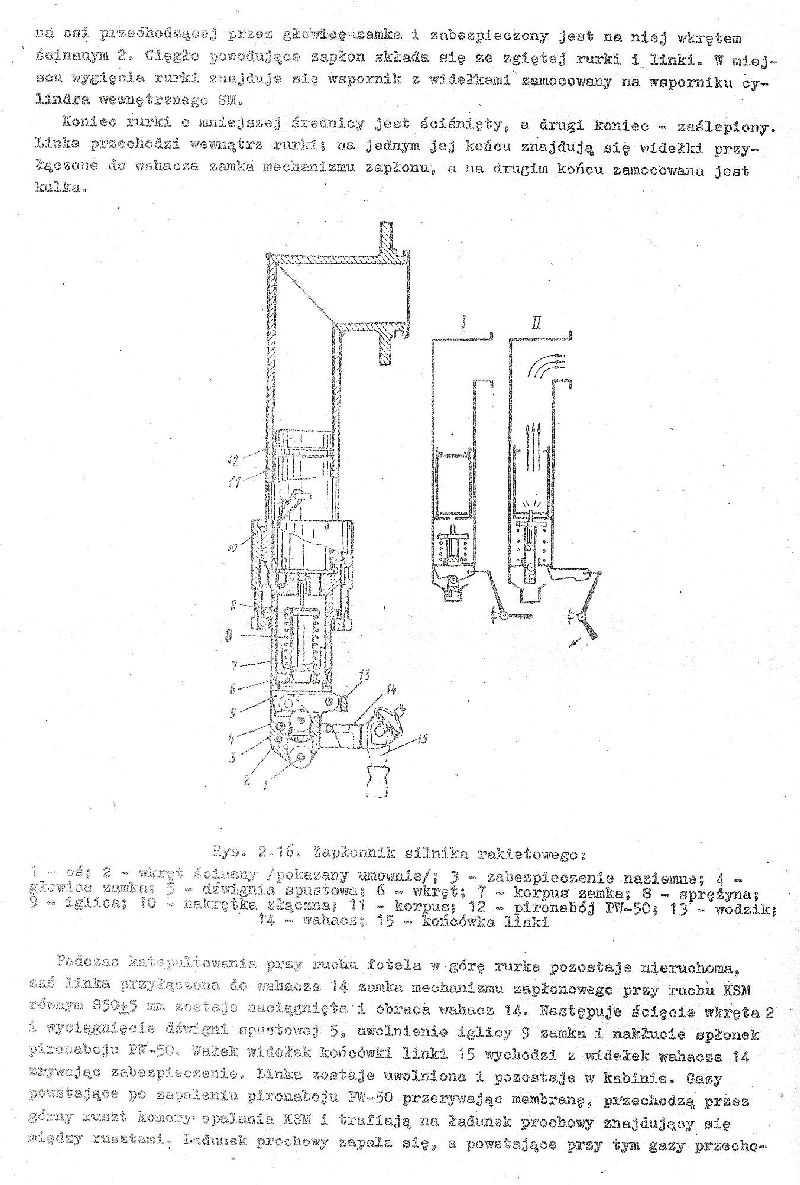
The seat uses 4 pyrotechnic cartridges (1 x PK-16, 2 x PK-3M-1, 1 x PV-50) and a propellant charge for the rocket motor (11 sticks, 24.5 mm in diameter and 410 mm long, weighing 2 kg).
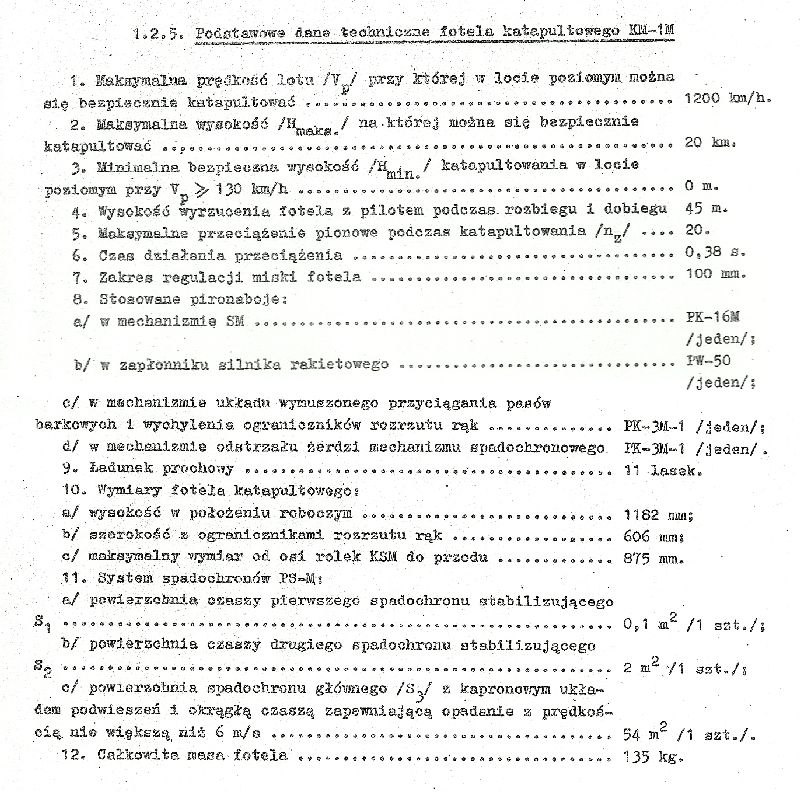
KM-1M technical data:
– maximum speed for safe ejection: 1200 km/h
– maximum altitude for safe ejection: the aircraft’s service ceiling
– minimum safe altitude in level flight at V=130-600 km/h: 0 m
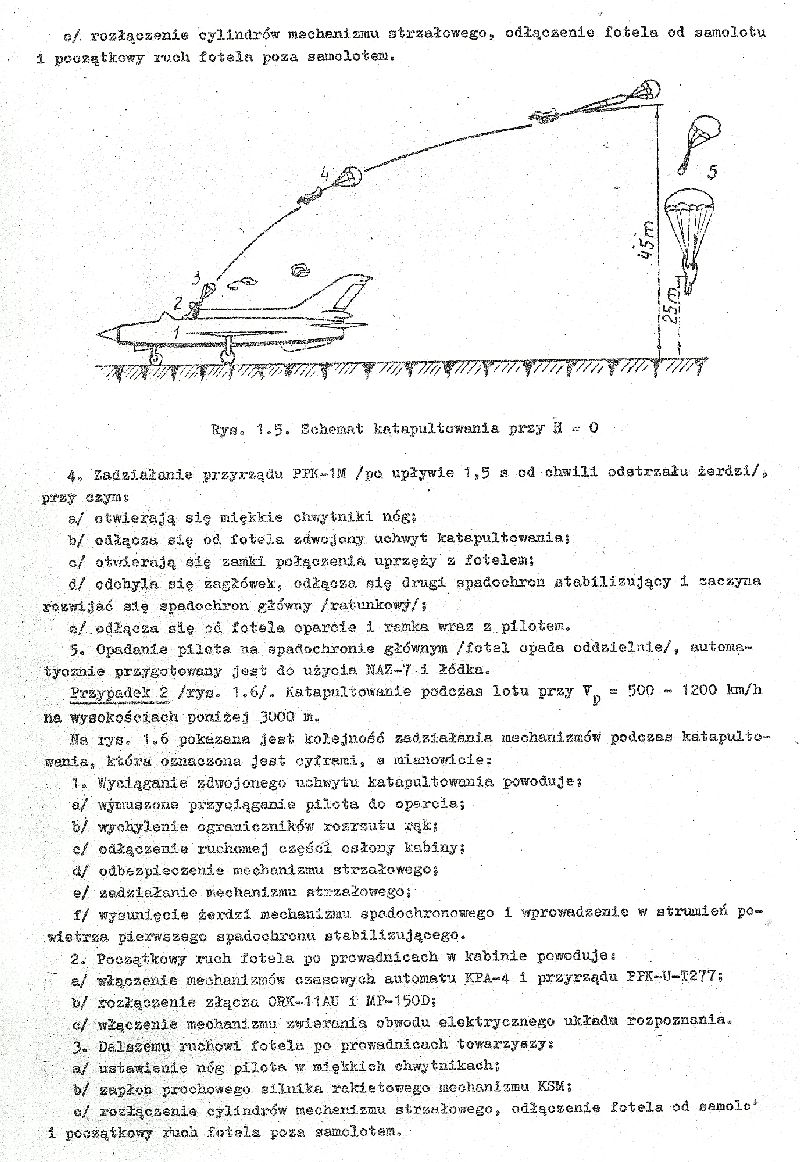
– height to which the pilot and seat are thrown when ejecting at H=0 m: 45 m
– maximum vertical g-load during ejection: nz=20
– duration of the g-load: 0.38 seconds
– seat bucket adjustment range: 100 mm
– area of the 1st and 2nd stabilising parachutes: 0.1 and 0.2 m2
– area of the main parachute: 54 m2
– total seat weight: 135 kg
– initial seat speed from the 1st stage of the ejection gun: 15 m/s
– speed from the 2nd stage of the ejection gun: 30 m/s
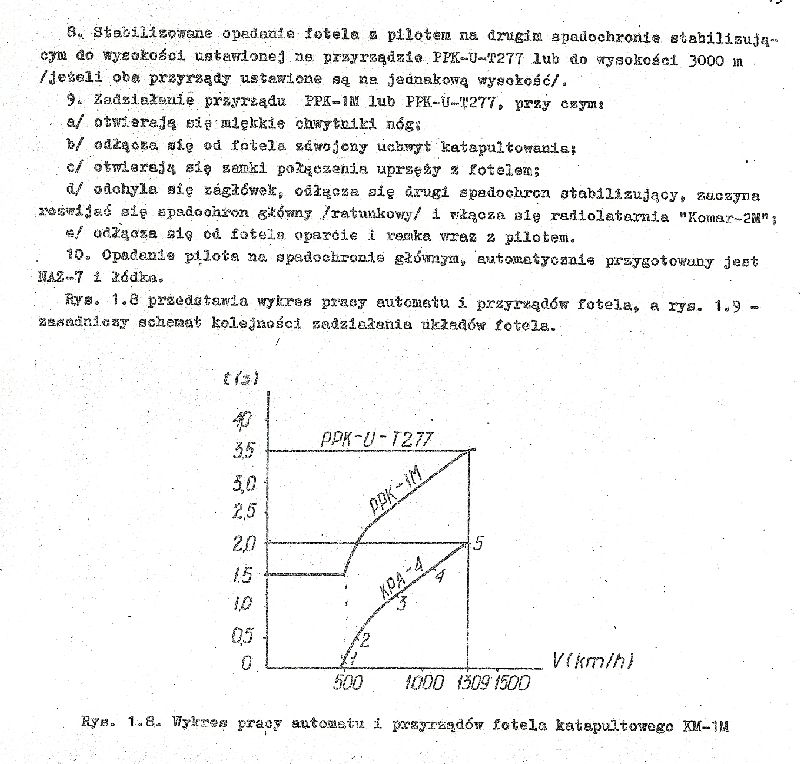
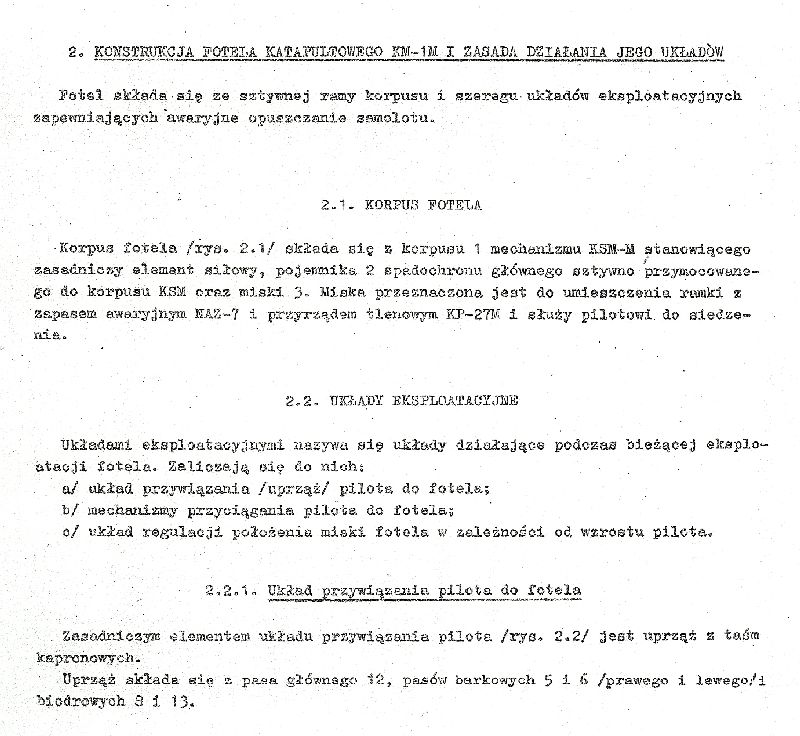
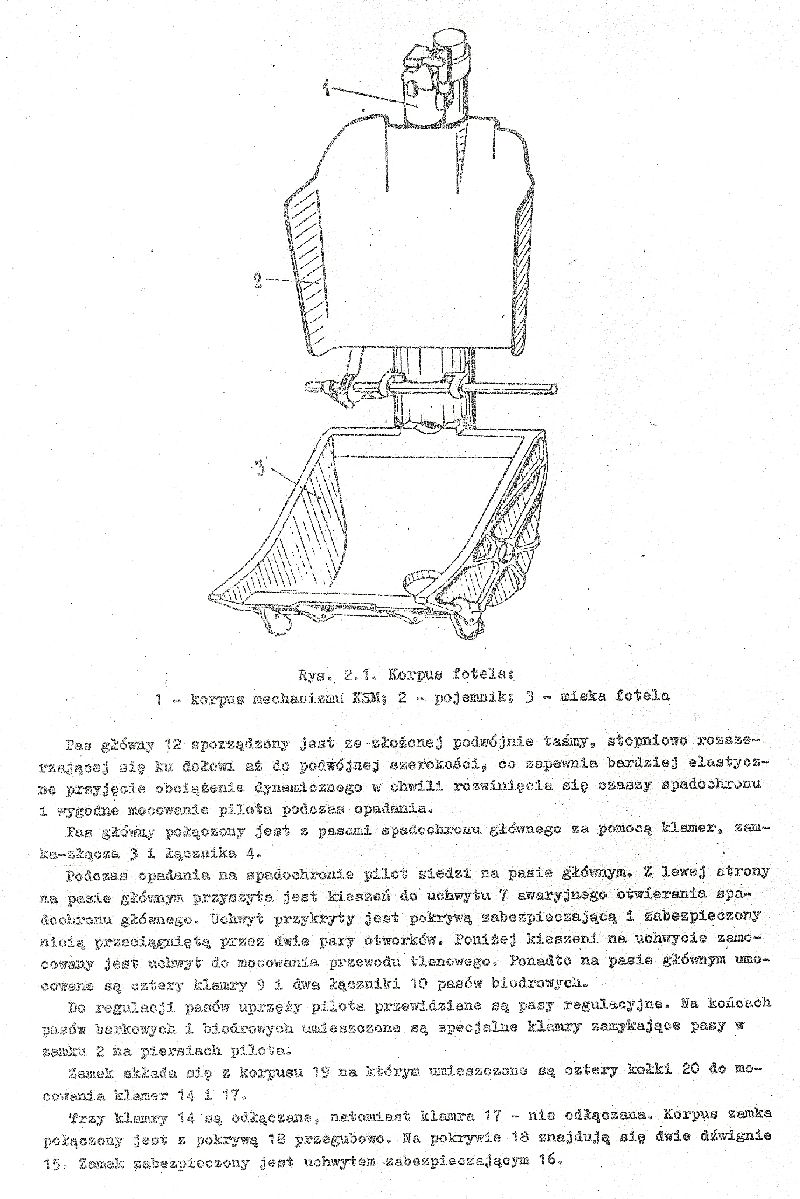
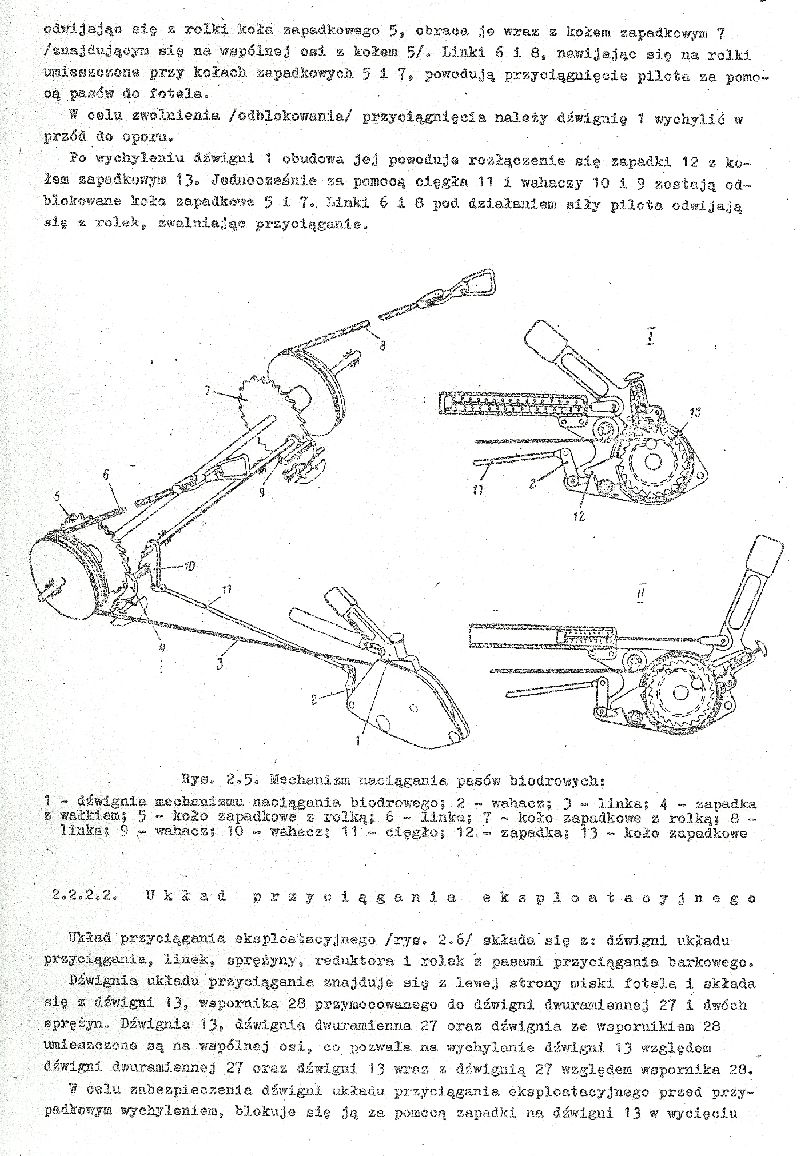
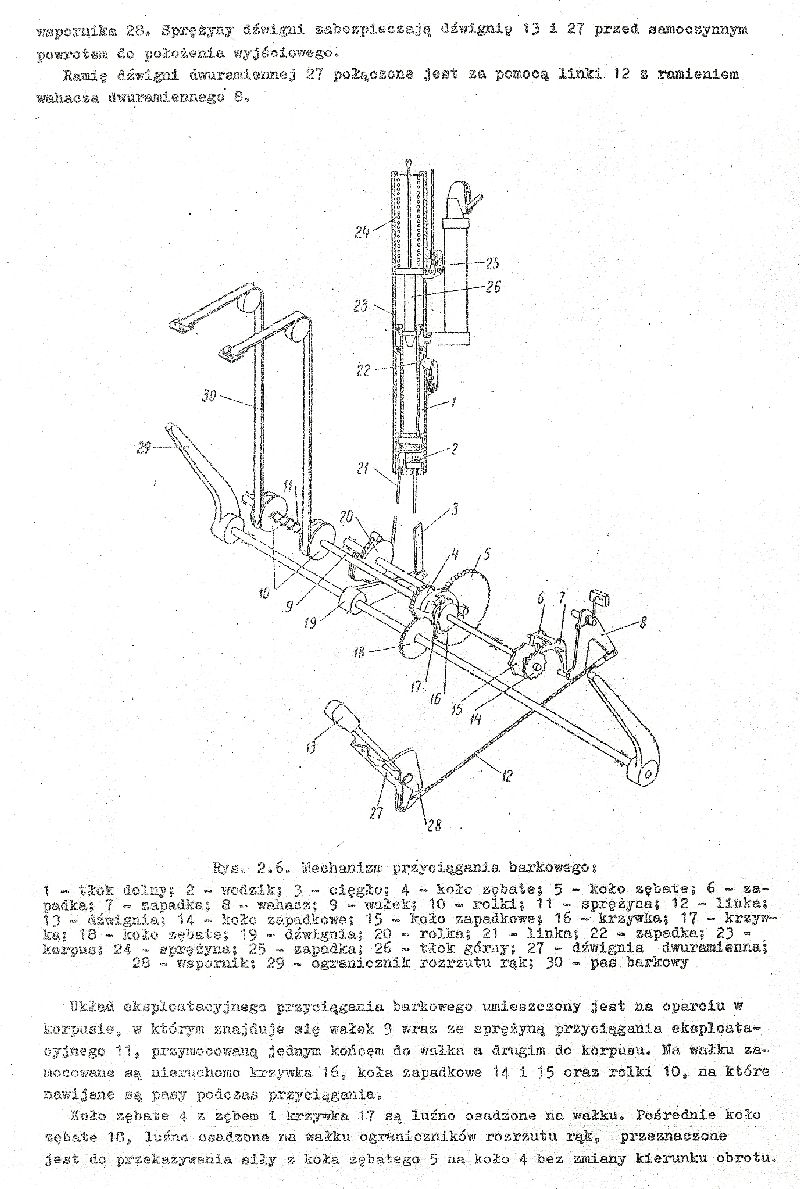
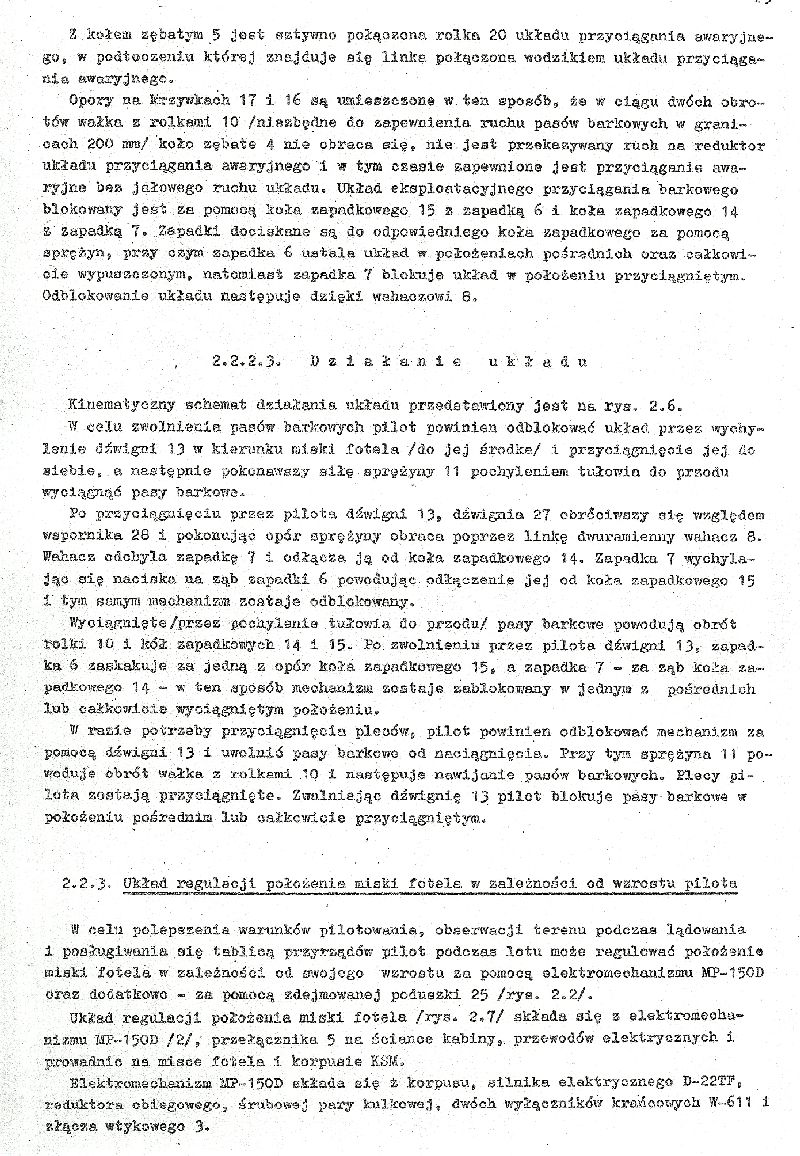
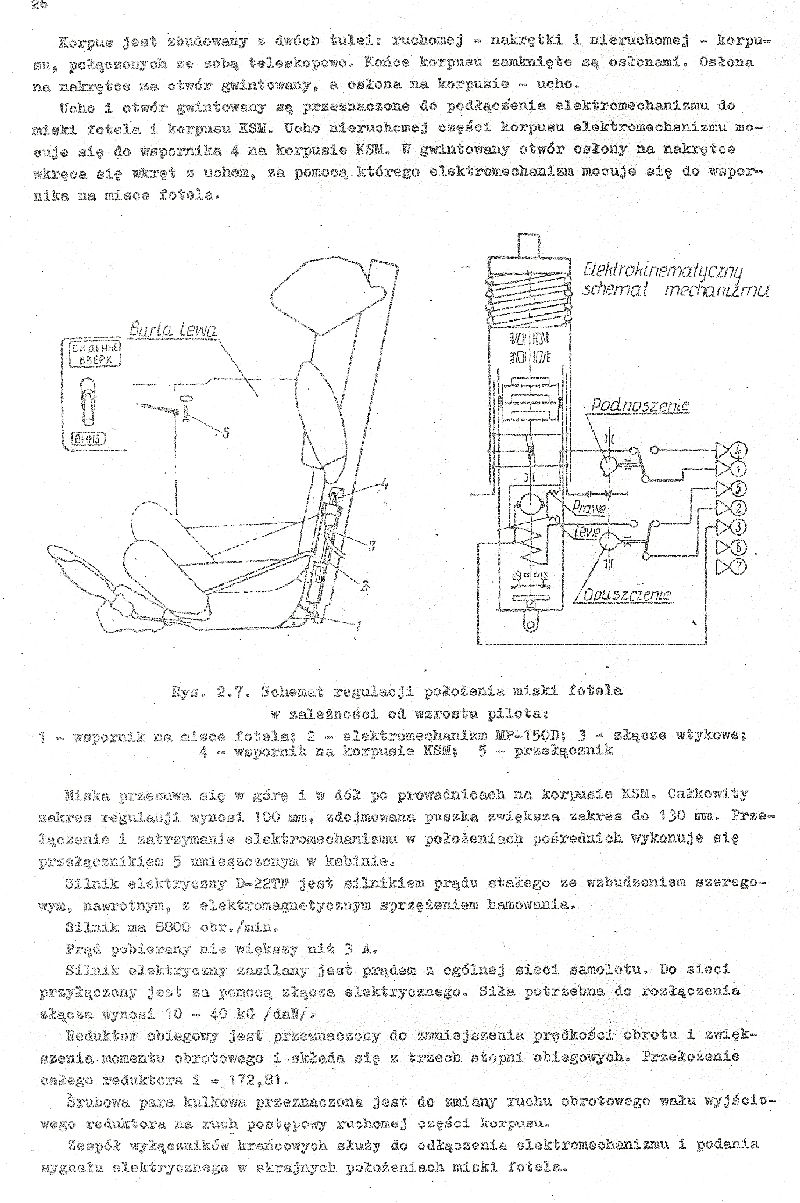
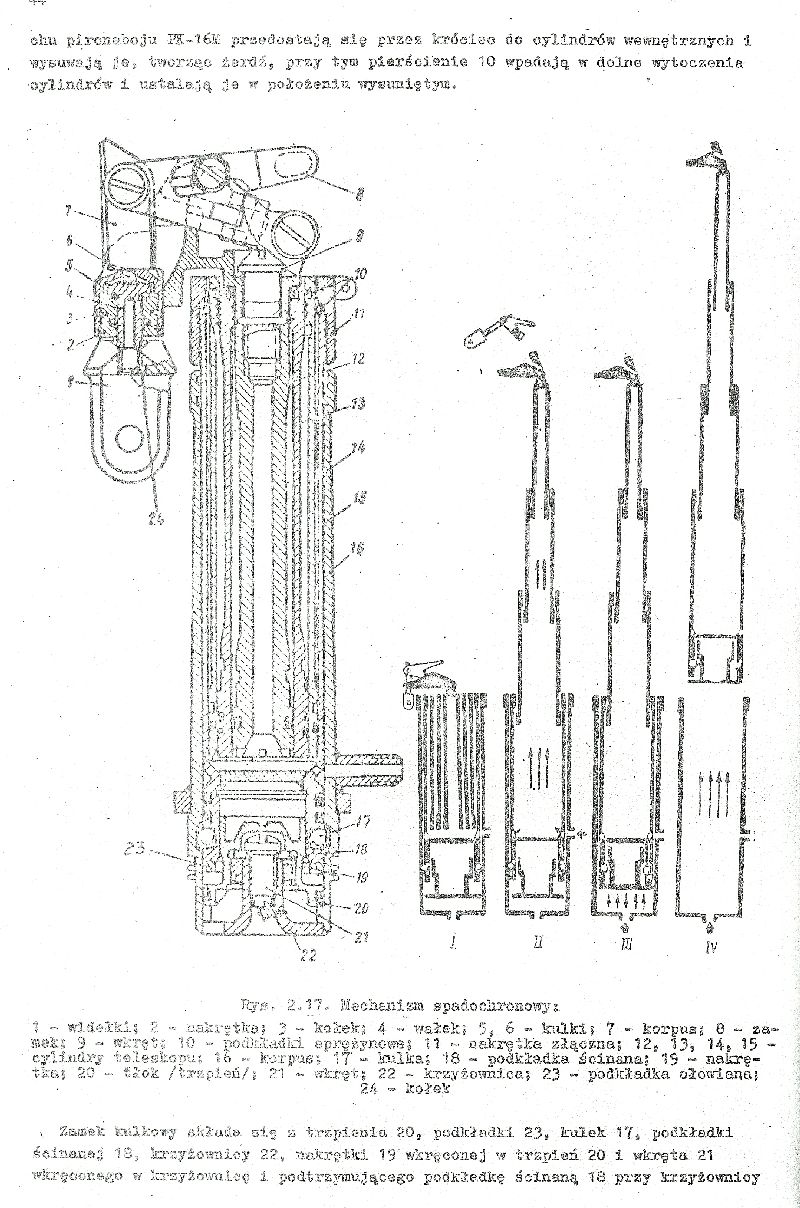
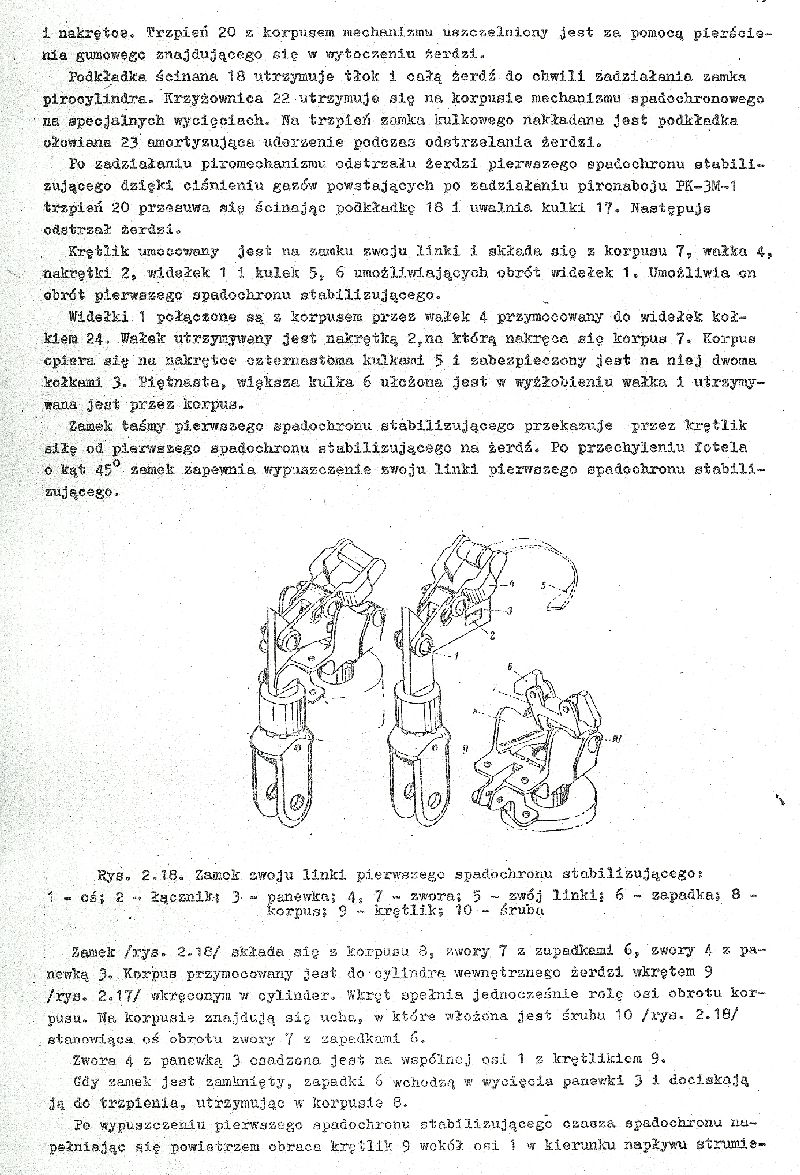
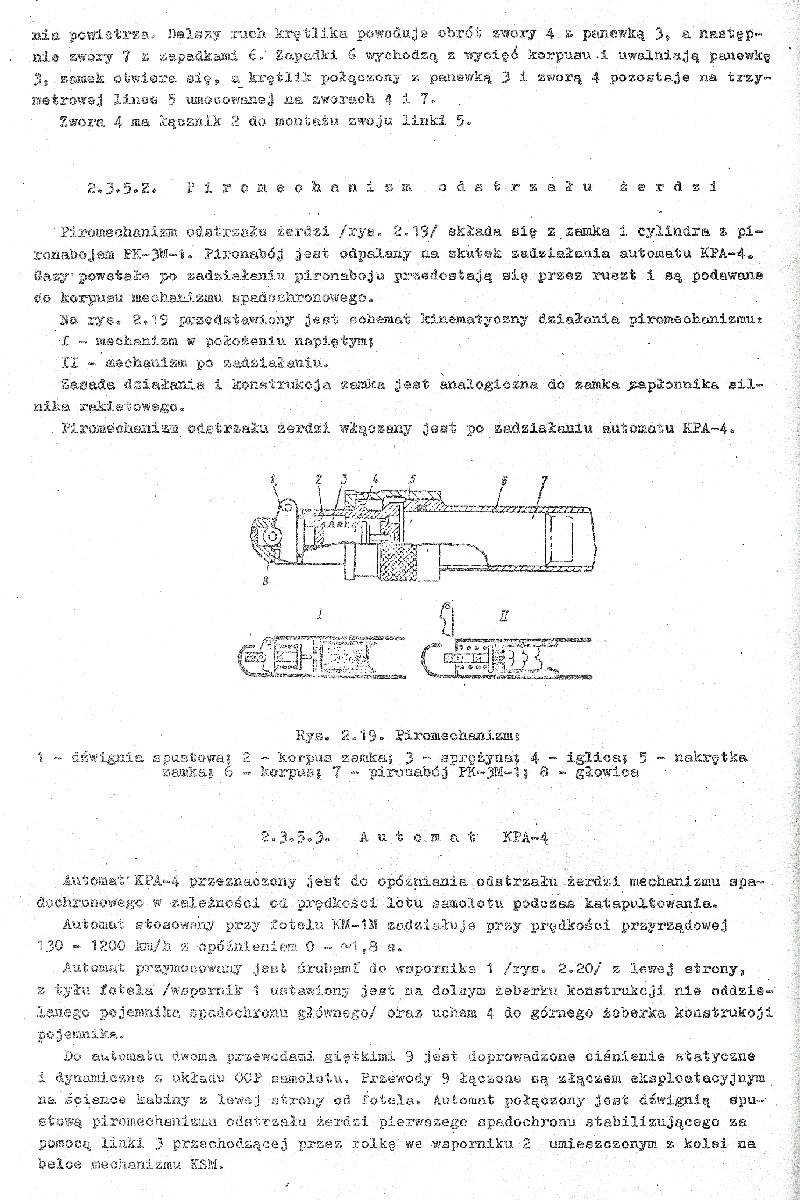
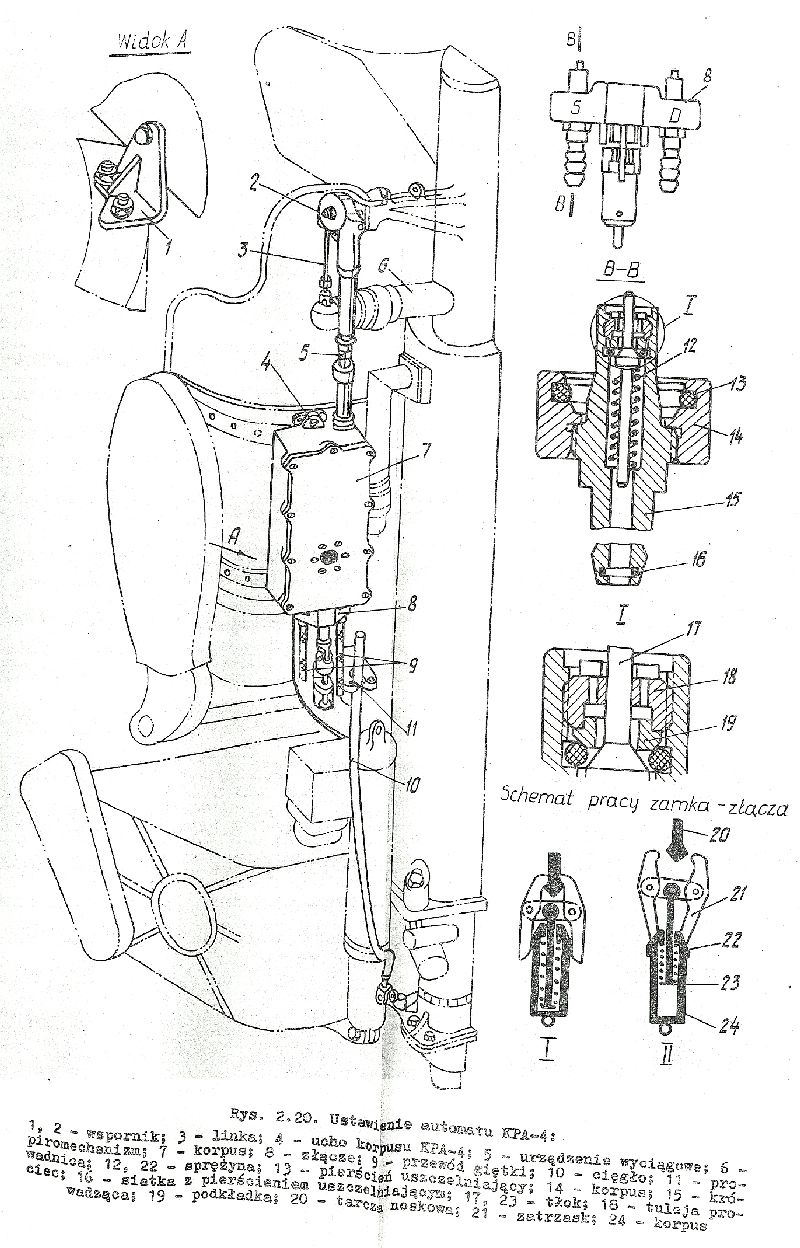
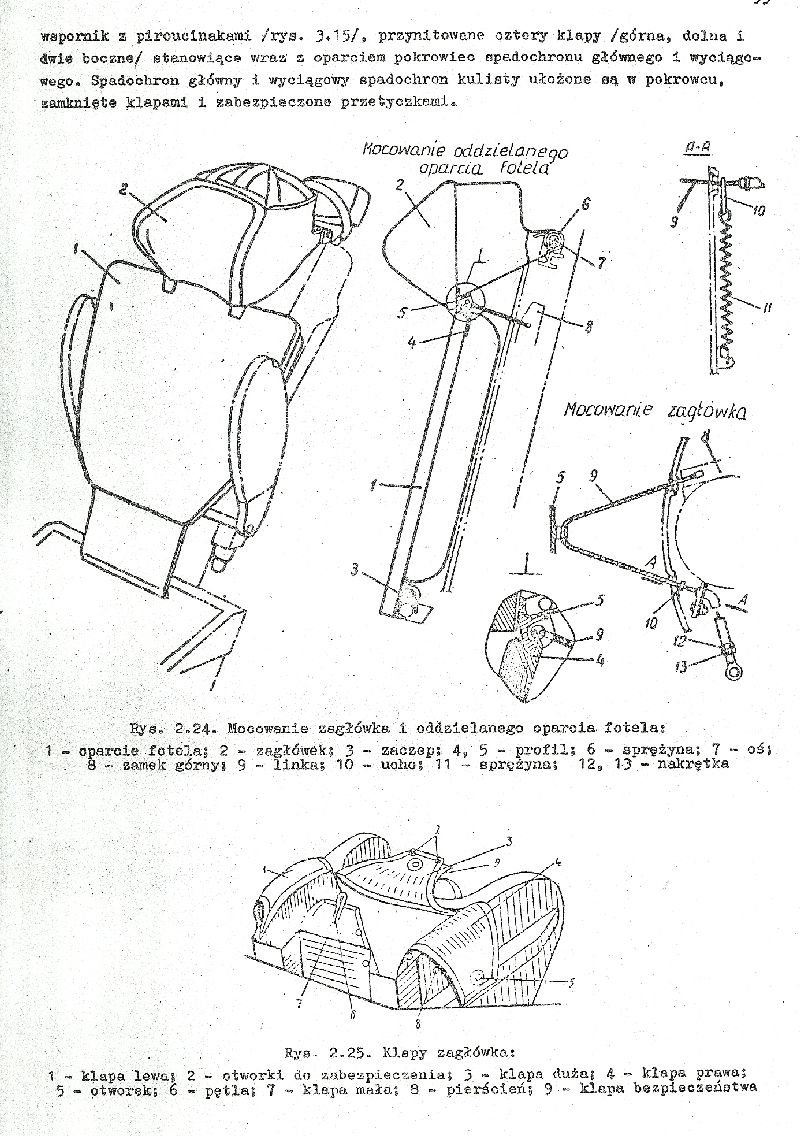
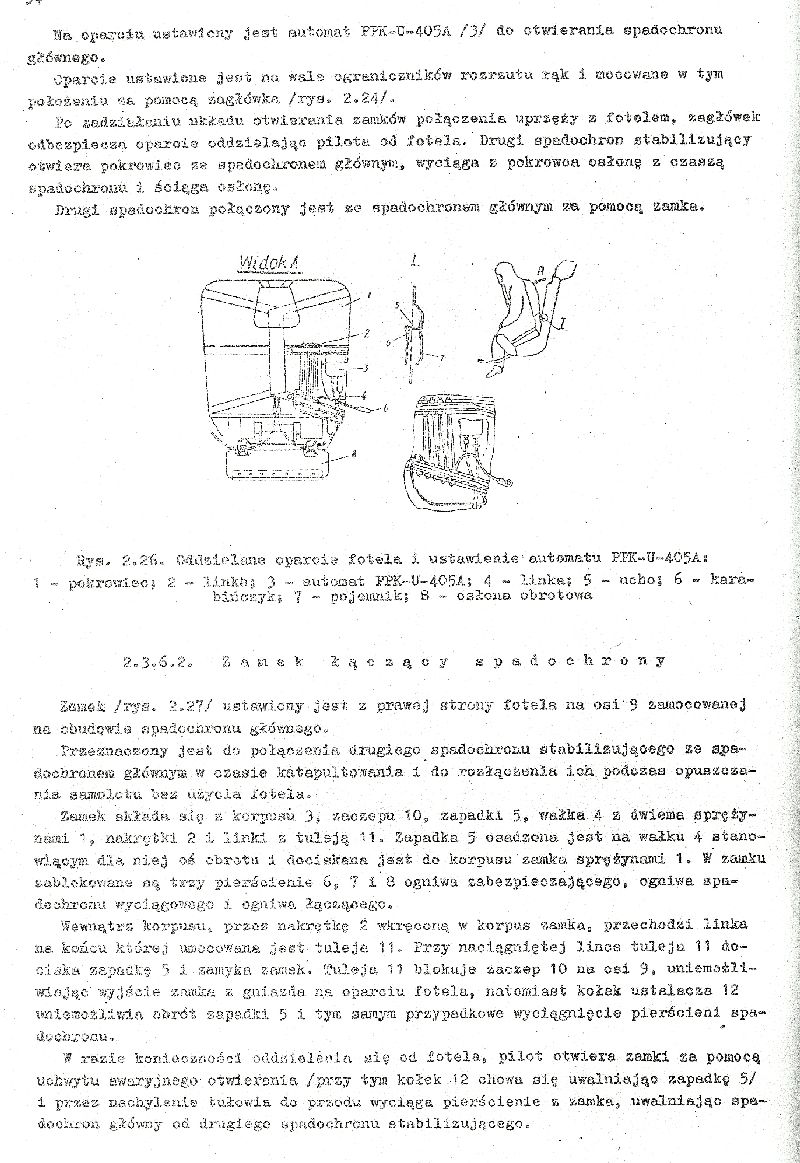
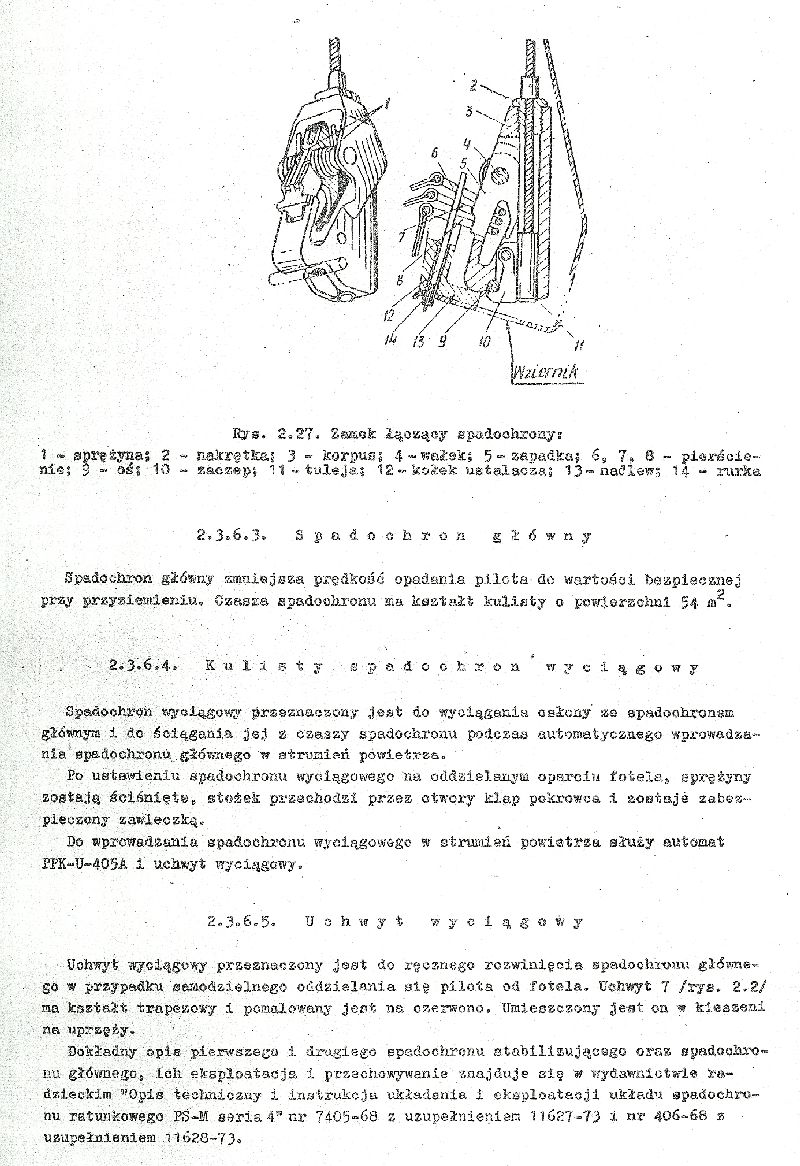
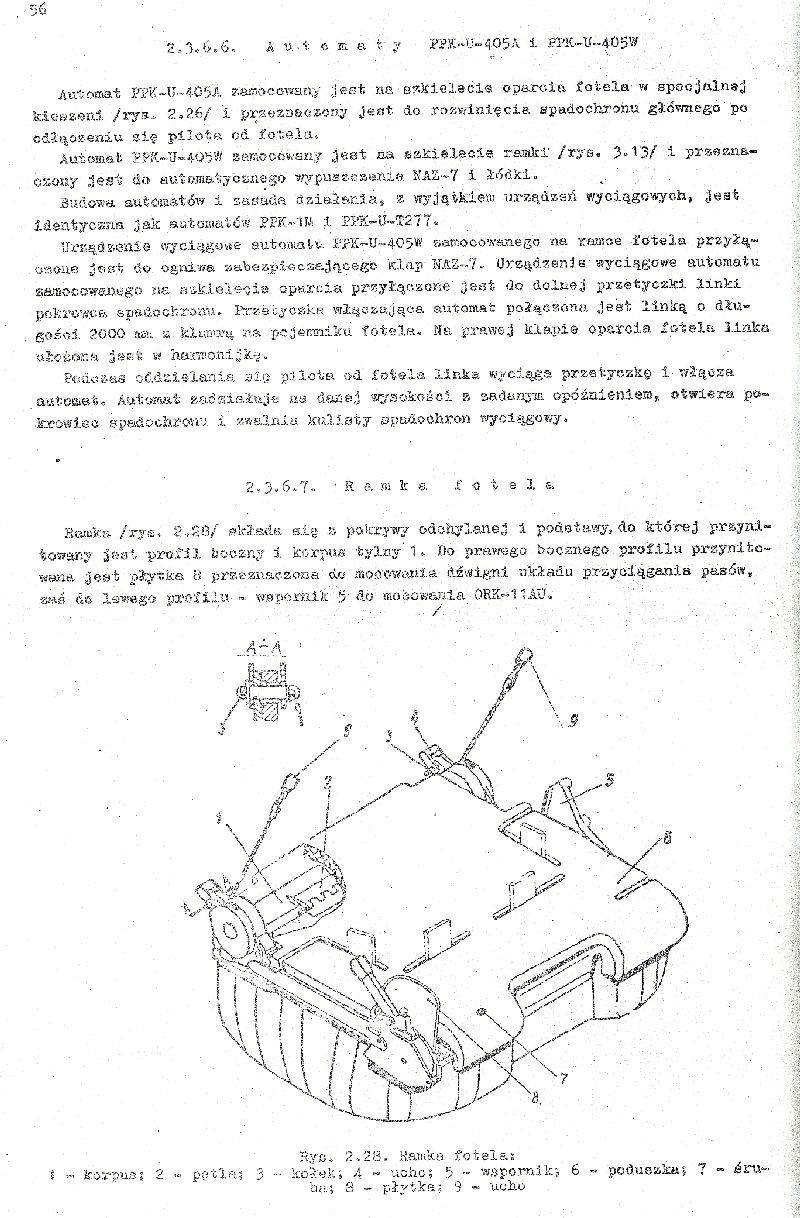
The KM-1M seat shown here comes from the private collection of Mr Tomasz Sobczak